8 May 2026 · Falah Mousa
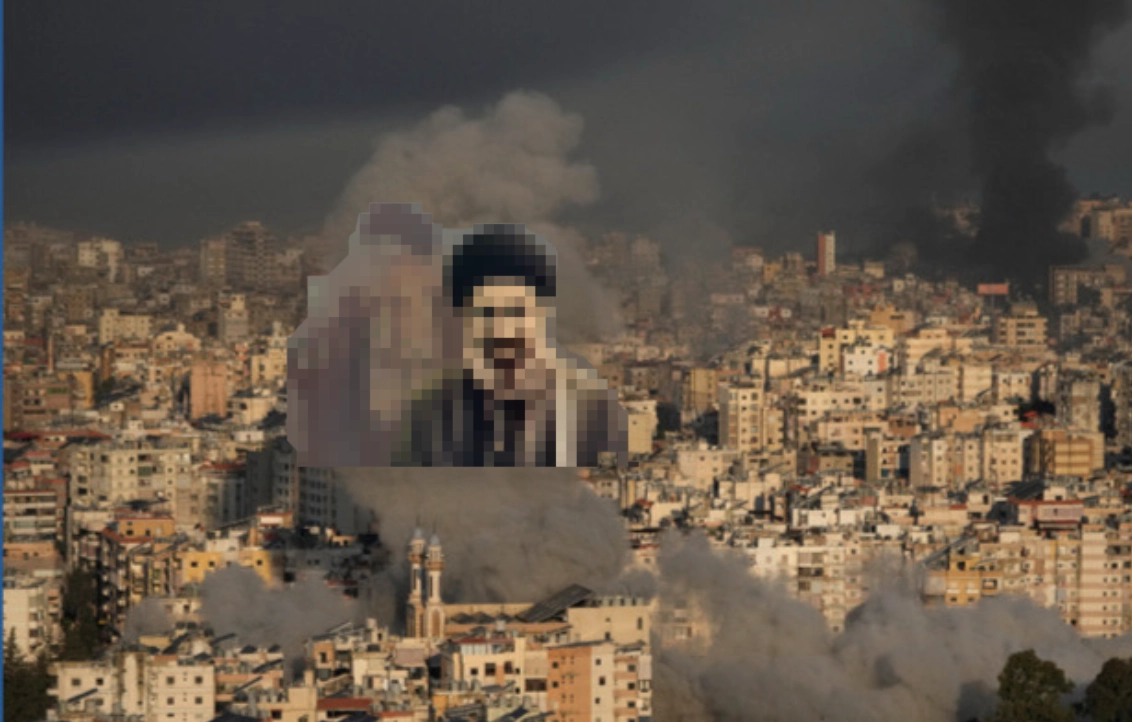
The balance of political and executive power inside Iran changed sharply after February 28th, 2026. As a consequence of this shift Iran is now rapidly moving towards a new type of military/centralized political structure. This new centralized system will be largely dependent upon the Islamic Revolutionary Guards.
Although formal structures continue to exist within the Iranian Government such as the Presidency, Foreign Ministry and other governmental agencies, they all have significantly less authority and independence than previously. Also, the new Supreme Leader Mojtaba Khamenei, although providing legitimacy for the current regime has provided very little day-to-day guidance. In addition, he has been absent from publicly visible life.
This shift has had a clear effect on negotiations with the American administration. Washington has sensed that there is no single Iranian position. The tone, aims, and participants in the talks have changed repeatedly.
Iran’s current political and executive scene can be divided into three main blocs with direct relevance to the negotiations with the United States:
The first bloc includes President Masoud Pezeshkian, Foreign Minister Abbas Araghchi, parts of the technocratic class, most civilian members of parliament and a broad section of the business community. These are the actors most open to negotiation.
The second bloc consists of those willing to negotiate, but only under conditions free of American threats. This group includes Mohammad Bagher Qalibaf, the speaker of parliament; acting defence minister Major General Majid Ibn al-Reza; and parts of the intelligence services and the regular army, known in Persian as the “Artesh”.
The third bloc is the most hardline. It includes those opposed to any real agreement that would end the wider crisis in the Middle East. This bloc is led by Ahmad Vahidi, commander of the Revolutionary Guard. It also includes Mohammad Bagher Zolqadr, secretary of Iran’s Supreme National Security Council; Gholam-Hossein Mohseni-Ejei, head of the judiciary; Ahmad-Reza Radan, commander of Iran’s police and security forces; and a large section of the clerical establishment. It is also supported by the Paydari Front, or Front of Islamic Revolution Stability, one of the most influential hardline movements inside Iran’s conservative camp. Founded in 2011 as an electoral list for the 2012 parliamentary elections, it later developed into an organised political force with broad influence inside Iran.
Above all these blocs stands Mojtaba Khamenei, Iran’s absent supreme leader. He remains the final authority on all matters concerning the Iranian state. Despite the numerous differences among these political blocs there is at least some level of understanding on how to prevent an open conflict between the blocs. As such, a 'mutually vetted' form of dispute resolution exists internally to the Iran political structure in order to limit the escalation of any disputes. These same three blocs also recognize that any splits during this time of war and economic turmoil would be detrimental to the survival of the Islamic governing body in Tehran. However, while the above-mentioned risks exist they currently are being kept under wraps. It is likely that these risks will grow larger with respect to their likelihood of occurring as well as their potential severity should negotiations fail and the full-scale military operations resumed.
The secularist, nationalists and armed opposition forces against the government of Iran are very diverse; however, they are also very fragmented and fractured. Much of the secularist opposition's organizational and political capabilities were severely damaged due to the repression of protests by the authorities in Iran in both 2025 and 2026. The largest opposition organizations include:
Reza Pahlavi, son of the Shah of Iran who resides in the U.S., is considered the most recognizable opposition leader to the regime. He created the Phoenix Project (a research organization) in 2019, which is a network of Iranian experts, scientists and professionals residing outside of Iran. The stated goal of the Phoenix Project is to assist in "restoring Iran" after years of what it claims to be destructive acts by the current Islamic Republic. The Phoenix Project is presented as a technical/academic center and not as a political party. In addition, in 2025 Reza Pahlavi created Prosper Iran (an initial 180-day plan) outlining a series of steps that would occur immediately after the collapse of the current Islamic Republic.
Mr. Pahlavi has been actively engaged in diplomatic efforts. In addition to meeting with members of the European Parliament he spoke to a large number of people (estimated by German authorities at approximately 250,000) at the side lines of the Munich Security Conference in February 2026. He views any negotiation between the U.S. government and the present ruling powers in Iran as supporting the Iranian regime. He has called upon the U.S. Government to assist in toppling this regime. Mr. Pahlavi has referred to military action taken by the U.S., or Israel against the Iranian regime as "humanitarian intervention" and stated that civilians should be protected from injury.
Maryam Rajavi leads the National Council of Resistance of Iran (NCRI), which is the political arm of the Mujahedin-e-Khalq (MEK). NCRI is headquartered in France and Albania. The organization proposes a transition period of six months after the fall of the Islamic Regime in Tehran, during which time there would be free elections in Iran. NCRI does not want either the existing system of governance in Iran or a monarchical system of governance. NCRI opposes any agreement between the U.S. Administration and Iran's current government; they argue that such an agreement lends legitimacy to Iran's current government.
MEK has established throughout Iran units of resistance and MEK was able to operate with successful media and propaganda efforts. However, MEK remains without wide-spread public support primarily based on their past cooperation with Former Dictator of Iraq, Saddam Hussein. Additionally, MEK operates under a very secretive organizational structure.
The "Solidarity for a Secular Democratic Republic in Iran" Coalition was established in 2023. The coalition represents a number of political parties and organizations including; the Republican Union, the European National Front, the Left Party, and the Union of Secular Republicans and Human Rights. This coalition does not support either Religious Rule or Monarchy. Instead, it supports a secular democratic republic, protection of minority/ethnic rights, and federal reform. However, the coalition's visibility and activity never was notable. Today, it appears to be less active and less visible than the Mujahedin-e Khalq Organization or other initiatives promoted by Reza Pahlavi, although both of them are criticized by the coalition. Additionally, the coalition's stance on an agreement with the U.S. is cautious and somewhat critical. This caution stems largely from concern that any agreement will enable the current regime to rebuild itself.
Kurdish parties operating in Western Iran include Komala, the Democratic Party of Iranian Kurdistan and several others. These Kurdish parties have no opposition to engagement with the U.S. However, they strongly advocate for minority rights and federal reform in any political resolution that may emerge from negotiations with the U.S. This advocacy places them diametrically opposed to the Iranian government's view of the State. On January 11th, 2026, these Kurdish parties issued a call for a national strike throughout Iran; however, this effort received little if any public support.
The ability of all Iranian opposition groups to directly impact politics inside Tehran is clearly very limited. Most of these groups have bases outside of Iran; therefore, the majority of their activities take place outside of Iran and away from the eyes of the people in Iran. There is little common ground among the groups as well. Their differing views of what Iran should be like in the future create great divisions.
The group hoping to lead the opposition movement in Iran, is the monarchical faction, but this too is divided. The older members of exile are nostalgic for the good old days while younger activist see a monarch as a quaint relic of history that has that hardly fits the modern world.
Iran's ruling class is terrified of another Syria or Libya. This fear prevents both the radical factions within the government from taking actions that may disrupt the existing social structure and prevent reformers from making demands for large scale concessions or sweeping changes, since they fear that the existing social structure may become unstable. On the other hand, Iran's secular opposition, as it now exists, cannot overthrow the government without either foreign military involvement (as was seen in Iraq, Afghanistan, Libya…etc) or a break down in loyalty among Iran's security forces who continue to exercise total control domestically. Either of these two possibilities seem unlikely to occur. Therefore, predicting Iran's future is uncertain and difficult, particularly since there appears to be no leadership or guidance regarding how to wage the U.S. war against Iran. However, few would argue that Iran stands at a cross-roads in time. Change has taken place and will continue to take place.
The Islamic Republic of Iran has survived many predictions of its early collapse. It has outlasted the loss of key figures in both the military, political and religious spheres. Therefore, it is too premature to consider a drastic alteration.
Democratic activists, trade unionists, and others who represent Iranian civil society are already in the prisons. And there is not any organized alternative that could overthrow the current government. Moreover, long years of state repression had effectively suppressed the revolutionary spirit calling for change among ordinary people, who were afraid even to show solidarity with the opposition groups that sought to bring down the existing regime.
One fact is hard to ignore: no single actor inside Iran controls the keys to an agreement or a "deal" with the USA. The hardline bloc led by Mr Vahidi cannot reject a deal forever if the Revolutionary Guard concludes that continued confrontation threatens its survival, not just its interests. At the same time, Mr Qalibaf and those around him cannot sign anything without cover from the new supreme leader, Mojtaba Khamenei, who so far appears, for different reasons, absent from the scene.
Therefore, a realistic agreement is unlikely to develop via conventional diplomatic channels. Instead, it will likely arise from a very limited "back-channel" communication process between the Revolutionary Guard and the United States, while excluding the Foreign Ministry and President Pezeshkian. Iran's historical record supports this assessment. The 1981 Hostage Agreement did not occur via a public, formalized channel. The 2013 secret Omani Talks, which provided a pathway toward the 2015 Nuclear Agreement were conducted along a similar model.
It's unlikely that any agreement/ deal will be fully comprehensive. Washington doesn't want a comprehensive “deal”; it wants nuclear guarantees and a halt to Iranian expansionism. Tehran isn't looking for anything more than survival, and some relief from the economic pressures which are crippling the country. There may be some common ground here between Washington and Tehran, but if there is, it is a fragile space.
Following any “deal” and the lifting of sanctions, Iran is likely to go into a period similar to that experienced in post-Soviet Russia: rapid economic development; chaotic distribution of wealth and the emergence of individuals from within the security services as leaders of "reform". The key difference now is that Iran's revolutionary guard holds both the guns and the controls. Whatever comes out of any agreement, it is evident that most of the funds which come out of sanctions relief will flow through Iranian companies and institutions owned by the revolutionary guard. That is what happened in 2015; ordinary Iranians saw few real gains. Therefore, if they finally conduct a "deal", then the life of the regime well be extended as opposed to providing a means to get towards serious change. The popular pressure was insufficient to topple the system when it was in its weakest state (as with the protests of 2022), so, what makes us think that will be possible, when the regime has some breathing space economically?
Ultimately, Iran does not face the alternative between the present regime and democracy. Rather, it faces an alternative between different types of authoritarianism. The real issue is not how much the system changes. It is who manages Iran post this era and to whose advantage. The realistic answer points to those who already hold the real cards: money, weapons and networks of influence (The Islamic Revolutionary Guard Corps "IRGC"). The opposition abroad has the language of change, but not the ground beneath it. The people inside Iran have the will, but not the organisation. The regime has power, but not a future.
This difficult equation will shape Iran in the coming years more than any talks in Muscat, Islamabad, Geneva or elsewhere. Perhaps the most honest conclusion is this: Iran deserves a better future than the one offered by its current Islamic theocratic elite, whether by those who rule it today or by those who claim they will rule it tomorrow.
Support Our Work
If you find our content valuable, please consider supporting our mission through a donation. Your contribution helps us continue providing high-quality analysis and insights.
Donation Options:
If you enjoy my work and would like to support it while helping me stay energized, I’d be deeply grateful for a coffee.
https://buymeacoffee.com/falahmousa
Thank you sincerely for your kindness and consideration.
 Falah Mousa