14 May 2026 · Falah Mousa
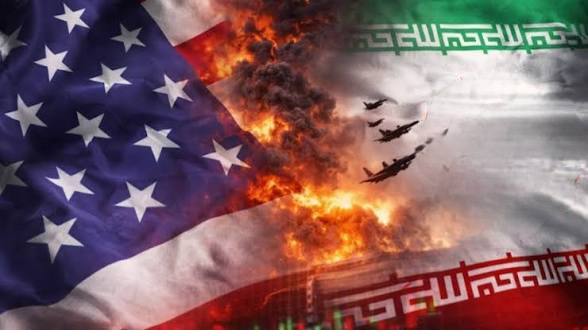
The 2026 Iran war was a conflict centred on Iran, launched by the United States and Israel on February 28, 2026, and has reshaped the political and security order of the Middle East.
Its consequences cannot be understood only through the immediate military events. The war also raises a set of wider questions about state collapse, regional instability, economic disruption, humanitarian suffering and the moral limits of power.
Taken collectively, they identify how this conflict may reveal deeper structural weaknesses within the global order. The conflict has elements of both a military and a political-economic-humanitarian-moral nature.
The Post-Invasion Vacuum: The first question concerns collapse of a State. History indicates that it is considerably easier to destroy/undermine a State’s authority structure than to establish a viable alternative. The case of Iraq provides a most graphic illustration. Military removal of a regime without establishment of a viable political successor creates a void into which fill with: militias; vengeance; corruption; external intervention; and long-term instability. Each of these dangers faces potential exposure today concerning Iran and other areas of the region.
The Rebuilding Trap: The second question pertains to energy and infrastructure. Wars in the Gulf are always regional conflicts but they touch upon oil/gas; shipping lanes; insurance markets; refineries; ports; and global supply lines. Damage to energy-related infrastructure may have the appearance of being repairable on paper, however, restoration of investor confidence; worker confidence; shipper confidence; government confidence; and therefore, restoration of "business-as-usual" will not occur merely because the shooting stops.
Global Development Risks: The third question concerns poverty. While those directly exposed to missiles during wartime obviously suffer as well, poorer nations around the globe experience increased costs associated with: higher-priced energy; food inflation; currency devaluation; and increasing national debt. Therefore, a war in the Gulf can rapidly convert into a poverty-based crisis in many areas of Africa, Asia, and Europe. For this reason, the conflict should be perceived as an international economic shock rather than solely as a localized military confrontation.
The Ethics of Power: The fourth question concerns power and legitimacy. The conflict serves to illustrate how international politics continues to treat some lives as vital while treating others as expendable. Powerful states proclaim their support for security, law, and stability but often exercise them selectively. Selective application of such principles undermines the moral credibility of the current international order. An international order that defends power at the expense of protecting individuals cannot endure for very long.
In summary, this series of articles argues that the Gulf War is not an isolated occurrence. Instead, it reflects our time: a world characterized by rapid movement of military action vs. slow diplomatic processes; a world wherein energy markets play a significant role in sustaining individual life; a world wherein poor societies bear the cost of decisions made by powerful elites; and finally, a world whose legitimacy is eroding due to widespread hypocrisy.
Support Our Work
If you find our content valuable, please consider supporting our mission through a donation. Your contribution helps us continue providing high-quality analysis and insights.
Donation Options:
If you enjoy my work and would like to support it while helping me stay energized, I’d be deeply grateful for a coffee.
https://buymeacoffee.com/falahmousa
Thank you sincerely for your kindness and consideration.
 Falah Mousa