21 August 2026 · Falah Mousa
A New Caspian Cable Could Change Europe’s Energy Strategy
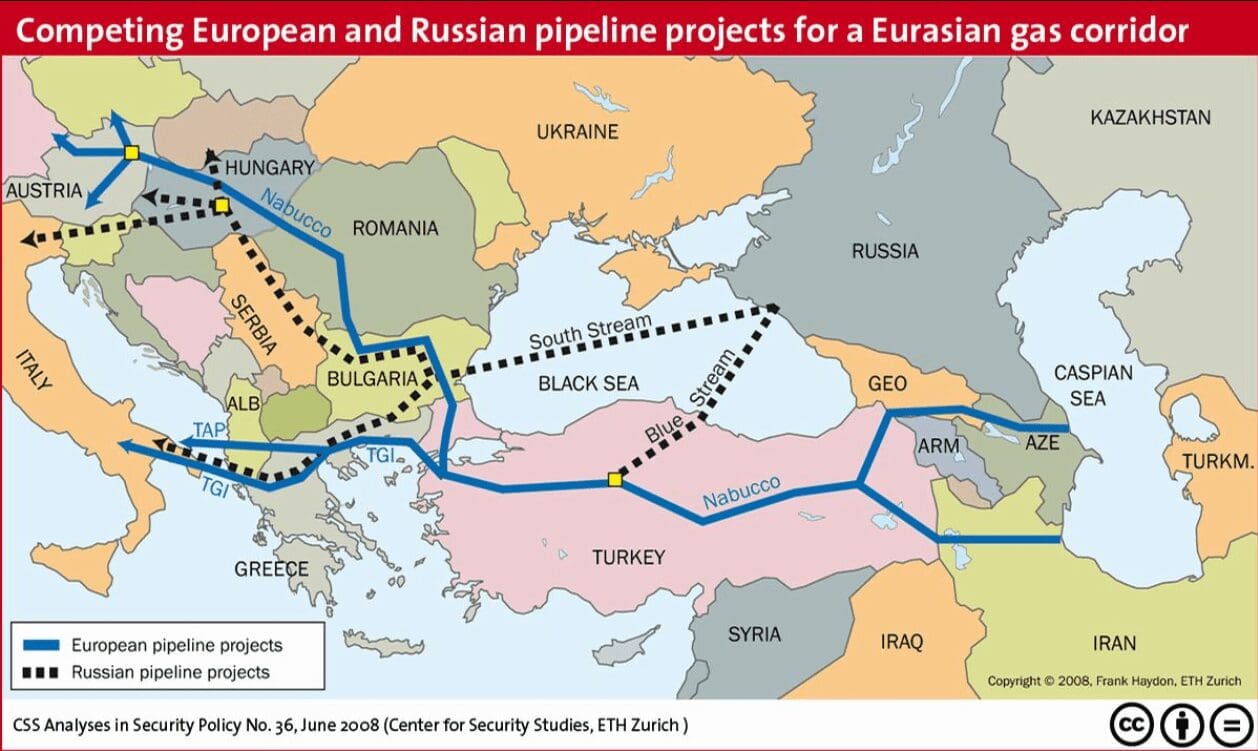
For decades, Central Asia has exported a long list of natural resources including; crude oil, refined petroleum products, natural gas, uranium, and aluminum. However, due to geographic isolation (Kazakhstan and Uzbekistan are landlocked) and historical control of Northern transportation corridors by Russia and the growing dominance of China to the East – all of these export options were limited. Now, a joint effort among the governments of Kazakhstan, Uzbekistan and Azerbaijan may provide Central Asia with additional opportunities — this time through the exportation of electricity West across the Caspian Sea.
The name of the new project is the Caspian Green Energy Corridor, which will connect the electrical grids of Kazakhstan, Uzbekistan and Azerbaijan and eventually send renewable electric power via high-voltage subsea cables across the Caspian Sea. Additionally, it is expected that the longer-term goal is to extend the corridor through the South Caucasus states and connect to the proposed Black Sea cable toward Romania and onto the European Electricity Grid. Specifically, the Asian Development Bank stated the purpose of the corridor is to enable renewable electricity generated within the Caspian Region to travel directly to Europe.
This is no mere statement of intent. As reported earlier, Kazakhstan, Azerbaijan and Uzbekistan signed a Memorandum of Understanding regarding the project in May 2024. Then, during COP-29 held in late-November 2024, Presidents of each nation signed a Strategic Agreement to move forward on developing the project. Following this, the three National Electrical Utility companies signed an agreement establishing the institutional framework for cooperation. Further to this agreement, the Asian Development Bank (ADB), along with the Asian Infrastructure Investment Bank (AIIB) entered into agreements to fund feasibility studies. On April 16th, 2026, Kazakhstan officially ratified the agreement establishing the institutional framework for cooperation. Currently, CESI (Italian Engineering Company) is engaged in conducting feasibility studies.
However, it is essential to not give the impression that construction on the cable has already commenced. The project remains in a technical-commercial-institutional preparatory phase. There are many issues still to be addressed; financing, ownership of the cable, electricity prices for transmission across borders, connecting the respective grids in each participating nation, meeting environmental standards for both terrestrial and marine environments and designing a reliable high voltage underwater cable. The technical-assistance program funded by the ADB is anticipated to continue until 2027.
In terms of geopolitics the implications are far greater than just the volume of electricity transmitted. If successful, Kazakhstan and Uzbekistan will obtain a new western energy route that circumvents Russian territory. Furthermore, when combined with the existing Trans-Caspian transport corridor supported by the EU – namely railways, port facilities and logistics connections linking Central Asia, Azerbaijan and the Black Sea region to Europe – this corridor represents a key component of EU trade, energy security and increased resilience in regional supply chains. According to current statements made by EU officials they view this overall Trans-Caspian corridor as "strategically" important.
There should be no confusion that neither Russia nor China are losing significant influence in Central Asia due to this initiative. China will continue to invest in Central Asia and maintain strong trading relationships with these nations. Similarly, Russia will remain an important player in Central Asia; both economically and geo-politically. What is significant about this opportunity is that Kazakhstan and Uzbekistan will potentially possess an additional outlet to deliver their goods to various markets. Historically speaking; access to multiple outlets to reach different markets generally provides countries with better negotiating leverage than reliance on a single conduit for delivery.
Azerbaijan can expect significant benefits from this potential success. Already an exporter of Caspian gas through the Southern Gas Corridor to Europe, if electricity from Central Asia transmits through Azerbaijan it could further establish Baku as an oil/gas provider as well as an electrical transmission hub between Central Asia/Europe. Presently, the European Commission views Azerbaijan (along with Georgia and the Black Sea) as an integral part of a broader energy connectivity strategy.
Additionally, Europe possesses its own compelling interest in supporting these types of connections. Since raising its relationship with Central Asia to a strategic partnership level, the EU has invested substantial funds into facilitating transport and communications between Europe/Asia across the entire region; including critical minerals and energy-related projects. During its first EU-Central Asia Summit held in Brussels in June 2019, the European Union pledged €12Billion towards supporting global gateway related projects and continues to support development of the Trans-Caspian transport route as an alternative path between Europe and Asia.
Yet despite its significant promise; this is clearly not one simple cable. Rather it constitutes a series of interconnected national electrical grids and inter-country agreements and massive amounts of associated infrastructure extending from Central Asia through Azerbaijan and Georgia before crossing the Black Sea and reach the European Union. Each segment must function technically and commercially. Even more importantly each segment must operate politically. The Black Sea submarine electricity link which will be required for completion of the corridor is also still in early stages of planning — thus ultimately dependent upon completion of infrastructure that has yet to be built.
Therefore, regardless of whether it relates to renewable energy; the most important issue here is; if Central Asia successfully establishes a direct route for transmitting electricity to Europe; what degree of impact would this have on its political and economic dependency on Russia and China?
#CentralAsia #Kazakhstan #Uzbekistan #Azerbaijan #CaspianSea #Geopolitics #PoliticalEconomy #EnergySecurity #Europe
 Falah Mousa