8 September 2026 · Falah Mousa
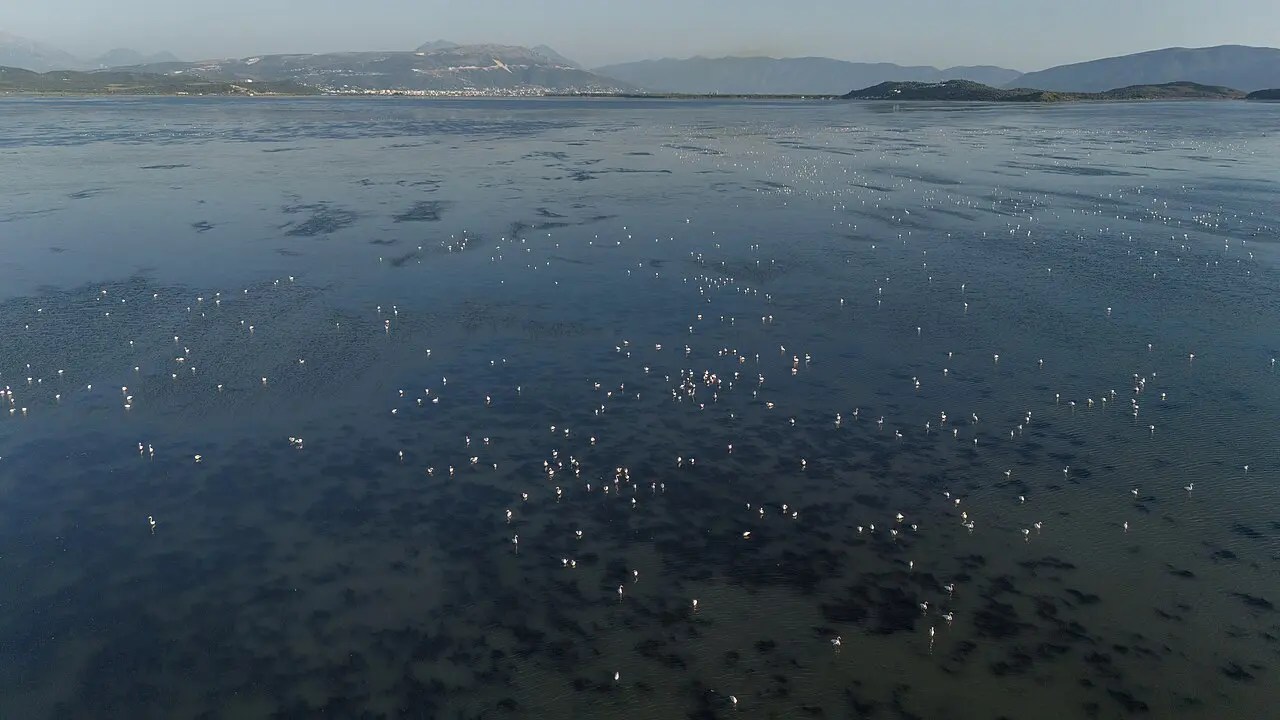
It’s been 100 days of the “Flamingo Protests” testing whether Albania’s European future will protect the environment.
Protestors say what started out as a local protest against an area being developed to create a tourist destination has now evolved into a national issue testing if environmental protection, public involvement and rule of law can stand up to luxury tourism and large scale development?
Where did it begin?
Early this year, in May, equipment rolled onto the Pishë Poro-Nartë protected area, located within the greater Vjosa delta. This strip of coastline is home to over 200 bird species and more than 70 are endangered. Birds migrate through this section of coastline to travel between Africa and Europe. There is very little wild coastline remaining in the Mediterranean.
Government officials referred to it as "a technical study" prior to an environmental assessment. However, the evidence presented a much different picture.
Heavy machinery worked inside the protected area for several days, blocking the entire connection between the Narta Lagoon and the ocean. In doing so, bulldozers damaged the flow that maintains balance in the salt levels in the lagoon, provides oxygen for fish, etc. Flamingos, Dalmatian Pelicans and nesting Turtles depend on the food chain maintained by this flow. Scientists would eventually warn that additional damage could cause ecological collapse. Much of what was destroyed; wetland, dune, forest, three EU priority habitats, may take years to restore.
It does not appear that the actions taken by the government constituted a genuine environmental assessment. Government claims vs. reality created distrust in those responsible for protecting Albania’s nature. Additionally, it exposed a bigger question: Who decides Albania’s development?
Local residents attempted to stop the destruction when they realized what was occurring. Private Security and barbed wire prevented them from stopping it and their attempts were caught on camera. International attention was given to these images by the end of May. Nightly protests in Tirana followed. They continue to this day.
Resorts versus Joining the EU:
The heart of this debate revolves around a 2024 law that allows previously protected areas to be open to luxury tourism and/or infrastructure projects; which directly conflicts with EU environmental laws. From the beginning, the EU opposed this law and repeal of this law has since become one of the requirements Albania must meet before membership is granted.
On June 17th, the European Parliament supported the protestors in saying that there needs to be an immediate moratorium on issuing any new permits and construction within protected areas until this law is repealed. Vjosa-Narta is currently the most direct example of how an applicant country for membership will treat EU laws when there is significant investment at stake.
What Albania Stands To Lose Or Prove:
After 100 days, the government has done nothing to repeal this law nor abandon this project. Protestors have successfully transformed a local environmental issue into a national issue about what type of country Albania wishes to be.
There are two options for Albania. Either maintain a form of governance where environmental law and public participation play second fiddle to investments or demonstrate that environmental protection, meaningful public participation and economic growth do not conflict; as they should in a modern democracy.
Albania does not need to repeat many mistakes other Mediterranean coastal regions have already experienced. For a country developing an economy based upon tourism, a wild lagoon represents one of the few resources that cannot be restored once it is lost.
The lagoon inlet was temporarily reopened. The flamingos remain for now. How long they will remain after day 200 will rest on a decision yet to be made by the government.
Image: Flamingos at Narta Lagoon, Albania. Arbenllapashtica / Wikimedia Commons, CC BY 4.0.
 Falah Mousa