Falah Mousa
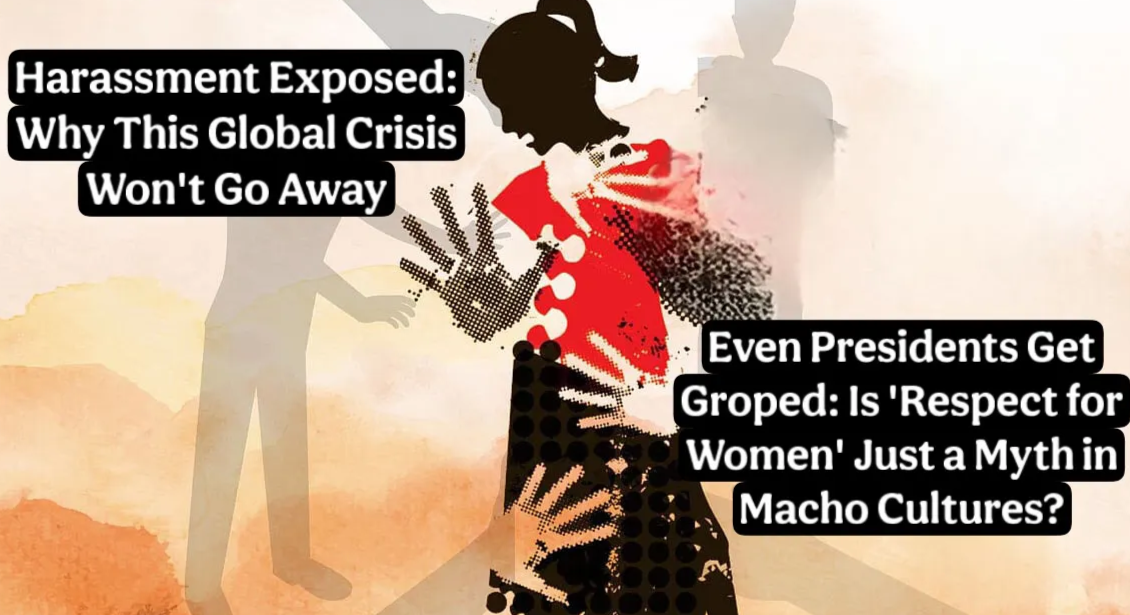
Even Presidents Get Groped: Is 'Respect for Women' Just a Myth in Macho Cultures?
On November 4, 2025, during a routine public walkabout in Mexico City's historic center, a visibly intoxicated man approached President Claudia Sheinbaum, the country's first female leader, and groped her breast while attempting to forcibly kiss her, as captured in viral video footage. Security quickly intervened, and the assailant, identified as a 45-year-old local resident with no prior criminal record, was taken into police custody. Sheinbaum, undeterred, promptly filed charges for sexual harassment and assault, emphasizing that no one is above the law and vowing to use the incident to push for stronger protections against gender-based violence.
This brazen act has reignited a fierce national debate in Mexico, where over 10 women are murdered daily in femicide cases, and street harassment remains rampant despite ongoing feminist movements like “Ni Una Menos” (Not one [woman] less).
Worldwide, this incident underscores harassment as a pervasive, insidious plague that transcends borders, cultures, and status; dismissing it as isolated ignores the systemic rot. According to UN Women, nearly 1 in 3 women worldwide have experienced physical or sexual violence, with public figures like Sheinbaum joining a grim list that includes U.S. politicians, European leaders, and activists in India and the Middle East who face similar violations.
Critics argue that lax enforcement, victim-blaming, and patriarchal norms perpetuate this cycle: Why do we normalize "drunken mistakes" when they strip women of dignity? In countries like Mexico, where machismo culture often excuses male aggression, such events highlight how harassment isn't just personal; it's a tool of oppression that silences women in power and deters others from leadership. Yet, progress is uneven; while Mexico's government has introduced apps and safe zones for reporting, global efforts like the #MeToo movement have waned, leaving billions vulnerable. It's time to call out the hypocrisy: If even a president isn't safe on her own streets, what hope for everyday women? This isn't just Mexico's problem; it's a worldwide failure demanding zero-tolerance policies, education reform, and accountability for perpetrators everywhere.
Beyond public spaces, harassment infiltrates professional environments, turning workplaces into arenas of fear and inequality that undermine productivity and human dignity. Recent global surveys reveal that approximately 23% of workers worldwide have experienced some form of violence or harassment during their careers, with sexual harassment disproportionately affecting women. (https://open.unaids.org/sites/default/files/2024/ILO-2022-2023.pdf)
According to data from various studies, 38% of women and 14% of men report encountering sexual harassment at work, often manifesting as unwanted advances, inappropriate comments, or quid pro quo demands that exploit power dynamics. (https://www.nsvrc.org/ending-sexual-assault-and-harassment-workplace/).
This isn't merely anecdotal; it's a systemic issue fueled by inadequate policies and cultures that prioritize hierarchy over safety. In the United States, for instance, 78% of sexual harassment claims are filed by women, and broader discrimination affects 91% of the workforce, including bullying that impacts 30% of employees. (https://www.eeoc.gov/data/sexual-harassment-our-nations-workplaces).
Globally, the International Labour Organization (ILO) highlights that psychological violence is the most prevalent form, but women face heightened risks of sexual harassment, with over 75% of workers in some regions reporting at least one incident of workplace violence in their lifetimes. (https://unstats.un.org/unsd/demographic-social/meetings/2024/iaeggs-20241203/3.A3_ILO.pdf).
Younger generations, like Gen Z, are witnessing this crisis firsthand—52% have seen harassment occur to colleagues in the past five years, compared to lower rates among older workers, signalling that the problem persists despite awareness campaigns. (https://www.traliant.com/resources/state-of-workplace-harassment-report/).
The economic toll is staggering: Harassment leads to higher absenteeism, reduced job satisfaction, and turnover costs that burden companies and economies alike.
In Europe, 31% of working women have faced sexual harassment, escalating to 42% for those aged 18-29, often in male-dominated industries where victim-blaming silences reports and protects perpetrators. (https://eige.europa.eu/newsroom/news/sexual-harassment-work-more-common-we-think?language_content_entity=en).
Critics decry how corporate inaction, such as weak investigations or retaliatory measures against whistleblowers, perpetuates this cycle, turning offices into toxic environments that disproportionately hinder women's career advancement and contribute to the gender pay gap.
Even in sectors like healthcare, where trust is paramount, up to 62% of workers experience workplace violence, including harassment, underscoring that no industry is immune. https://www.who.int/tools/occupational-hazards-in-health-sector/violence-harassment
As we move further into 2025, with statistics showing rising risks, organizations must prioritize comprehensive training, anonymous reporting mechanisms, and cultural shifts to dismantle these barriers. https://3plusinternational.com/tackle-the-risk-of-workplace-sexual-harassment/
Failing to address workplace harassment isn't just a moral lapse; it's a professional and economic sabotage that demands urgent, global accountability to foster truly inclusive environments.
Support Our Work
If you find our content valuable, please consider supporting our mission through a donation. Your contribution helps us continue providing high-quality analysis and insights.
Donation Options:
If you enjoy my work and would like to support it while helping me stay energized, I’d be deeply grateful for a coffee.
https://buymeacoffee.com/falahmousa
Thank you sincerely for your kindness and consideration.
PayPal: falahmousa@gmail.com
Scan PayPal Payment:

 Falah Mousa