9 September 2026 · Falah Mousa
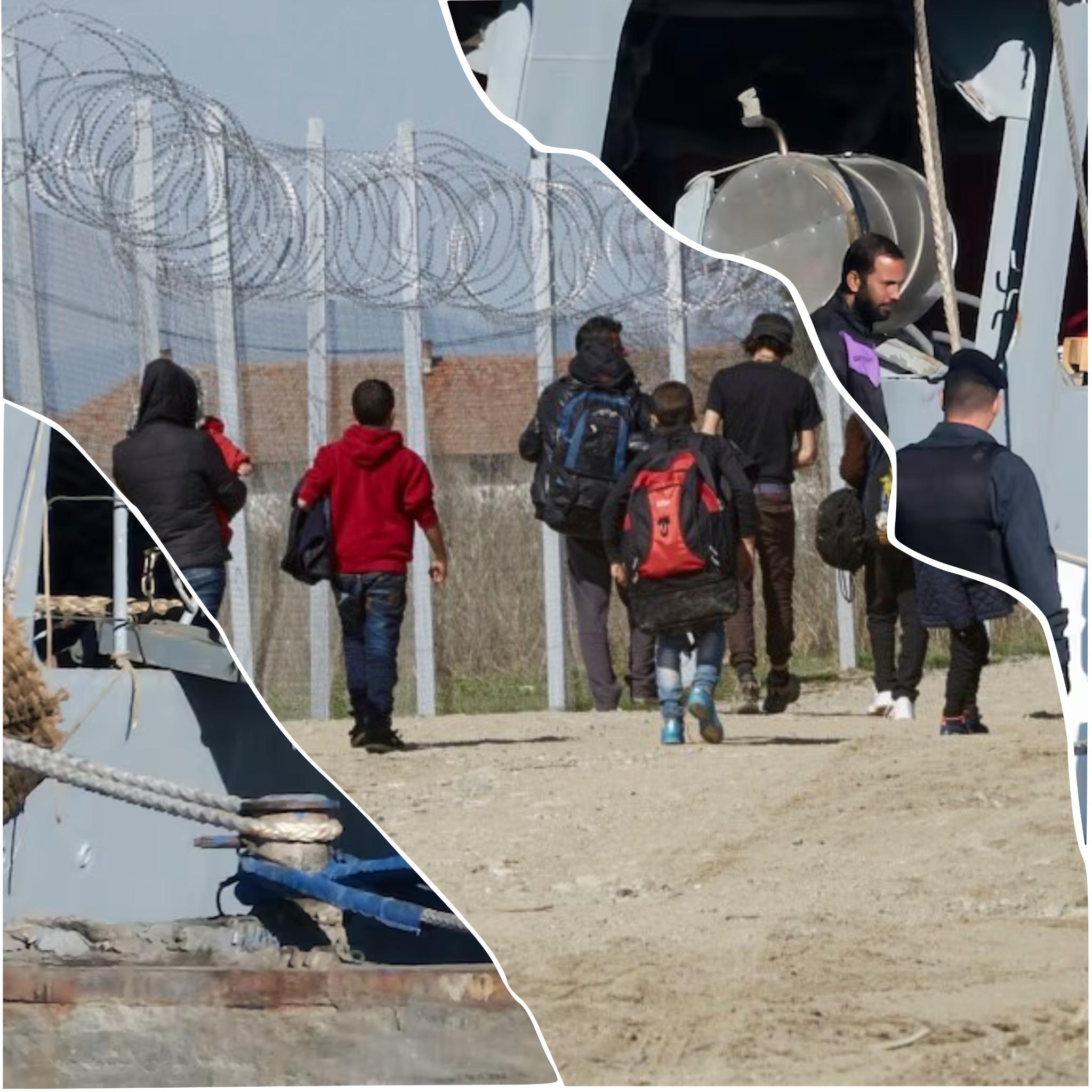
Western European governments want to create “Return Hubs” outside of EU. The Western Balkans has been considered; however, talks have not resulted in any identified host countries so far.
In Copenhagen last week, (September 4) representatives from Germany, Austria, Denmark, Greece and the Netherlands met to discuss establishing centers for processing migrants. The goal is to agree to establish these centers in third countries in 2026. Denmark expects to begin sending migrants back to other countries by late 2027. “We expect to reach an agreement with third countries during 2026,” said German Interior Minister Alexander Dobrindt. The next meeting is scheduled to take place in Munich in September (internazionale.it, Five European nations seek deals to send migrants out of the EU. 4 Sep. 2026).
If established, the “Return Hubs” will serve as a center where individuals can be detained until such time as they may be deported. Detention could occur if someone’s asylum claim was denied. According to the provisional deal between the Council and the European Parliament on an EU law regarding the processing of migrants within an EU member state, a migrant could be held in a detention facility prior to being deported to another country, or the migrant could be sent directly to the designated country. Therefore, deportation could result in relocation to a country which is not that individual’s native land.
The EU legislation is still under consideration and requires final approval. On June 1, negotiators concluded an agreement. Members of Parliament voted on the position of the Parliament on June 17. At present, the official tracking page of the European Parliament indicates that the regulation is pending the position of the Council. Therefore, the regulations have not entered into effect. European Parliament
Supporters of the initiative believe that once deportation orders have been issued, those subject to the order should actually leave. A recent report from Eurostat indicated that approximately 108,475 non-EU nationals received a deportation order from an EU country in the first three quarters of 2026. Approximately 34,550 non-EU nationals were removed from the EU and sent back to their respective countries. This number represents an increase of 8.1 percent over the same period last year. (Eurostat, Returns to third countries up by 8% in Q1 2026. 30 June 2026).
The Balkans have gained prominence due to existing infrastructure. An investigation published by Prishtina Insight in August identified approximately forty migration centers located throughout the Western Balkans. Fifteen were either constructed or renovated using EU funds after 2015. Space for approximately six thousand people existed in Serbia, while space for roughly two thousand six hundred people existed in Bosnia and Herzegovina. The numbers refer to reception centers, asylum centers and detention centers; each type has a separate function. (prishtinainsight.com, “Return Hubs” for Migrants Anticipated in Balkans for “Era of Deportations”. 26 August 2026).
Albania currently houses what is believed to be one of the most well-known examples of an EU member state transferring aspects of its migration activities to a third country. The agreement between Italy and Albania was finalized on November 27, 2023. Italy originally intended to process certain asylum applications at centers established on Albanian territory. Although several court rulings prohibited early transfers from Italy to Albania, in March 2025 Rome amended the regulations governing the use of centers on Albanian territory; centers could now detain people who were transferred from Italy while awaiting deportation. (Associated Press, Italy approves new decree to use Albanian migration centers as repatriation hubs).
Cost is an additional consideration. By 3 August, according to El Pais over 600 migrants had already left Italian detention centers to go to Gjadër as part of the new function of the center. Only less than 100 of these migrants had been repatriated to their respective countries; all other migrants had gone back to Italy. The El Pais report cites official estimates by the Italian government at an estimated cost of €138 million per year. Balkan governments interested in similar deals are justified in asking what value they will obtain in exchange for the expenditure of such funds. (El País, El centro de deportación de migrantes de Italia en Albania sigue casi vacío por segundo año consecutive. 03 Aug. 2026).
Additionally, Albania has demonstrated that acceptance of one type of program does not imply automatic acceptance of any subsequent programs. On May 12, during a visit by Britain’s Leader of the Opposition Keir Starmer, Albanian Prime Minister Edi Rama declined a role in Britain’s planned return hubs. Likewise, in October Montenegrin Prime Minister Zdravko Krivokapic stated his office would not participate in Britain’s plans regarding migrant returns. This decision related solely to Britain’s proposals. (mina.news, PM’s Office: Montenegro will not accept migrants from Great Britain).
On the other hand, Serbia has agreed to collaborate with Austria and Hungary concerning deportations. On November 23, 2022, the three countries signed a Memorandum on Migration. Officially, this included cooperation to strengthen policing of borders and create a joint project for the forced removal of persons residing illegally in Serbia. (srbija.gov.rs, Memorandum on cooperation of Serbia, Hungary and Austria in fight against illegal migration).
In addition to collaboration with Austria and Hungary, Kosovo has established a separate agreement with the U.S. As reported by the AP, on June 6, 2025 Kosovo agreed to temporarily take in up to 50 individuals from the U.S. who were subject to deportation but were not citizens of Kosovo. The AP also noted that in December 1 individual had arrived under this agreement. (Associated Press, Kosovo receives first deported migrant from US under agreement with Trump administration).
Concerns exist among aid organizations operating in both Bosnia and Serbia pertaining to treatment of migrants, if greater numbers were to be deported to these two countries. In February 2025, Collective Aid reported that migrants were experiencing extended stays in detention facilities in both countries while enduring harsh conditions. Access to legal counsel and medical assistance were poor. Collective Aid cautioned that return hubs could result in larger scale implementation of these difficulties. (collectiveaidngo.org, Webinar on EU Return Regulation, Return Hubs and the Balkans: Detention and Deportation in Practice. 27 Feb. 2026).
Rules intended to protect migrants sent to a hub are outlined within an agreed upon EU document. Host countries are obligated to uphold basic human rights standards as defined by law including prohibition against returning an individual to a location where he/she/they would experience severe danger. Children without parents/guardians are excluded from hub agreements involving returns. When involved in return agreements beyond hubs, countries must outline alternative options available when returning is not feasible. Countries must also establish mechanisms for independent monitoring of compliance. Agreed legislative text, Article 17
It remains unclear how these rules will be implemented. On July 16, Council of Europe Human Rights Commissioner Michael O’Flaherty requested that the five governments review the potential risks associated with implementing a hub prior to proceeding. He suggested that an independent assessment process occur regularly along with the establishment of binding agreements enabling migrants to seek enforcement of their rights. O’Flaherty also advocated for transparency through publication of agreements and assessments so that national courts and legislatures may review and evaluate them. (Commissioner for Human Rights, Austria, Denmark, Germany, Greece and the Netherlands should put in place strict human rights guardrails in their plans for ‘return hubs’. Strasbourg 16 July 2026).
At present, the UN Refugee Agency has yet to review the specifics of the plan. In September, representatives indicated they would communicate with UNHCR and the International Organization for Migration. UNHCR reported that it had not received sufficient information regarding a proposal and therefore was unable to comment on aspects of the arrangements. (internazionale.it. see above).
Balkan governments should be cautious when considering the establishment of centres for people sent from other countries. Although hosting a small number of people is likely to provide some advantages should additional European funding improve local services, provide proper care and legal assistance, these benefits are subject to the terms of any agreement. The country that sends people away will see an immediate reduction in the number of people waiting to be removed, while the host country may face years of responsibility if removal proves impossible. The proposed rules allow the host country to become a person’s final destination; therefore, governments must assess the cost of people remaining as carefully as they assess the costs of operating a centre. Council of the EU using existing camps could make it easier for governments to establish agreements, however, shortages in legal assistance and asylum services raise doubts about whether some countries can manage this type of arrangement. Birn a limited agreement may be worth considering if funding covers all responsibilities and rights of people received can be enforced. Otherwise, there are uncertainties regarding the benefits to the host country and its duties towards the people it receives will be real and long lasting.
Prior to entering into a contract, Balkan Governments must determine what occurs when someone cannot be deported. Does the EU country that initiated the deportation assume responsibility for transporting the migrant back to their country or does the host country allow them to reside in their country? Which entity assumes financial liability if the funding ceases? What governmental body is liable if a migrant is subjected to unlawful detention? Which court can issue an order directing the release of a migrant? Will the host country have authority to deny future admissions when it is no longer capable of providing necessary services? And finally, what happens to the agreement if the host country becomes an EU member? These issues should be publicly disclosed prior to signing any agreements. A government accepting monies for establishing a temporary facility may find itself caring for individuals for years and taxpayers are entitled to know what this entails financially and what obligations will remain with whom.
 Falah Mousa