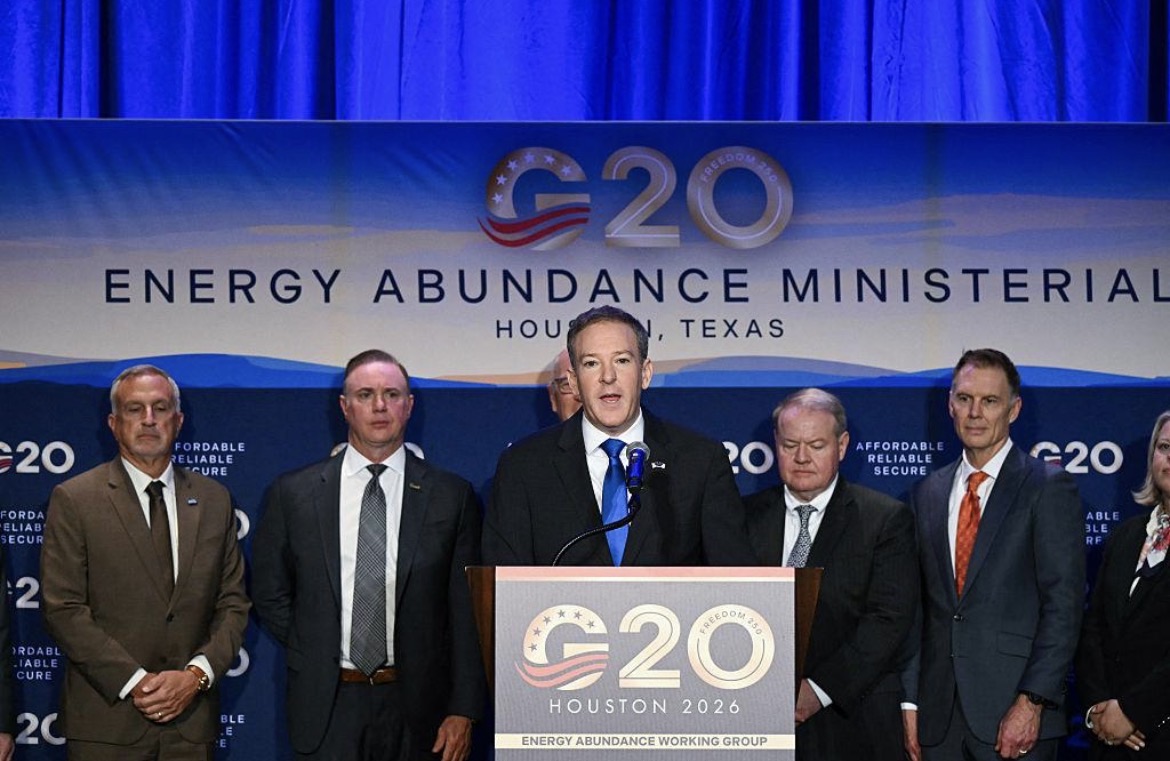
A damaged Saudi pipeline, restricted shipping through the Strait of Hormuz and a shortage of willing tankers have pushed energy security to the top of the G20 agenda in Houston.
Brent crude approached $110 a barrel after attacks disrupted Saudi Arabia’s East-West pipeline. The route had been carrying about four million barrels a day—roughly 4% of global supply—while allowing Saudi exports to avoid Hormuz. Saudi Arabia may now have to send more oil through the strait, where security risks and reduced vessel traffic remain serious concerns.
Shipping capacity is another constraint. The daily cost of hiring a tanker on the benchmark Gulf-to-China route reached $1.035 million on Monday, according to Baltic Exchange data cited by Bloomberg. That figure matters because releasing more crude will not help consumers quickly if there are too few ships prepared to collect and transport it.
A further coordinated release from strategic reserves may still be justified. The IEA’s 32 member countries already agreed in March to release 400 million barrels—the largest coordinated release in the agency’s history. But the IEA described emergency stocks as a temporary buffer. Reserves can limit immediate shortages; they cannot repair infrastructure, protect shipping routes or restore refining capacity.
The politics surrounding the Houston meeting are also difficult to ignore. Russian officials are attending despite continued European concern over Moscow’s war against Ukraine. Washington is exploring additional Venezuelan production, but new drilling projects take time and require stable legal, financial and operating conditions. Neither offers a quick answer to today’s diesel shortage.
Europe’s position also needs some perspective. Gas storage is lower than in previous years, but the European Commission said on 3 September that there was no immediate threat to EU gas supplies, citing greater diversification, more LNG import capacity and lower demand.
Meanwhile, the US Environmental Protection Agency used the G20 meeting to announce a major climate-policy reversal. The EPA finalized the repeal of most of the 2024 power-plant carbon standards and proposed removing the remaining requirements. Presenting this as part of an affordability strategy is questionable. The administration has stated that deregulation will reduce costs, but its own analysis projects that the proposed removal of the remaining standards would add 123 million metric tons of carbon emissions over the next decade.
The G20 should address the immediate supply shock. But another reserve release and more drilling agreements are incomplete answers. A credible energy-security policy must also reduce exposure to unstable supply routes, strengthen infrastructure and expand energy sources that do not depend on globally traded fuel.
 Falah Mousa