Author: falahmousa

  • The rebuilding trap in Gulf energy… Why the war will not end at the oilfield

    The rebuilding trap in Gulf energy… Why the war will not end at the oilfield

    12 April 2026 · Falah Mousa

    Image accompanying The rebuilding trap in Gulf energy… Why the war will not end at the oilfield

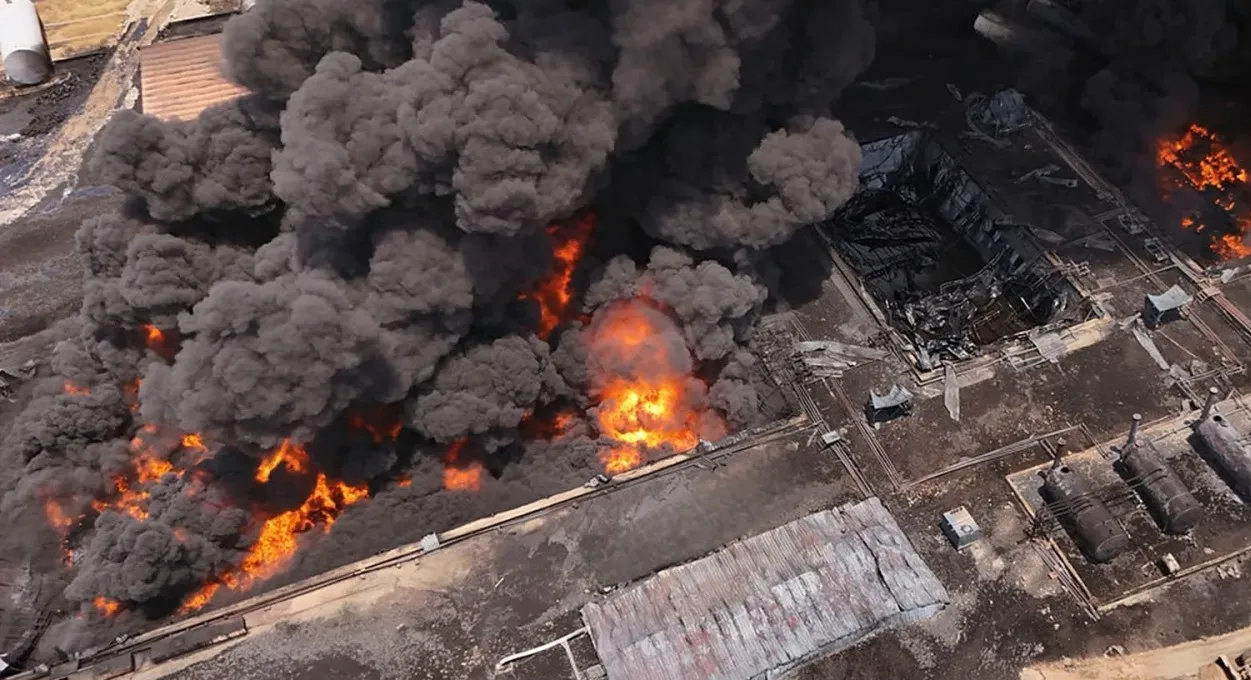
    The actual energy crisis in the Gulf region is no longer the bombing itself. The bigger issue, and one that could last for many months, is the very costly effort to restore export capability, oil/gas production, and investor/producer confidence.

    The global oil trading community is looking at Brent price movements; tanker movement; and the Strait of Hormuz. This is not where the global economic issue currently resides. The economic damage caused by American-Israeli war against Iran is due to damaged gas processing units, damaged refineries, damaged LNG trains; and years before they can be replaced. The current War in the Middle East has moved past how much higher prices will rise. A far greater concern is how much lost productive capability there will be for how long; and at what cost to a world economy that was already severely vulnerable to energy-related risks. Estimates suggest that restoring the ability of all energy facilities damaged during this conflict in the Middle East will require an estimated $25 billion or so. However, the real losses will occur as a result of lost exports; delayed investments; and lost capacity in areas previously considered stable.

    The scale of the issue is evident from the example of Qatar. Losses to Ras Laffan have significantly reduced the ability to produce LNG. Because large frame gas turbines for such a purpose are manufactured by few producers who also have significant backlog orders for those products, recovering fully to pre-war levels may be many years away. Thus, in energy, capital is instantaneously available but a country cannot instantaneously manufacture specialized equipment or mobilize engineering personnel to safely restart production. That is why the economic consequences of war in the Gulf is going to be based on much narrower global supply chain networks for critical energy-related hardware rather than on how much capital wealth exists among producing nations.

    That is when the direct loss due to physical destruction converts into a broader macro-economic shock. For every month of delayed delivery of LNG and/or crude oil, it creates tighter energy markets, alters global trade flows and increases the cost of energy well beyond the region. As a result, importers in both Asia and Europe are paying higher prices for their imported fuels, manufacturers are paying higher prices for their raw materials (feed stocks) and governments are facing additional rounds of upward inflation pressures at a time they are already carrying heavy debt burdens. The IMF’s warning that the US-Israel War on Iran will weigh on global growth reflects exactly this transmission mechanism: infrastructure damage in the Gulf does not stay in the Gulf.
    The strategic lesson is bleak. For years Gulf producers believed that scale itself provided security. They built spare capacity, export terminals and giant downstream complexes on the assumption that large systems could absorb shocks. But resilience in hydrocarbons is not measured only in barrels a day. It lies in domestic maintenance capability, access to critical imported equipment, contractor depth and the political ability to keep shipping lanes open. The producer with the largest balance-sheet may not be the producer that restores output fastest.

    The responsibility for this current crisis extends beyond the Iranian missile, drone attacks and acts of sabotage to take place throughout the region. It includes the actions of a White House which has used one of the world's most critical energy routes as a backdrop to unscripted statements, threatening language and brashness. In managing the conflict, the U.S. Administration has demonstrated alternate ultimatum and hasty tactical withdrawal styles; the U.S. has issued stern warnings regarding severe escalations followed by rapid moves toward an unstable cease-fire while restrictions on the Strait of Hormuz have remained in-place and broader terms of the war have yet to be resolved. This is not responsible statecraft; it is an irresponsible manner of managing crises that creates greater uncertainty among producers, buyers/importers, insurers and shippers. While nearly 20% of the world's normal oil trade passes through the Strait of Hormuz, when a country such as the United States demonstrates impulsive decision-making in regards to a matter of national strategic interest, that issue quickly evolves into a global economic shock to inflation, a global supply chain shock and a global loss of confidence.

    European leaders are urging caution and negotiation; however, they continue to be extremely circumspect and fractured as well as generally politically timid (especially relative to their clear moral and strategic language regarding other conflicts). It would appear much of Europe does not want to engage in direct confrontation with Washington, due in part to concerns of creating a greater rift with President Donald Trump during a time of tenuous transatlantic relations. As such, we find ourselves familiarly mired in a crippling double-standard; where rhetoric concerning international order exists, yet Europe's reluctance to take action is based upon its continued reliance upon the same U.S. for security. That quietness has economic implications. It sends a signal to markets there is no defined Western plan for reducing escalation; nor is there a viable or serious political coalition in place to shield global energy trade from the unpredictable decisions made by Washington; nor is there a stable European counter-weight to Washington when it decides to confuse coercion theater with policy. Thus, this crisis can be viewed as the culmination of both conflict in the Gulf and political cowardice in Europe as well as the lack of discipline in Washington regarding strategy.

    Iran, for its part, faces an even harsher reconstruction problem. Because of U.S.-led sanctions against Iran, fewer western-based contracting companies can operate in Iran. Thus, Iran has to rely more heavily upon Iranian (domestic) based companies and Chinese contractors for all aspects of the reconstruction process. While this approach could potentially ensure that repairs are made somewhat faster than if relying solely upon western contractors; it also limits Iran's ability to procure materials and equipment; limits the speed at which Iran can repair damaged infrastructure; and increases the likelihood that Iran will divert many of its limited resources away from new development projects toward restoring as much existing capacity as possible. This is where Iran finds itself currently. War-damaged assets in Iran are being destroyed by sanctions limiting the amount of international contractors available to restore those damaged assets.
    Markets remain obsessed with the next shipping disruption or the next move in crude futures. They should spend more time on turbine lead times, engineering capacity and the fragility of post-strike reconstruction. The biggest cost of this war may not be the oil and gas the Middle East cannot produce today. It may be the energy the world assumed would come back soon, but will not.

    Support Our Work

    If you find our content valuable, please consider supporting our mission through a donation. Your contribution helps us continue providing high-quality analysis and insights.

    Donation Options:

    If you enjoy my work and would like to support it while helping me stay energized, I’d be deeply grateful for a coffee.

    https://buymeacoffee.com/falahmousa

    Thank you sincerely for your kindness and consideration.
  • Washington Is Repeating Its Iraq Mistake in Iran: Removing a Regime Is Easy. Building a State Is Not

    Washington Is Repeating Its Iraq Mistake in Iran: Removing a Regime Is Easy. Building a State Is Not

    17 March 2026 · Falah Mousa

    **Washington Is Repeating Its Iraq Mistake in Iran: Removing a Regime Is Easy. Building a State Is Not**

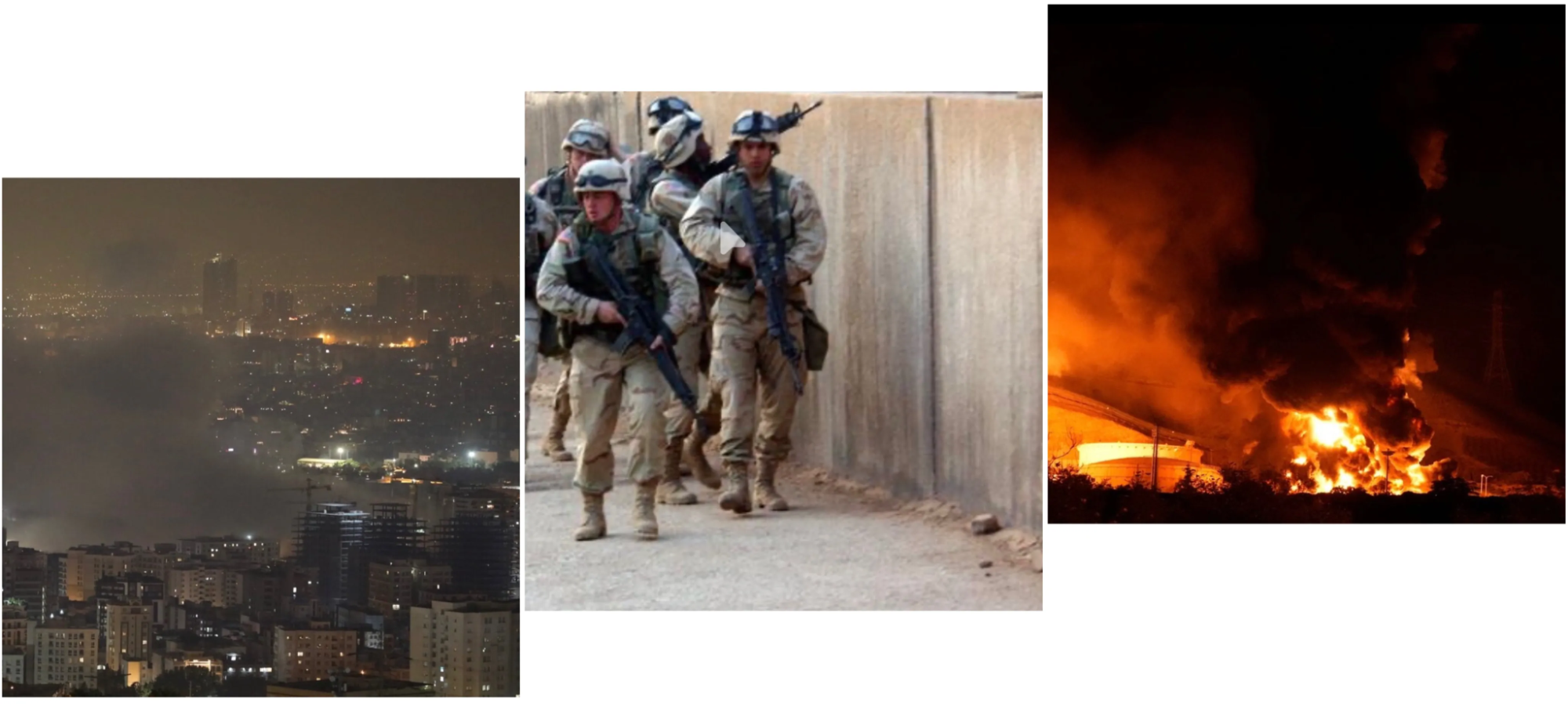
    Although the U.S. militarily "won" the Iraq War in 2003 by removing Saddam Hussein's regime and accomplishing most of what Washington set out to do, the U.S. politically lost this war. Over twenty years after the fall of Baghdad, Iraq is still largely under Iran's influence. Parties in Baghdad have close ties to Tehran and are key players in Iraq's government. Openly operating in Iraq, Iranian-backed militias are also embedded within Iraqi governmental institutions.


    For over $2 Trillion and at the cost of nearly 4,500 U.S. lives, the U.S. created, in Iraq, an unstable pro-Iranian environment instead of a stable pro-American one.
    That is a lesson that has been avoided by many for too long: winning the battle does not necessarily equate to winning the war.


    The biggest problem with the Iraq invasion was not the invasion itself but the lack of an appropriate post-invasion plan. By disbanning the Iraqi Army and disbanding the Baath party, Washington disestablished the institutions which had preserved the state. Instead of a new beginning, what occurred next was a void in power. And, as history has shown us time and again, voids in power are quickly filled by those entities best equipped, best armed and best prepared to fill that void.


    In Iraq, it was Iran that filled that void.


    For that reason, the potential consequences of the current conflict with Iran are so significant. The belief that removal of a regime (or destruction of it) through aerial bombing will result in the establishment of a better government is no strategy. The most well-organized and well-equipped force within Iran is not the opposition groups residing in exile, not the monarchists, nor those with influence from their allies in Washington; it is the Islamic Revolutionary Guard Corps.


    Thus, any effort to break the regime from outside could either leave its core power structure in place or push the country toward collapse. Neither outcome would bring stability.
    Therefore, the first major question remains unanswered: Who will govern Iran on the day after the collapse of the Regime?


    Washington may have desires regarding this issue, but desire is not a plan. Destruction does not equate to Governance.


    If the objective is to halt Iran's Nuclear Program, then the results to date provide more questions than answers. If the objective is Regional Stability, the repeated attacks have only increased the danger to the Region.


    As such, Iraq should have provided a clear lesson: Removing a Regime is significantly easier than creating a politically stable environment after the collapse of that Regime.
    It is there, and only there, that wars are ultimately lost. Wars are often won on the battlefield and lost in the vacuum that follows.


    President Donald Trump's stated objectives of the war with Iran are changing every day. Sometimes it is as if the objective is to be able to bring about regime change. The next time he said that his objective was simply to stop Iran from pursuing a nuclear program. Some days he wants unconditional surrender and some afternoons he indicates he may be willing to negotiate.


    By contrast, Iran's sole objective today is the survival of the regime. For over four decades that regime has poisoned the lives of Iranians, Lebanese, Syrians, Iraqis, Yemenis and many others. The regime's history of repressing its people, destroying their lives, lying to them and making short sighted decisions which contributed to igniting this war is well documented. Tehran now appears to want to expand the conflict to include Iran's surrogates in Lebanon, Iraq and other parts of the Middle East and provoke a global energy crisis to convert this conflict into multiple global crises.

    Support Our Work

    If you find our content valuable, please consider supporting our mission through a donation. Your contribution helps us continue providing high-quality analysis and insights.

    Donation Options:

    If you enjoy my work and would like to support it while helping me stay energized, I’d be deeply grateful for a coffee.

    https://buymeacoffee.com/falahmousa

    Thank you sincerely for your kindness and consideration.

  • Davos 2026: Can It Reunite the Global Economy?

    Davos 2026: Can It Reunite the Global Economy?

    20 January 2026 · Falah Mousa

    **Davos 2026: Can It Reunite the Global Economy? **

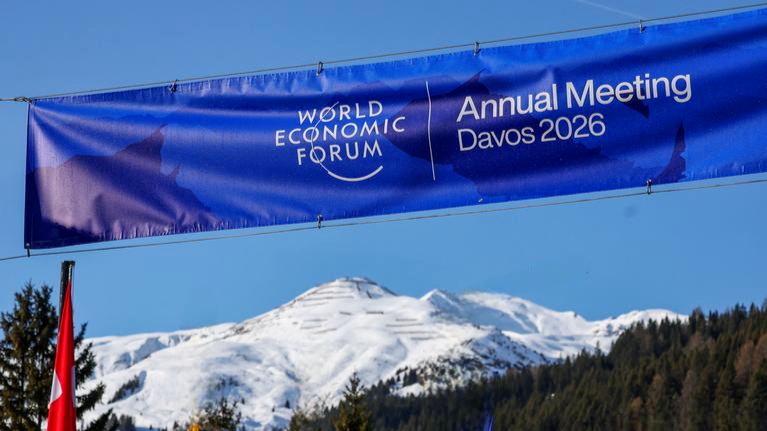
    In the midst of the worst geopolitical tensions since the Second World War, and the deepest economic and technological divisions, the World Economic Forum is today holding its 56 th annual meeting in Davos (19-23 January), under the theme "The Spirit of Dialogue."

    More than 3,000 participants from over 130 countries are attending this year's forum. It is the broadest edition in regards to political and economic representation since its inception in the 1970s. However, it also coincides with a "return of doubt" about the value of such large global events, and their capacity to really influence a world that is slowly getting, both politically and economically, divided and conflicted to an extent where even international principles and peace are being profaned, and where the rise of insular populist interests and the far right is leading to a progressive domination of the current global order.

    According to forum's president and chief executive, Borge Brende "dialog in times of uncertainty is an urgency", and he considers this year's event to be among the most critical in Davos' history. But I want to point out that the 2026 Edelman Trust Barometer shows that: “grievance has devolved into insularity. Seven in 10 respondents report unwillingness or hesitance to trust someone with different values, approaches to social issues, backgrounds, or information sources. This insularity is highest in developed markets, including Japan (90 percent) and Germany (81 percent). It is also higher than the global average in the UK (76 percent) and Canada (73 percent), and on par with the global average in the U.S. (70 percent). Insularity cuts across income, gender, and age, and affects both developing and developed markets”. Therefore,  WEF Interim co‑chair Larry Fink acknowledges the forum faces a crisis of legitimacy and urges participants to “listen to, not lecture” those affected by their decisions; he argues that prosperity must be judged by how many people can see it, touch it and build a future on it, not just by GDP or market caps.

    All in all, although these criticisms give Davos sound reasons for questioning its effectiveness, it is still certainly among the few places where we can have direct access to face-to-face dialogue between heads of state, corporate giants and civil-society personalities. The significance of the forum in 2006 should be determined by the degree at which it can move beyond the elitist networking and bottomless rhetoric into producing real policy innovations and cooperation, while orienting itself to its gathermaking "betters the state of the world".

    President Trump: Redrawing Geopolitical Balances:

    In this tense, fractured context the USA President Donald trump will be heading to Davos leading the most numerous American delegation to the international forum. It can be viewed as a double-edged sword. On the one hand it will attract huge media, political attention. on the other it will underline the contradiction with the Davos message (partnerships, multilateralism, affirmation of openness) and that of President Trump (more isolationalism, more using pressure and threats, doubts that the foundations of the rules based international order, founded upon international agreements and international law, are sound). President Trump is expected to arrive with an agenda that is not just about trade, but also a broader attempt to redraw the geopolitical balances (from Ukraine and Gaza to Iran and Greenland.

    Artificial intelligence that should be expected to hold a prominent seat to Davos 2026 and later is surely part of it. But it's not only about new technology and growth. Increasingly, AI becomes a fresh arena of competition among the great powers.

    States now connect artificial intelligence to security interests, to global domination, and even to questions of war and peace. At the same time, governments are resorting to a greater range of economic and political instruments to coerce rivals, such as tariffs, curtailing of investments, sanctions, and state subsidies. This indicates that many of the principals designated to safeguard core international governance are destabilizing.

    The plain truth being that the existing global order is not operating properly: when our trust in others is decreasing, we close the doors to each other's; hence, agreements and common rules disappear; even Leaders persisting in talking to each other's, transforming political uttering into deeds becomes a path filled with obstacles.

    Support Our Work

    If you find our content valuable, please consider supporting our mission through a donation. Your contribution helps us continue providing high-quality analysis and insights.

    Donation Options:

    If you enjoy my work and would like to support it while helping me stay energized, I’d be deeply grateful for a coffee.

    https://buymeacoffee.com/falahmousa

    Thank you sincerely for your kindness and consideration.