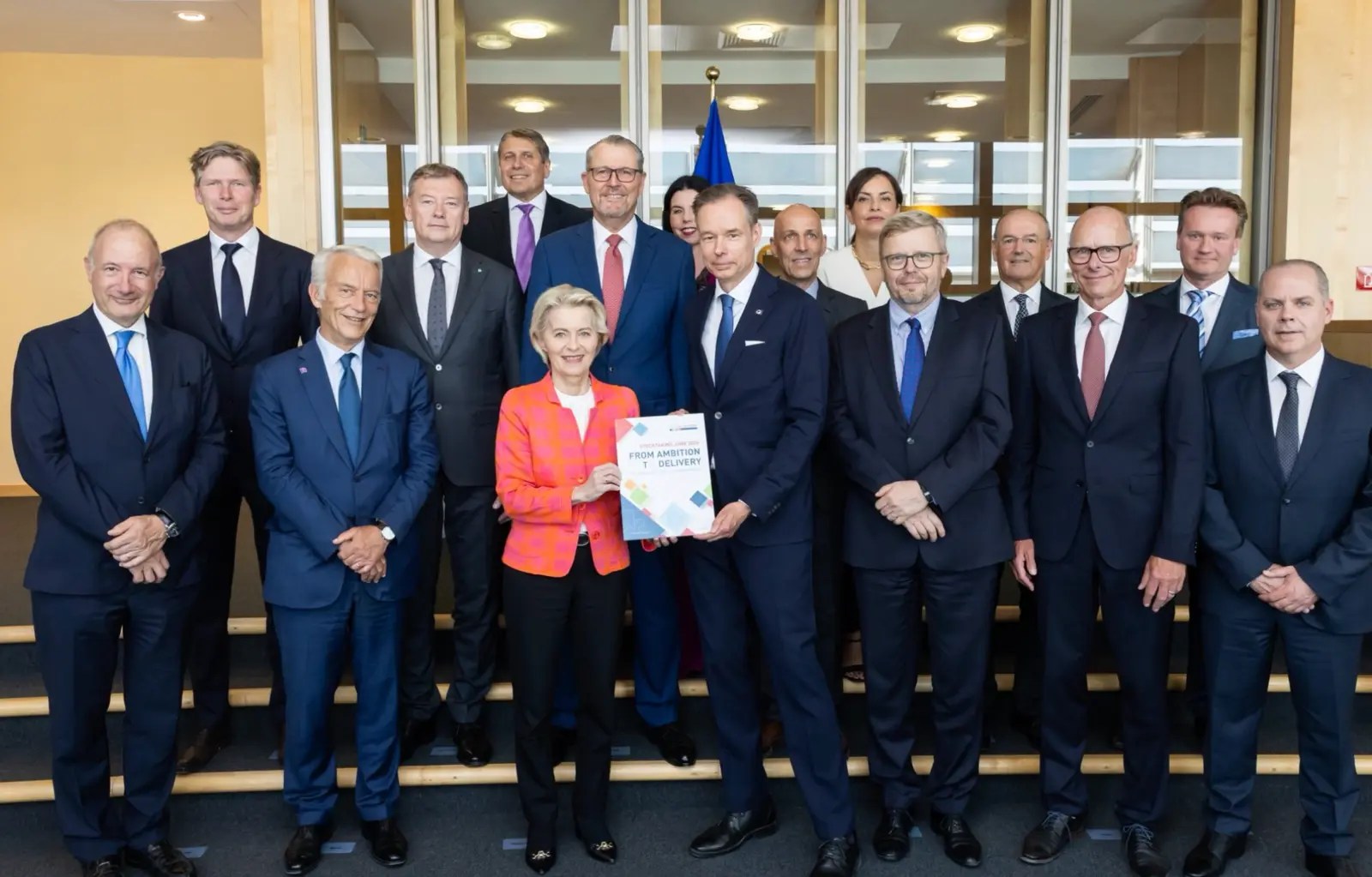
As part of its new economic stimulus package, the EU has plans to spend hundreds of billions of euro’s on Research & Technology as well as on European Industry. This includes the proposed "European Competitiveness Fund" which by itself would amount to approximately €234 billion. When combined with the funds for Horizon Europe, the total comes out to just under €409 billion.
BusinessEurope, which represents all the major industries in Europe (the largest business lobby), now is seeking representation from companies at the table that will determine priorities for the use of these funds. Trade Unions, small businesses and environmental organizations also believe they deserve a seat at this table. Governments, however, are concerned that Brussels will have too much authority over the allocation of funds. Additionally, Eastern European Countries are worried that large corporations located in Western Europe will receive most of the benefit.
All three parties possess valuable information regarding investment opportunities, available technologies as well as the challenges facing European Businesses. Therefore, it makes logical sense to seek input from them during discussions related to priorities. However, their role should be strictly limited; specifically if those companies later apply for funding from the same public resources.
This Board will provide recommendations for priority projects as opposed to selecting specific grant applications. While there is a distinction between the two, this still amounts to hundreds of billions of euro’s in public money. Therefore, clear definitions and limitations regarding who can influence decisions made at this level will be necessary.
Governments are talking increasingly about AI sovereignty. They want national AI systems, stronger control over sensitive data, and less dependence on foreign technology companies. But AI depends on cloud infrastructure, data centres, chips, software, networks, and large amounts of computing power. This creates an important question: can a country really control its AI systems if the cloud infrastructure behind them is largely controlled by foreign companies?
On 25 August 2026, UNDP announced a partnership with the DFINITY Foundation to test sovereign cloud infrastructure and decentralized AI with governments, civil society organizations, and UNDP country offices. The programme is experimental, but the policy question is important.
Governments are using AI in taxation, health services, migration, education, administration, and communication with citizens. Many of these services involve sensitive information, so governments need to know where their data is stored, who can access it, which laws apply, and what happens if access to a cloud provider is interrupted.
Europe is already confronting this problem. Much of its cloud market is controlled by non-European companies, even as the EU invests in its own AI industry. A country may control an AI model while still depending on foreign servers, chips, software, and cloud services.
For smaller countries, complete technological independence is neither realistic nor necessary. They can still protect sensitive public data, avoid dependence on one provider, require that systems can be transferred, and build enough technical expertise to understand what they are buying.
The UNDP initiative is interesting because it places this issue directly on the international development agenda. It does not provide a final solution, but it recognizes that access to AI is only one part of the problem.
A country may have access to advanced AI systems while remaining highly dependent on infrastructure that it does not control. That dependence may be acceptable in some areas, but it can become a serious weakness when it affects sensitive data, essential public services, or important government decisions.
For that reason, the debate about AI sovereignty needs to include the cloud. Governments do not need to own every part of the system, but they do need to understand who controls it, what legal and technical dependence exists, and what options remain if the relationship with a provider changes.
The goal should not be technological isolation. The real issue is excessive dependence.
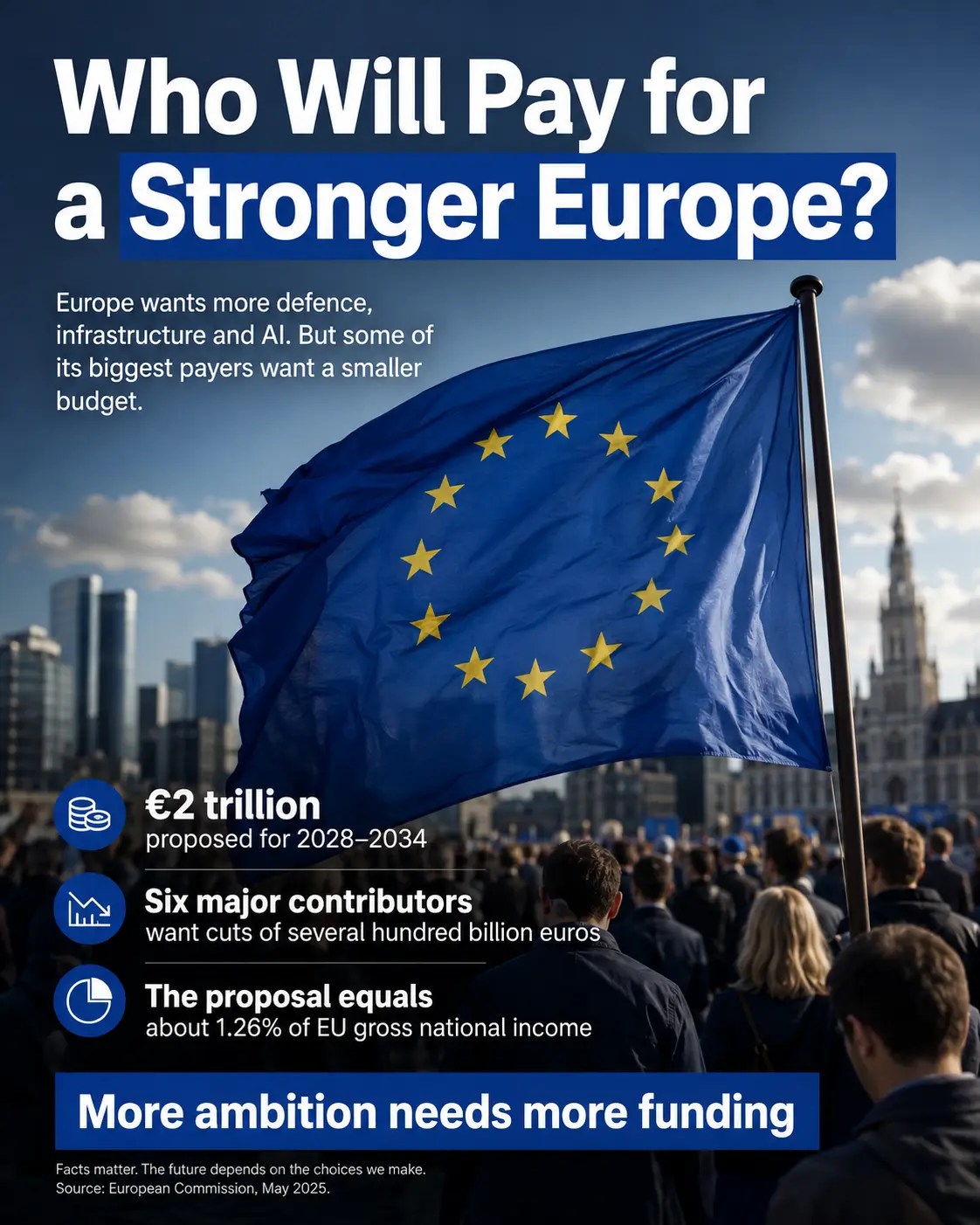
Six of the EU’s biggest net contributors are demanding major cuts to the Union’s next seven-year budget.
Germany, Denmark, the Netherlands, Austria, Finland and Sweden want the European Commission’s proposed budget of almost €2 trillion for 2028–2034 reduced by several hundred billion euros. Germany had previously pushed for roughly €400 billion in cuts.
There is a real argument for spending discipline. National governments are under pressure, public debt is high, and taxpayers are entitled to ask whether EU money is being used well.
The same six governments say Europe needs to spend more on defence, competitiveness, AI, and what they call sovereignty. They want Europe to become better able to protect itself, compete with the US and China, control its borders and respond to crises. Yet they also want every part of the proposed EU budget to contribute to cuts and reject new joint EU borrowing. That is where the debate becomes more serious than a dispute over numbers.
Europe cannot keep adding responsibilities at EU level while refusing to decide how those responsibilities will be paid for. Defence costs money. Industrial policy costs money. Energy infrastructure, technology, borders and research all cost money.
The Commission’s proposal is already only about 1.26% of EU gross national income over the seven-year period. Whether €2 trillion is the right figure is open to debate. But governments asking for a smaller budget should also explain clearly which ambitions they are prepared to reduce.
Cutting waste is sensible. Demanding greater European capacity while cutting the resources needed to build it is much harder to defend.
Europe needs an honest choice: decide what should be done together, then decide what governments are actually willing to pay for it.
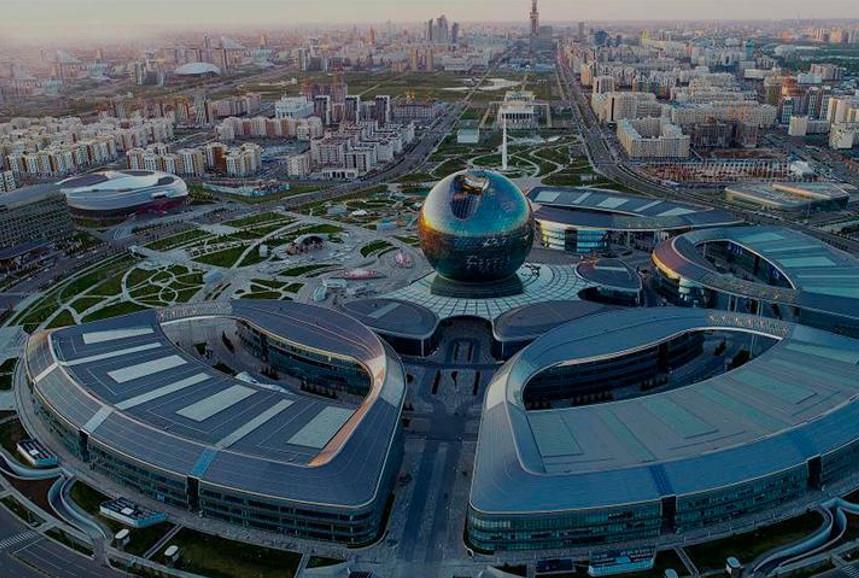
There is an interesting trend in Kazakhstan's capital markets. Foreign investors currently own approximately $5 billion in the form of Kazakh local governments' domestic debt. This year alone, the value of the Kazakh Tenge (the currency) has risen approximately 10 percent relative to that of the US Dollar. Furthermore, during a recent loan from China, Kazakhstan borrowed billions of Yuan through its direct participation with China's Bond Market. While these figures appear to be those of an economic or financial news headline; however, they demonstrate a broader perspective of how Kazakhstan will utilize its overall geopolitical strategy.
Kazakhstan is currently making it easier for foreign investors to invest in their local bond market. At the end of May, the Kazakh government implemented a Primary Dealer System to enable foreign investors (and foreign banks) to purchase and sell Kazakh Government Bonds. Additionally, Kazakhstan has started contact with global settlement services like Euroclear; which is one of the biggest global clearing houses for stocks, bonds and other types of security, to simplify the buying/selling process for international investors. Furthermore, Astana working on adding Kazakh government bonds to JPMorgan's GBI-EM Index; this would attract significantly greater numbers of international investors into the Kazakh government bond market. However, Kazakhstan is not unilaterally creating its financial system along the lines of western financial markets. Kazakhstan was also issuing a sovereign Panda Bond in China. A panda bond is a bond sold by foreign borrowers in China denominated in Chinese currency. The 3.4 Billion Yuan ($500 Million) was borrowed from foreign investors over 3 years at an interest rate of 1.9%, however investor demand exceeded double the offer size. Overall, it appears that the Governments of Kazakhstan are encouraging western/international investors to invest in their own government debt in Tenge, but also raise funds through direct lending from China's financial markets. Therefore, rather than rely upon only one source of capital, Kazakhstan will be able to draw funding from multiple resources. This is not a contradiction. It is Kazakhstan’s multi-vector foreign policy being applied to finance.
For years, Kazakhstan has tried to avoid becoming economically dependent on one external power. This is difficult because geography does not give Astana many easy choices. Kazakhstan shares a long border with Russia and an even more important economic relationship with China. Russia remains deeply connected to Kazakhstan’s trade and transport networks, while China is a major investor, customer, and source of infrastructure financing.
The West is also becoming more interested in Kazakhstan. Its oil, uranium, critical minerals, transport corridors and position between China and Europe give the country importance far beyond the size of its population. Financial markets now appear to be becoming another part of that relationship.
However, there's another side to the story. Investors are not investing in the Kazakh government bond for geopolitical reasons. Kazakhstan continues to offer competitive interest rates. Portfolio investment will be drawn into Kazakh Tenge-denominated assets with higher yields as a result of a strong currency. As we can see from this, this is a very real risk. Portfolio capital could potentially enter quickly, but it may just as easily exit quickly due to lower interest rates, a weaker currency, or other changes in the perception of regional risks. Therefore, attracting foreign funds is merely one step of many that the Republic of Kazakhstan must take to build a sustainable economy. It must create both a more liquid and more deep domestic financial system; one that can function properly regardless of how much enthusiasm international investors have. Thus, the reforms to the Kazakh government securities, making markets for these securities, and creating the necessary infrastructure to settle transactions are important beyond mere inflows this year.
The geopolitical aspect remains relevant. Countries like Kazakhstan are often portrayed as being forced to ultimately pick between Russia, China and the West. However, Kazakhstan is taking an alternate path. Rather than choosing one major financial center, Kazakhstan is developing relationships with multiple centers simultaneously.
Western investors obtain an easier avenue into the Kazakh government's debt, while China has a new sovereign borrower for its yuan-denominated bond market. As a result, Astana may have additional means through which to finance itself and also greater autonomy to make its own economic and political choices. This ability to be flexible is particularly valuable for middle powers positioned between two larger regional powers (Russia and China).
The bigger question is therefore not whether Kazakhstan is moving East or West. It is whether a country can protect its strategic autonomy by making several competing economic powers interested in its financial stability at the same time.
If Kazakhstan succeeds, its bond market may tell us something important about how smaller and middle powers will manage geopolitical competition in the years ahead.
A New Caspian Cable Could Change Europe’s Energy Strategy
For decades, Central Asia has exported a long list of natural resources including; crude oil, refined petroleum products, natural gas, uranium, and aluminum. However, due to geographic isolation (Kazakhstan and Uzbekistan are landlocked) and historical control of Northern transportation corridors by Russia and the growing dominance of China to the East – all of these export options were limited. Now, a joint effort among the governments of Kazakhstan, Uzbekistan and Azerbaijan may provide Central Asia with additional opportunities — this time through the exportation of electricity West across the Caspian Sea.
The name of the new project is the Caspian Green Energy Corridor, which will connect the electrical grids of Kazakhstan, Uzbekistan and Azerbaijan and eventually send renewable electric power via high-voltage subsea cables across the Caspian Sea. Additionally, it is expected that the longer-term goal is to extend the corridor through the South Caucasus states and connect to the proposed Black Sea cable toward Romania and onto the European Electricity Grid. Specifically, the Asian Development Bank stated the purpose of the corridor is to enable renewable electricity generated within the Caspian Region to travel directly to Europe.
This is no mere statement of intent. As reported earlier, Kazakhstan, Azerbaijan and Uzbekistan signed a Memorandum of Understanding regarding the project in May 2024. Then, during COP-29 held in late-November 2024, Presidents of each nation signed a Strategic Agreement to move forward on developing the project. Following this, the three National Electrical Utility companies signed an agreement establishing the institutional framework for cooperation. Further to this agreement, the Asian Development Bank (ADB), along with the Asian Infrastructure Investment Bank (AIIB) entered into agreements to fund feasibility studies. On April 16th, 2026, Kazakhstan officially ratified the agreement establishing the institutional framework for cooperation. Currently, CESI (Italian Engineering Company) is engaged in conducting feasibility studies.
However, it is essential to not give the impression that construction on the cable has already commenced. The project remains in a technical-commercial-institutional preparatory phase. There are many issues still to be addressed; financing, ownership of the cable, electricity prices for transmission across borders, connecting the respective grids in each participating nation, meeting environmental standards for both terrestrial and marine environments and designing a reliable high voltage underwater cable. The technical-assistance program funded by the ADB is anticipated to continue until 2027.
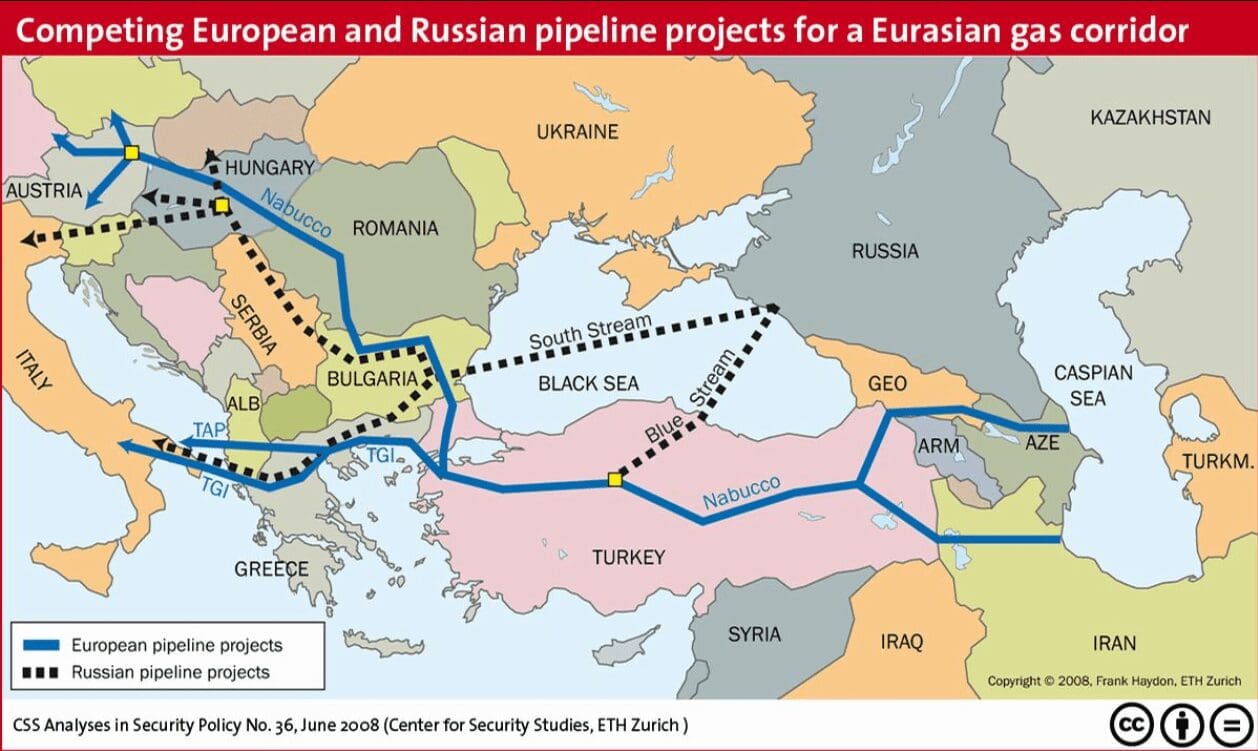
In terms of geopolitics the implications are far greater than just the volume of electricity transmitted. If successful, Kazakhstan and Uzbekistan will obtain a new western energy route that circumvents Russian territory. Furthermore, when combined with the existing Trans-Caspian transport corridor supported by the EU – namely railways, port facilities and logistics connections linking Central Asia, Azerbaijan and the Black Sea region to Europe – this corridor represents a key component of EU trade, energy security and increased resilience in regional supply chains. According to current statements made by EU officials they view this overall Trans-Caspian corridor as "strategically" important.
There should be no confusion that neither Russia nor China are losing significant influence in Central Asia due to this initiative. China will continue to invest in Central Asia and maintain strong trading relationships with these nations. Similarly, Russia will remain an important player in Central Asia; both economically and geo-politically. What is significant about this opportunity is that Kazakhstan and Uzbekistan will potentially possess an additional outlet to deliver their goods to various markets. Historically speaking; access to multiple outlets to reach different markets generally provides countries with better negotiating leverage than reliance on a single conduit for delivery.
Azerbaijan can expect significant benefits from this potential success. Already an exporter of Caspian gas through the Southern Gas Corridor to Europe, if electricity from Central Asia transmits through Azerbaijan it could further establish Baku as an oil/gas provider as well as an electrical transmission hub between Central Asia/Europe. Presently, the European Commission views Azerbaijan (along with Georgia and the Black Sea) as an integral part of a broader energy connectivity strategy.
Additionally, Europe possesses its own compelling interest in supporting these types of connections. Since raising its relationship with Central Asia to a strategic partnership level, the EU has invested substantial funds into facilitating transport and communications between Europe/Asia across the entire region; including critical minerals and energy-related projects. During its first EU-Central Asia Summit held in Brussels in June 2019, the European Union pledged €12Billion towards supporting global gateway related projects and continues to support development of the Trans-Caspian transport route as an alternative path between Europe and Asia.
Yet despite its significant promise; this is clearly not one simple cable. Rather it constitutes a series of interconnected national electrical grids and inter-country agreements and massive amounts of associated infrastructure extending from Central Asia through Azerbaijan and Georgia before crossing the Black Sea and reach the European Union. Each segment must function technically and commercially. Even more importantly each segment must operate politically. The Black Sea submarine electricity link which will be required for completion of the corridor is also still in early stages of planning — thus ultimately dependent upon completion of infrastructure that has yet to be built.
Therefore, regardless of whether it relates to renewable energy; the most important issue here is; if Central Asia successfully establishes a direct route for transmitting electricity to Europe; what degree of impact would this have on its political and economic dependency on Russia and China?
In 2025, the EU imported €559 billion worth of goods from China and exported approximately €200 billion worth of goods to China. Although this gap is significant, the greater concern lies beneath it.
Chinese manufacturers have built massive production capacity. China’s domestic market cannot absorb everything they produce, so more goods are pushed into global markets, and Europe has long been one of the most important destinations for these products. For European consumers, this can mean lower prices, but for European business and industry, the picture is very different.
The European Commission is asking European businesses to invest significantly in clean technologies, battery production, electric vehicles, advanced manufacturing and industrial security. At the same time, many Chinese competitors operate on a much larger scale and benefit from strong state support. This creates a clear contradiction in EU policy.
On one hand, the EU advocates for “strategic autonomy” and a stronger industrial base. On the other hand, it remains heavily reliant on imports of manufactured goods, machinery, components and technology from China. Tariffs on certain Chinese imports may slow those imports, but they will not resolve the fundamental problem.
If Europe wishes to maintain its status as an industrial power, it must determine which industries are strategically important, where dependence on another country becomes dangerous, and which sectors it is willing to protect or rebuild. Until then, “strategic autonomy” will continue to be little more than an empty phrase used by politicians.
The ultimate question is straightforward: How much industrial dependence will Europe tolerate before that dependence becomes a political liability?
Readers looking for Falah Mousa books and eBooks can now find the current catalogue together on Lulu. The collection includes literary fiction from the Balkans as well as nonfiction on hatred, social division, demographic change and international affairs.
Borrowed is a literary novel set in Albania. It follows Luan Kodra, a bookseller in Tirana, through isolation, financial hardship, injustice, love and a growing uncertainty about his own identity and perception of reality.
The Silence That Remains is a novel set in post-war Kosovo. It follows three people trying to document testimony and unresolved crimes while confronting the political interests that benefit from silence.
The Anatomy of Hate: Breaking the Cycle of Division
The Anatomy of Hate examines how hatred develops through fear, identity, political manipulation and systems of exclusion, and considers practical approaches to reducing its social impact.
Global Depopulation: Impacts, Challenges, and the Path Forward
Global Depopulation examines falling birth rates, ageing populations, shrinking workforces and the economic and geopolitical consequences of demographic decline.
The US-Iran war will likely drag on for months and “could easily continue into 2027,” Richard Fontaine, a security expert at the Center for a New American Security (CNAS), warned. He said it could shift between “hot and cold war indefinitely,” as new strikes disrupt the fragile pause and draw more countries into the conflict.
Saudi Arabia joined US strikes on Wednesday. A drone then hit a US-owned gas facility in Egypt, while the Houthis threatened to charge tolls in the Red Sea. Washington also sanctioned Chinese companies for transporting Iranian oil, as Tehran reportedly relies on Chinese technology and Russian tactics to attack US bases.
Fontaine warned that the US needs to contain the war’s spread. Yet officials told Bloomberg that even if a deal is reached, low-level fighting could continue.
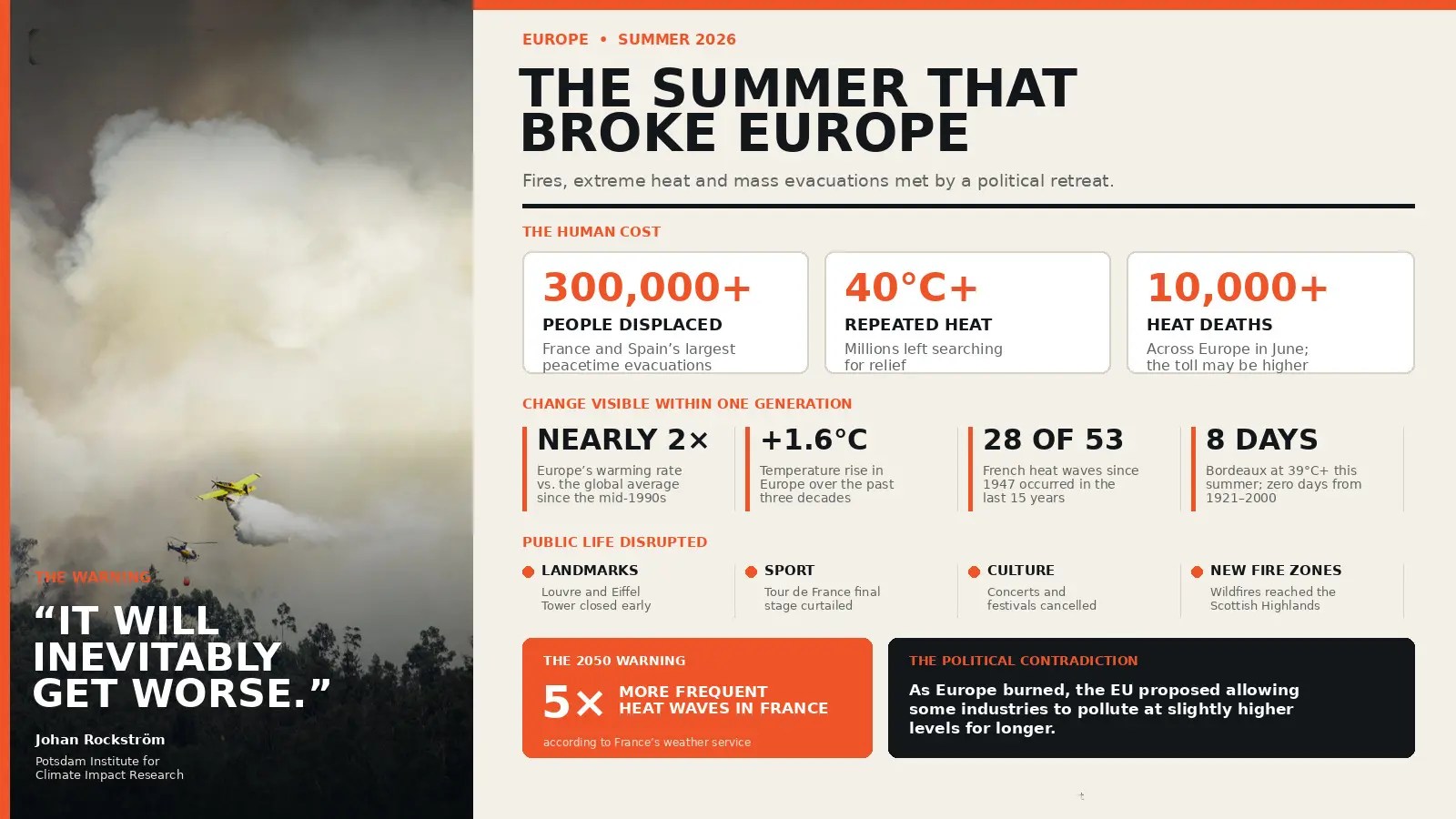
Ravenous fires. Searing heat waves. Freakish storms. The summer of 2026 has already shattered meteorological records in several European countries. On a continent that has endured centuries of upheaval, including ruinous wars and deadly pandemics, it is now the weather that has Europe feeling close to a breaking point.
More than 300,000 people have been displaced in France and Spain. The largest fires in the modern histories of both countries have led to their largest peacetime evacuations. Millions of Europeans have been left desperate for relief as temperatures repeatedly rise above 40 degrees Celsius.
The heat has forced the cancellation of concerts and festivals, curtailed the final stage of the Tour de France, and led the Louvre Museum and the Eiffel Tower to close early. Wildfires have even reached the Scottish Highlands. Across Europe, at least 10,000 heat-related deaths were recorded in June alone, and the real number may be higher.
The most frightening part of Europe’s terrible summer is that scientists believe this is only the beginning.
“It will inevitably get worse,” warned Johan Rockström, a Swedish scientist and director of the Potsdam Institute for Climate Impact Research in Germany. “It will get worse and worse and worse, to the point where, I’m afraid, we’ll be passing the limits of adaptation.”
Europe is not alone. Heat waves have affected Australia and Japan. Floods have devastated Kenya and Angola. A snowstorm paralysed parts of the eastern United States. Developing countries in the Southern Hemisphere remain more vulnerable than wealthy European countries to the effects of a changing climate.
Yet no other continent is warming as rapidly as Europe. Since the mid-1990s, it has been heating at nearly twice the global average.
This is partly the result of changing weather patterns and partly because of Europe’s proximity to the Arctic. As Arctic snow and ice disappear, they expose darker surfaces that absorb more heat instead of reflecting it.
Europe is now more than 1.6 degrees Celsius warmer than it was three decades ago. The change is happening quickly enough to be noticed within a single generation. France has recorded 53 heat waves since 1947, but 28 of them occurred during the past 15 years.
The figures from Bordeaux show how sharply conditions are changing. Between 1921 and 2000, the city never experienced a day with temperatures at or above 39 degrees Celsius. This summer, it has already happened eight times, even though the season is not yet halfway over. Bordeaux is now also being threatened by wildfire.
Europe may still be cooler than many other parts of the world, but it is poorly prepared for extreme heat. Many buildings lack air-conditioning and were designed to retain warmth. Forests and coastal areas are often covered by the same types of trees, making them dangerously vulnerable when heat and drought create the conditions for large fires.
Europeans are being forced to confront the reality of a changed climate more directly than before. The question is whether governments will respond with measures serious enough to reduce future warming and protect people from conditions that can no longer be avoided.
Spain’s prime minister, Pedro Sánchez, has declared a “climate emergency” and called for a state pact to address the problem structurally. In France, President Emmanuel Macron has promised to replant the pine forests destroyed by fire in the Gironde region with different tree species that are better suited to a hotter and drier climate.
“The situation we’re in today is the most difficult we’ve ever recorded, the most difficult since World War II,” Macron said.
But there is a clear contradiction between the urgency of these warnings and Europe’s political direction. While fires spread and temperatures rise, the European Union is considering changes that would allow some industries to continue polluting at slightly higher levels for longer.
Net-zero policies, which aim to balance the greenhouse gases released into the atmosphere with those removed, have become political targets. Critics, particularly on the right, describe them as a luxury Europe cannot afford during a period of weak economic growth and energy insecurity.
Yet the climate crisis does not disappear because cutting emissions is politically or economically difficult. Europe is already paying through evacuations, deaths, destroyed forests, disrupted public events and communities placed under constant threat.
Europe cannot determine the global climate outcome by itself. Much depends on China, the United States and energy-hungry developing countries. The American president has even dismissed climate change as a “con job.” But dependence on the actions of other countries does not remove Europe’s responsibility to reduce its own emissions and prepare its societies for what is coming.
The planet is already on course to miss the central target of the 2015 Paris Agreement: keeping global warming well below two degrees Celsius above preindustrial levels. France’s national weather and climate service has warned that heat waves could become five times more frequent by 2050.
The past few months may be remembered as the summer that broke Europe. The greater danger is that, when Europeans look back from the middle of the century, the summer of 2026 may seem relatively mild.
Germany’s Leadership Crisis Is Becoming Europe’s Problem:
After years of political hesitation, coalition disputes and economic uncertainty, Friedrich Merz presented himself as the leader who would restore discipline, clarity and direction to Germany. He was supposed to bring order back to Berlin and confidence back to Europe.
That promise is already under pressure. According to POLITICO Europe, discussion is growing inside conservative circles about whether Merz can remain in office, while his party prepares for difficult elections in September. Opposition is normal in any democracy. What matters here is how quickly the criticism has begun and how familiar it sounds.
Merz is now being accused of many of the same weaknesses he used against his predecessors: lack of direction, internal division and an inability to turn strong language into clear policy.
Germany’s problem is not one bad decision. It is the combination of three major pressures that are becoming harder to manage at the same time.
The first is economic:
Germany’s industrial model is under strain. Energy remains expensive. Manufacturing is weaker. Chinese competition is increasing, especially in sectors such as cars, batteries, machinery and clean technology. For years, Germany relied on a simple formula: relatively cheap energy, strong exports and access to major global markets.
That formula no longer works as it once did.
The second pressure comes from the populist right:
Public anger over migration, housing, wages, energy costs and declining living standards has created a large political market for parties offering simple answers. The more mainstream parties appear divided or slow, the stronger that market becomes.
Merz promised to stop this movement by sounding tougher and more decisive. But borrowing the language of the populist right does not automatically weaken it. Sometimes it only confirms that the populists were setting the agenda all along.
The third pressure is internal:
Merz must manage disagreements inside his coalition and within the conservative movement itself. These divisions concern public spending, defence, taxation, migration and Germany’s role inside the European Union.
That is difficult enough in stable conditions. It becomes much harder when economic growth is weak, voters are angry and every major policy decision creates a new political cost.
The deeper issue, however, goes beyond Germany. When leadership in Berlin weakens, the European Union slows down.
Germany is central to nearly every major European debate: defence spending, industrial policy, the EU budget, energy security, relations with China and the future of European competitiveness.
A distracted or unstable German government does not simply create a domestic problem. It creates a European vacuum.
France cannot fully replace Germany. Brussels cannot force national governments to agree. Smaller member states cannot carry the political and financial weight needed for major decisions.
Europe often speaks about strategic autonomy, sovereignty and global influence. But those ambitions still depend heavily on political stability in Berlin.
That is why the Merz crisis matters. Germany still has economic power, institutional strength and political influence. But leadership is not measured by size alone. It requires a government that can make decisions, defend them and persuade the public that the costs are necessary.
If Merz cannot do that, then Germany’s problem will not remain German.
Europe’s largest economy may once again become the reason Europe cannot move.