Author: falahmousa

  • Iraq’s Climate Crisis: Can Global Action Stop the Collapse?

    Iraq’s Climate Crisis: Can Global Action Stop the Collapse?

    Falah Mousa

    **Iraq’s Climate Crisis: Can Global Action Stop the Collapse?**

    Abstract

    Iraq is grappling with a multifaceted crisis driven primarily by the adverse impacts of climate change. Rising temperatures, prolonged droughts, and erratic rainfall patterns have exacerbated water scarcity, leaving the nation’s once-thriving agricultural sector in disarray. Climate change has not only disrupted ecosystems but also heightened the risk of waterborne diseases by overwhelming Iraq’s fragile water and sanitation infrastructure. The resulting contamination has led to outbreaks of cholera and other diarrheal diseases, disproportionately affecting vulnerable populations, particularly in displacement camps and informal settlements.

    Furthermore, climate change has become a powerful driver of internal displacement and social instability. As rivers dry up and agricultural yields plummet, rural communities are being forced to abandon their homes in search of water and livelihood opportunities. This mass displacement has intensified competition for limited resources, such as water and arable land, often escalating into violent disputes, particularly in southern Iraq. The country now faces a vicious cycle: environmental degradation and resource scarcity fuel displacement and conflict, which in turn strain urban centers and exacerbate existing governance challenges.

    Beyond its borders, Iraq’s climate crisis has triggered migration flows, with more Iraqis seeking refuge in Europe and neighbouring countries. These patterns highlight the global implications of climate change, as countries worldwide must grapple with the challenges of accommodating climate refugees.

    This article explores the interconnected dimensions of Iraq’s climate crisis; waterborne diseases, displacement, resource conflicts, and migration, and underscores the urgent need for coordinated action. Iraq’s experience serves as a cautionary tale, illustrating how climate change amplifies existing vulnerabilities, destabilizes nations, and creates ripple effects far beyond national borders. Addressing Iraq’s crisis will require a multifaceted approach, combining national reforms, international cooperation, and climate resilience strategies that could serve as a model for other regions grappling with similar challenges.

    Introduction

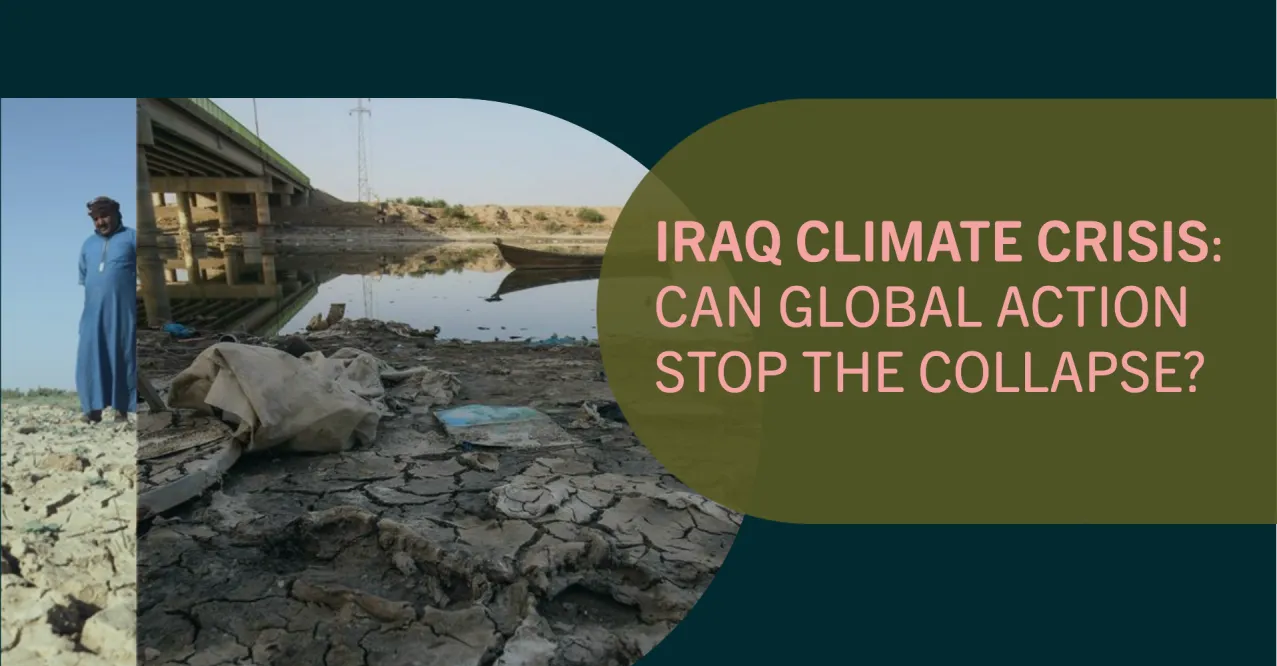
    Iraq is facing a critical juncture where the impacts of climate change intersect with its historical challenges of water management and environmental conservation. Once celebrated as the heart of ancient Mesopotamia, the region's vibrant rivers and fertile lands are now under immense strain. The steady decline in water resources, coupled with rising temperatures, has created an urgent crisis affecting public health, agriculture, and livelihoods across the country.

    Over the past century, the flow of the Tigris and Euphrates rivers has diminished significantly, with some estimates suggesting a reduction of up to 90%. This dramatic decrease is attributed to multiple factors, including upstream water usage by neighbouring countries, inefficient water management systems, and the growing effects of climate change. As a result, Iraq faces severe challenges in ensuring reliable access to clean water for its population. Prolonged droughts and desertification have not only reduced agricultural output but also contributed to increasing rural-to-urban migration, straining urban centers that are already facing limited resources.

    The environmental challenges confronting Iraq are among the most severe in the world. According to the United Nations, the country is ranked as one of the five most vulnerable to the impacts of climate change. Rising temperatures, which are increasing nearly twice as fast as the global average in some areas, are exacerbating water scarcity, reducing biodiversity, and creating conditions for more frequent and intense sand and dust storms. The shrinking Mesopotamian marshes, a UNESCO World Heritage Site, exemplify the devastating effects of these changes. These wetlands, once a thriving ecosystem supporting local communities and wildlife, have seen significant degradation, with far-reaching consequences for Iraq’s environment and economy.

    This crisis has profound implications for Iraq’s future. Water scarcity is undermining the agricultural sector, which has historically been a cornerstone of the nation’s economy and food security. Communities dependent on farming and fishing are losing their livelihoods, forcing many to migrate in search of better opportunities. These population movements, combined with limited access to essential resources in urban areas, are creating new challenges that require urgent attention and innovative solutions.

    Iraq is actively pursuing strategies to address these challenges. Investments in sustainable water management, the adoption of modern irrigation techniques, and the promotion of renewable energy are some of the measures being implemented to build resilience against climate change. Efforts to restore the marshlands, introduce drought-resistant crops, and encourage community-based water conservation practices are also gaining momentum. However, these initiatives require greater support from international partners to ensure their success on a larger scale.

    Displacement Within and Beyond Iraq: A Climate Migration

    Climate change has become a powerful driver of both internal and external migration in Iraq, creating a ripple effect that extends far beyond the country’s borders. Rising temperatures, prolonged droughts, and reduced water availability have rendered vast areas of farmland uninhabitable, particularly in southern Iraq. Farmers and agricultural workers, unable to sustain their livelihoods, are abandoning their lands and moving to urban centers or informal settlements, where access to clean water, sanitation, and basic services remains scarce. An estimated 1.2 million Iraqis currently live in informal settlements, often deprived of essentials such as clean water, electricity, and healthcare.

    According to the Internal Displacement Monitoring Centre (IDMC), water scarcity in provinces such as Basra, Muthanna, and Dhi Qar has triggered large-scale displacements, with dire consequences for urban centers already grappling with limited resources. The cyclical nature of this crisis is evident: displacement increases pressure on urban infrastructure, exacerbating water shortages and sanitation challenges. This, in turn, drives more people into overcrowded informal settlements, creating fertile ground for disease outbreaks and social unrest.

    Faced with these dire conditions, many displaced individuals are seeking refuge beyond Iraq’s borders. Countries in Europe and the Middle East have witnessed a steady rise in asylum applications from Iraqis, with climate-related displacement and the collapse of rural economies among the most cited reasons. These migration patterns underscore the global dimensions of Iraq’s crisis, as climate-induced displacement becomes both a national and international challenge, requiring coordinated responses from regional and global stakeholders.

    Waterborne Diseases: A Growing Threat

    Iraq’s water sanitation infrastructure has been overwhelmed by rising demand from displaced populations and urban expansion. Decades of war, economic sanctions, and neglect have further eroded the capacity of public health systems. Contaminated water sources serve as breeding grounds for waterborne diseases, including cholera, typhoid, and diarrheal diseases, which account for a significant portion of preventable deaths.

    In recent years, cholera outbreaks have become increasingly frequent. Major outbreaks were reported in 2015, 2017, and 2022, with southern provinces such as Basra being the hardest hit. According to the World Health Organization (WHO), up to 70% of infant deaths in some regions are linked to diarrheal diseases stemming from poor water quality and inadequate sanitation. This crisis is particularly pronounced in camps for internally displaced persons (IDPs), where overcrowding and limited access to clean water and hygiene facilities create ideal conditions for the spread of disease. For example, a 2023 report by the Norwegian Refugee Council (NRC) highlighted that displaced communities in southern Iraq face a 40% higher risk of contracting waterborne illnesses compared to non-displaced populations.

    Conflict Over Resources

    As Iraq’s natural resources dwindle, competition over water and arable land has escalated into a critical challenge, fuelling tensions that often lead to localized conflicts. The scarcity of water in particular has become a flashpoint for disputes, especially in southern provinces where agriculture is heavily dependent on the Tigris and Euphrates rivers. With reduced water flow due to upstream damming in neighbouring countries, rising temperatures, and inefficient water use, Iraq’s rural communities are struggling to meet even their basic needs. Tribal clashes over water rights have become more frequent, with some disputes escalating into violent confrontations that destabilize entire regions.

    A report from the United Nations Assistance Mission for Iraq (UNAMI) reveals that water-related disputes now account for 60% of local conflicts in rural areas, particularly in provinces such as Basra and Maysan. These disputes often arise during the planting and harvesting seasons when farmers vie for access to limited irrigation water. The situation is exacerbated by outdated irrigation techniques that waste significant amounts of water, further intensifying competition.

    The strain on resources is not limited to rural areas. Urban centers, already under pressure from increasing migration and population growth, are witnessing rising tensions as water shortages disrupt daily life. In Baghdad and Basra, residents face regular water cuts, and the lack of clean drinking water has sparked protests demanding government action. These resource-based grievances often intertwine with socio-economic frustrations, creating fertile ground for broader unrest.

    The ramifications of these conflicts extend beyond their immediate localities. Violent disputes over resources disrupt agricultural production, leading to food shortages that further compound Iraq’s socio-economic vulnerabilities. Additionally, the instability in rural areas contributes to secondary displacement, as families forced out by conflict seek refuge in already overburdened cities. This, in turn, heightens competition for resources in urban areas, perpetuating a cycle of instability.

    Ultimately, Iraq’s conflict over resources reflects a deeper environmental and socio-political crisis. Without urgent interventions to improve resource management, foster collaboration among competing groups, and adapt to the realities of climate change, these localized disputes threaten to evolve into larger, more systemic conflicts that could undermine the country’s long-term stability. The path forward requires coordinated action at the local, national, and international levels to mitigate the effects of resource scarcity and create sustainable solutions for Iraq’s future.

    Towards Collective Solutions: A Path to Stability and Renewal

    Addressing Iraq’s climate crisis requires a holistic and collaborative approach that unites local, national, and international efforts. At the national level, Iraq has taken important steps, such as adopting a National Adaptation Plan focused on sustainable water management, modernized irrigation systems, renewable energy investment, and community-based solutions like rainwater harvesting and drought-resistant crops. However, these initiatives alone cannot resolve the scale of the crisis. Iraq’s challenges demand robust international support in the form of technical expertise, financial aid, and long-term partnerships to ensure the successful implementation of adaptation measures. Programs aimed at restoring the Mesopotamian marshes, conserving ecosystems, and improving infrastructure must be scaled up to address both immediate needs and long-term sustainability.

    The global community also has a responsibility to address the broader implications of Iraq’s crisis. Climate change is not confined to national borders, and the displacement, migration, and resource conflicts arising from Iraq’s environmental challenges have far-reaching effects. Developed nations, international organizations, and NGOs must work together to provide resources and advocate for global climate action. Support for Iraq’s adaptation efforts not only serves a humanitarian purpose but also contributes to regional and global stability.

    Failure to act decisively will not only push Iraq into an irreversible ecological and humanitarian disaster but will also destabilize an already fragile region, with consequences that could ripple across the globe. This is not just a crisis for Iraq to solve; it is a worldwide call to action. The question is no longer whether the world can afford to save Iraq but whether it can afford not to. The time to act is now, before Iraq becomes a grim symbol of what happens when the world turns a blind eye to the realities of climate change.

    References:

    1- ScienceDirect. “Waterborne Diseases and Wastewater Treatment in Iraq”. 2024.

    2- Norwegian Refugee Council (NRC). "Displacement and Water Scarcity in Iraq.". 2023.

    3- United Nations Assistance Mission for Iraq (UNAMI). "Resource Conflicts in Iraq.". 2024.

    4- WaterPeaceSecurity.org. “Water challenges and conflict dynamics in Southern Iraq”. 2022.

    5- Internal Displacement Monitoring Centre (IDMC). Reports on Climate-Induced Displacement in Iraq.

    6- Iraq Ministry of Water Resources. National Adaptation Plan (2023).

    7- International Organization for Migration. “The Silent Enemy: How Climate Change is Wreaking Havoc in Iraq”. 2023.

    Support Our Work

    If you find our content valuable, please consider supporting our mission through a donation. Your contribution helps us continue providing high-quality analysis and insights.

    Donation Options:

    PayPal: falahmousa@gmail.com

    Scan PayPal Payment:

    PayPal payment QR code

    Bank Transfer:

    IBAN: BE33967579583046

    SWIFT/BIC: TRWIBEB1XXX

    Bank Name and Address: Wise, Rue du Trône 100, 3rd floor, Brussels, 1050, Belgium

    Contact: fm@falahmousa.com
  • Profiting from Poverty: The Dark Truth Behind Fake Job Platforms and Arrogant Employers

    Profiting from Poverty: The Dark Truth Behind Fake Job Platforms and Arrogant Employers

    Falah Mousa

    How Fake Companies and Job Platforms Exploit Struggling Job Seekers in Need and Crisis

    **Profiting from Poverty: The Dark Truth Behind Fake Job Platforms and Arrogant Employers**

    The modern digital environment has intensified the visibility of unemployment as a widespread and persistent challenge. With economic uncertainty affecting large segments of the global population, job seekers increasingly rely on online platforms in search of meaningful work. Yet, behind these legitimate efforts to find employment lies a troubling reality: exploitation by fraudulent companies, anonymous recruiters, and deceptive job platforms that target those already in precarious situations.

    The digital job market has expanded far beyond traditional platforms like LinkedIn, ReliefWeb, and Naukri. A growing number of lesser-known websites now flood the internet, each promoting remote or international roles with promises of high salaries and flexible conditions. These platforms often present themselves as the key to stable, well-paying employment, particularly for those facing economic uncertainty. Simultaneously, countless online ads offer free certification programs and training courses that claim to boost employability. Together, these messages cultivate a powerful sense of hope among job seekers; a hope too often exploited.

    Yet, beneath these shiny promises often lies an ugly truth. Many job listings are ghost postings, carefully crafted by scammers who prey on desperation. Fake companies demand upfront payments under the guise of administrative fees or training costs, exploiting unemployed individuals who can barely afford daily essentials. Such sinister operations offer no real jobs; just prolonged misery and financial losses.

    But who exactly benefits from this misery? Behind the veil of these exploitative schemes stand shadowy operators skilled in deception. Often, these perpetrators reside far beyond legal reach, shielded by anonymity provided through digital platforms. Their targets are clear; vulnerable individuals, desperate enough to cling onto any thread of hope. They craft their offers convincingly, mimicking reputable companies, using polished language and sophisticated websites designed to trap the unemployed, who may lack sufficient digital literacy to identify fraud.

    The exploitation does not end there. Even supposedly legitimate employers often participate, albeit differently, in degrading job-seekers. The application processes have become a humiliating ritual; endless forms demanding intrusive personal information, repetitive personality tests, absurd situational questionnaires, and unnecessary multiple interviews. These endless, degrading processes rarely reflect genuine evaluation. Instead, they amplify employers' power, reinforcing a perverse sense of superiority over candidates already burdened by vulnerability and desperation.

    Such practices not only reflect institutional arrogance but also systemic exploitation. Employers justify excessive screening with arguments about competition and 'selectivity,' yet rarely pause to consider the human cost. Applicants invest significant emotional, physical, and financial resources, only to be met with silence or automated rejections after months of hopeful anticipation.

    The tragedy deepens when these false opportunities reach those struggling the most financially, tricking them into paying for so-called “premium access,” “exclusive listings,” or fictitious certifications. The unemployed, already crushed under financial pressure, end up deeper in debt, entrapped in a vicious cycle of exploitation and disappointment.

    Consumer protection agencies and employment authorities urgently need to intervene. Better regulation, rigorous verification of job-listing platforms, and transparent hiring practices are critical to halting this exploitation. Meanwhile, job seekers must exercise heightened vigilance, scrutinizing job opportunities carefully, verifying legitimacy before committing personal information or money.

    In the end, this exploitation is not merely financial; it is profoundly emotional and psychological, a silent tragedy hidden behind countless hopeful clicks and empty promises. Each fraudulent opportunity robs victims of more than money; it destroys their confidence, self-respect, and sense of purpose. Dreams painstakingly built upon sincere ambitions are shattered with every scam, leaving emotional scars that linger long after financial losses have faded. Dignity becomes collateral damage in a ruthless game where livelihoods and self-worth are cruelly traded for profit. The mental toll exacted on job seekers is devastating, often manifesting in anxiety, depression, and chronic despair, further deepening the wounds inflicted by exploitative schemes. Until substantial protections and stringent oversight are firmly established, the unemployed will continue to fall prey to those who coldly exploit desperation, serving as a stark and urgent reminder that our society must fundamentally reform its approach to employment, digital accountability, and the essential preservation of human dignity.

    Support Our Work

    If you find our content valuable, please consider supporting our mission through a donation. Your contribution helps us continue providing high-quality analysis and insights.

    Donation Options:

    PayPal: falahmousa@gmail.com

    Scan PayPal Payment:

    PayPal payment QR code

    Bank Transfer:

    IBAN: BE33967579583046

    SWIFT/BIC: TRWIBEB1XXX

    Bank Name and Address: Wise, Rue du Trône 100, 3rd floor, Brussels, 1050, Belgium

    Contact: fm@falahmousa.com

  • The Cost of Conflicts: How Global Military Spending Eclipses Developmental Potential

    The Cost of Conflicts: How Global Military Spending Eclipses Developmental Potential

    Falah Mousa

    **The Cost of Conflicts: How Global Military Spending Eclipses Developmental Potential**In an era where humanity faces existential threats from climate change, burgeoning economic inequality, pandemics, pervasive food insecurity, and escalating political instability, the alarming rise in global military spending highlights our deeply misplaced priorities.

    In an era where humanity faces existential threats from climate change, burgeoning economic inequality, pandemics, pervasive food insecurity, and escalating political instability, the alarming rise in global military spending highlights our deeply misplaced priorities. The year 2023 saw military expenditures soar to a jaw-dropping $2.4 trillion, as reported by the Stockholm International Peace Research Institute (SIPRI). This staggering amount, marking a 6.8% increase from the previous year, highlights a relentless global arms race. This reckless focus on military spending instead of addressing humanitarian needs takes away essential resources from vital areas such as education, healthcare, and infrastructure, leading to ongoing neglect and underdevelopment that could ultimately threaten the survival of our civilization.

    This massive expenditure raises profound ethical and strategic questions: Why do nations continue to pour billions into weapons and warfare while millions of people lack access to basic necessities? How can we justify such an allocation of resources in the face of pressing global crises? The stark reality is that the money spent on military power is not just about national security; it also reveals deeper problems like political corruption, economic interests, and maintaining power imbalances.

    Consider the paradox: while countries amass arsenals capable of mass destruction, they simultaneously fail to address the existential threat of climate change, which poses a far greater risk to humanity. The opportunity cost is staggering. Each dollar spent on military hardware is a dollar not spent on clean energy, sustainable agriculture, or climate resilience. This diversion of funds exacerbates the vulnerability of communities worldwide, particularly in developing nations, where the need for sustainable development is most urgent.

    The Escalating Arms Race:

    The geopolitical landscape, marked by the Russian-Ukrainian conflict, has been a significant driver of increased military budgets. Russia's military expenditure surged to $109 billion in 2023, a 24% rise from 2022, and a dramatic 57% increase since the annexation of Crimea in 2014. This spending spree constitutes 16% of Russia's government budget and 5.9% of its GDP. Meanwhile, Ukraine, now the eighth-largest military spender globally, increased its budget by 51% to $64.8 billion, representing a staggering 58% of its government spending.

    These figures not only highlight the intense military buildup but also raise profound questions about the opportunity costs of such allocations. The resources funnelled into militarization could have been used to enhance economic development and foster peaceful relations between nations. Instead, the militarization has led to the recruitment of tens of thousands of citizens, stripping vital economic sectors of their professional capabilities and disrupting institutions due to the loss of a suitable workforce.

    Europe’s Defence Policy Overhaul:

    The repercussions of the Ukrainian war extend far beyond the immediate conflict zone. European countries have significantly revised their defence policies and budgets, collectively signalling a dramatic shift in the continent's approach to security. This overhaul marks a controversial departure from decades of restrained military expenditure, raising serious concerns about the future of European security and the potential revival of militarism across the region.

    New data from the Stockholm International Peace Research Institute (SIPRI) reveals a significant increase in military spending across Europe since early 2022, culminating in a total of €552 billion in 2023. This represents a 16% rise compared to 2022 and a dramatic 62% increase from 2014, when spending was €330 billion.

    Historically, many European nations have prioritized diplomatic and economic measures over military solutions, a stance deeply rooted in the continent's post-World War II commitment to peace. However, the perceived threats from an increasingly assertive Russia have prompted a re-evaluation of this stance. Countries like Germany, France, Italy, and Spain are ramping up their defence budgets, with Germany alone earmarking €51.8 billion for its 2024 defence budget and establishing a special fund of €100 billion to enhance defence policies and foreign relations.

    According to SIPRI, the military spending of the United Kingdom in 2023 was $74.9 billion, which was 7.9% higher than in 2022 and 14% higher than in 2014. The UK's military burden was 2.3% of GDP in 2023.

    France is dramatically increasing its military spending, with the 2024 budget set at €47.2 billion, reaching the NATO target of 2% of GDP. Over the next decade, France’s military budget will nearly double from its 2017 levels, reflecting a broader European trend towards increased military investments (politico.eu. February 15, 2024)

    The emphasis on defence spending raises critical questions about the allocation of these funds. There is a real danger that such an influx of resources could entrench powerful defence contractors and lobbyists, creating a military-industrial complex that prioritizes profits over peace. This shift could undermine democratic accountability, as decisions about war and peace become increasingly influenced by corporate interests rather than the will of the people.

    In light of these considerations, it is imperative to question whether Europe’s defence policy overhaul is a prudent response to current threats or a perilous path towards renewed militarism. Can Europe balance the need for security with the imperative to foster peace and stability? Will increased military spending achieve its intended goals, or will it merely entrench a cycle of fear and conflict?

    Asia’s Military Spending Soars to $595 Billion in 2023 Amid Regional Arms Race:

    In 2023, Asia's total military expenditure reached $595 billion, reflecting a 4.4% increase from the previous year and a significant 46% rise since 2014. The latest data from (SIPRI) reveals that China's military spending alone was estimated at $296 billion. This 6% increase from the previous year marks the 29th consecutive year of rising military expenditure for China. As the world's second-largest military spender, China accounts for 12% of global military expenditure and 50% of the spending in Asia and Oceania.

    This substantial investment underscores China's ongoing efforts to enhance the combat readiness and modernization of the People’s Liberation Army, significantly influencing the military spending trends of neighbouring countries such as Japan, Taiwan, and South Korea. According to the SIPRI report, since 2022, military spending in East Asia and India has continued to rise, driven primarily by China's regional influence.

    Military expenditures in East Asia grew by 6.2% in 2023, reaching $411 billion. Japan's military budget for 2023 was $50.2 billion, marking an 11% increase from 2022 and representing the largest year-on-year rise since 1972. This is part of Japan's extensive military build-up program, which aims to spend $310 billion from 2023 to 2027, averaging $62 billion annually. Similarly, South Korea's military expenditure rose by 1.1% in 2023 to $47.9 billion, with plans to allocate $253 billion from 2023 to 2027. Taiwan's military spending grew by 11% in 2023 to $16.6 billion, with substantial funds directed towards procuring F-16 combat aircraft and naval systems, accounting for 21% of its total military budget.

    Africa’s Military Expenditures: Balancing Security and Development in 2024:

    According to (SIPRI) report, African countries collectively spend a significant amount on military expenditures, though the figures vary widely across the continent. In 2023, Africa's total military spending was estimated to be around $40 billion, reflecting diverse security concerns and regional conflicts. Key spenders include Algeria, which allocates approximately $10 billion annually, driven by its strategic interests and regional security dynamics. Similarly, Egypt's military budget is substantial, nearing $5 billion, as it aims to maintain regional influence and address regional security threats. South Africa, another major player, spends about $4 billion, focusing on modernization and peacekeeping roles. Other nations, such as Nigeria and Kenya, also allocate considerable resources to defence, with budgets of $2.6 billion and $1.1 billion respectively, largely due to internal security challenges and counter-terrorism efforts.

    These expenditures, while necessary for addressing immediate security needs, raise critical questions about opportunity costs and long-term developmental impacts. In a continent where many nations struggle with poverty, inadequate healthcare, and poor educational infrastructure, the decision to allocate vast sums to military budgets is deeply contentious. Redirecting these funds towards economic development, healthcare, and education could be transformative, fostering sustainable growth and stability.

    The prioritization of military spending over socio-economic development can exacerbate existing inequalities and hinder human development. In countries like Nigeria, where millions lack access to clean water and basic health services, the focus on military expenditure over essential services is seen by many as a misallocation of resources. This decision not only affects the current quality of life but also hampers future economic prospects, as an undereducated and unhealthy population cannot contribute effectively to the nation's growth.

    Furthermore, the military-first approach often reflects and reinforces the power dynamics within African countries. Governments that prioritize defence spending may do so to maintain control and suppress dissent rather than genuinely addressing national security threats. This can lead to a vicious cycle where militarization becomes both a cause and consequence of political instability, undermining democratic processes and exacerbating human rights abuses.

    America's Defence Billions: Shaping Global Power and Security:

    Across the Atlantic, the U.S. Congress has approved a substantial $95 billion aid package to support Ukraine, Israel, and Taiwan. This monumental financial commitment underscores the global dimensions of military spending and strategic partnerships. By bolstering key allies in regions of geopolitical tension, the United States reaffirms its enduring role as a global military leader and its strategic interest in countering Russian, Chinese, and Iranian influences. However, this aid package raises critical questions about resource allocation, particularly at a time when domestic and global economic disparities are stark.

    According to the SIPRI Military Expenditure report for 2023, the United States' military spending was $877 billion. This amount confirms the USA as the largest military spender globally, significantly outpacing other countries. The report highlights a notable increase in the budget for "research, development, test, and evaluation" (RDT&E), with a 9.4% rise in real terms from the previous year, reflecting the USA's strategic shift towards developing new weapon systems to counter adversaries with advanced military capabilities. The United States remains by far the largest spender in the world, allocating 3.1 times more to the military than the second-largest spender, China.

    This massive expenditure underscores the U.S.'s commitment to maintaining its global military dominance. Yet, it also invites scrutiny regarding its impact on domestic and international priorities. The U.S. defence budget not only supports extensive military operations but also drives the proliferation of advanced weaponry worldwide, contributing to an arms race that potentially destabilizes regions rather than securing peace.

    As the U.S. navigates its role on the global stage, the imperative to reassess and potentially redirect its military spending towards more sustainable and humanitarian goals becomes ever more pressing. This prioritization of military expenditure is seen by many as a perpetuation of conflicts and an escalation of global arms races, rather than a pursuit of long-term peace and stability. The allocation of such vast resources towards military support fuels debates about the ethical and strategic implications of perpetuating a global environment of confrontation and conflict, rather than investing in diplomatic efforts and international development that could address the root causes of instability and promote a more equitable and peaceful world order.

    The time has come for world leaders to prioritize the welfare of their citizens over the relentless pursuit of military superiority. Only through such a paradigm shift can we hope to build a more just and equitable world for future generations.

    Support Our Work

    If you find our content valuable, please consider supporting our mission through a donation. Your contribution helps us continue providing high-quality analysis and insights.

    Donation Options:

    PayPal: falahmousa@gmail.com

    Scan PayPal Payment:

    PayPal payment QR code

    Bank Transfer:

    IBAN: BE33967579583046

    SWIFT/BIC: TRWIBEB1XXX

    Bank Name and Address: Wise, Rue du Trône 100, 3rd floor, Brussels, 1050, Belgium

  • EU Must Wake Up or Fade Into Irrelevance: Mario Draghi’s Plan to Save Europe

    EU Must Wake Up or Fade Into Irrelevance: Mario Draghi’s Plan to Save Europe

    Falah Mousa

    **EU Must Wake Up or Fade Into Irrelevance: Mario Draghi’s Plan to Save Europe**

    The European Union (EU) has a Critical opportunity to reshape its future. In his recently released “Report on the Future of European Competitiveness”, Mario Draghi, former President of the European Central Bank and former Italian Prime Minister, highlights the pressing challenges facing the EU. Commissioned by European Commission President Ursula von der Leyen, the report delivers a sobering assessment of Europe’s economic trajectory, warning that “the gap in GDP between the EU and the US has widened significantly, driven by stagnating productivity growth and insufficient investments in key industries.” The EU now faces an urgent need for economic renewal, as it struggles with technological stagnation, declining productivity, reliance on imported energy, and increasing geopolitical vulnerabilities.

    The report is divided into two parts: Part A outlines the strategic challenges confronting Europe, while Part B provides an in-depth sectoral analysis and concrete policy recommendations to enhance Europe’s global competitiveness. From lagging behind in critical technological sectors like AI and semiconductors to dealing with escalating energy costs, the report highlights how Europe is unprepared for the rapidly changing global landscape. Draghi underscores that “Europe’s failure to commercialize innovation has led to a widening gap with the US and China, particularly in high-tech industries,” reinforcing the need for a coordinated industrial strategy.

    Draghi warns that without a radical overhaul of its economic, energy, and industrial policies, Europe risks fading into irrelevance on the world stage. He argues that the EU must “match the ambition and scale of US and Chinese industrial policies” by fostering an integrated financial system, reducing regulatory barriers for high-growth industries, and prioritizing investment in frontier technologies. He also stresses that energy security is paramount, stating that “Europe’s energy market remains too fragmented, with high costs undermining industrial competitiveness.”

    As Europe grapples with mounting geopolitical tensions, rising global competition, and rapid technological advances, Draghi’s message is clear: Europe must fundamentally transform or face a future of economic decline. But will the EU heed this call? And even if it does, does the political will exist to implement the bold reforms necessary to secure Europe’s place in the global economic order?

    Why the EU Is Falling Behind Economically and Geopolitically

    The European Union is falling behind economically and geopolitically due to a combination of structural weaknesses, industrial fragmentation, slow decision-making, and an inability to keep pace with global technological and economic shifts. One of the fundamental challenges is Europe’s failure to translate innovation into market dominance. While the EU produces high-quality research, it struggles with commercialization. As Draghi points out, “In fact, there is no EU company with a market capitalization over EUR 100 billion that has been set up from scratch in the last fifty years, while all six US companies with a valuation above EUR 1 trillion have been created in this period”. This stark comparison highlights Europe’s inability to foster new global industry leaders, which significantly weakens its economic influence.

    Another major reason for Europe’s economic stagnation is its lack of a unified industrial strategy. Unlike the US and China, where governments coordinate trade, fiscal, and industrial policies to enhance competitiveness, the EU remains divided. Draghi notes that “the public sector in the EU spends about as much on R&I as the US as a share of GDP, but just one-tenth of this spending takes place at the EU level”. This fragmentation prevents the EU from fully capitalizing on its investment potential, limiting its ability to compete with global tech giants.

    Additionally, Europe’s overreliance on external energy sources and critical raw materials leaves it vulnerable to economic and geopolitical pressures. The EU continues to depend heavily on imports from China and other global suppliers for essential materials. Draghi warns that “for chips production, 75-90% of global wafer fabrication capacity is in Asia”, underscoring Europe’s dangerous reliance on foreign supply chains for critical technologies. This lack of industrial self-sufficiency puts the EU at a strategic disadvantage, especially as global trade tensions rise.

    Moreover, Europe’s slow and complex regulatory environment deters investment and stifles business growth. Unlike the US, where high-growth startups can quickly scale, European companies face bureaucratic hurdles that slow down their expansion. Draghi highlights this issue by stating, “More than half of SMEs in Europe flag regulatory obstacles and the administrative burden as their greatest challenge”. These barriers discourage entrepreneurship and force many European startups to relocate to the US or other more business-friendly environments.

    Finally, the EU’s geopolitical influence is waning due to its limited military and economic coordination. While the EU collectively spends large sums on defence, it remains inefficient and fragmented. Draghi observes that “European collaborative procurement accounted for less than a fifth of spending on defence equipment procurement in 2022”. This disjointed approach weakens Europe’s ability to assert itself on the global stage, leaving it dependent on allies like the US for security.

    In sum, Europe’s decline stems from its failure to foster innovation, its fragmented industrial policies, energy dependence, excessive regulation, and lack of geopolitical coordination. Without major structural reforms, the EU risks further economic and strategic decline in an increasingly competitive global landscape.

    Europe’s Deepening Crisis: Productivity, Political Fragmentation, and Energy Challenges:

    Mario Draghi’s report presents a sobering analysis of Europe’s economic decline, attributing it to stagnating productivity, industrial fragmentation, and an unresolved energy crisis. The EU has struggled to keep pace with global competitors, particularly the United States and China, due to a failure to convert innovation into economic leadership. Draghi highlights that “Europe’s corporate structure is concentrated in mature industries with slow growth, while the U.S. and China dominate the frontier of technological innovation”, emphasizing the EU’s difficulty in scaling high-growth firms.

    Beyond economic stagnation, political fragmentation remains a roadblock to deeper integration. Unlike the US and China, which synchronize industrial policy with national economic strategies, Europe remains divided. Draghi warns that “the EU’s institutional setup creates an inconsistent policy response, as national interests often override collective European priorities”, making coordinated decision-making almost impossible in key sectors like defense, energy, and finance. This institutional misalignment stifles critical investments in innovation, leaving Europe reactive rather than proactive in global economic shifts.

    Energy security further compounds Europe’s economic weaknesses. As Draghi notes, “Europe’s energy pricing structure remains uncompetitive due to fragmented regulatory frameworks, excessive taxation, and lack of unified infrastructure investment”. The absence of a cohesive energy market continues to strain European industries, forcing companies to operate under significantly higher costs than their global competitors. While the EU has made strides in renewable energy, Draghi stresses that “without a single European energy strategy, the bloc risks underutilizing its green potential while remaining vulnerable to external shocks”.

    Ultimately, Draghi’s report warns that without structural reforms, Europe will remain in economic stagnation, losing ground in global markets. He urges EU leaders to act swiftly, stating that “Europe’s future depends on whether it can overcome its policy fragmentation and invest at scale in the industries of tomorrow”. The path forward requires bold action; will European leaders rise to the challenge, or will they allow the continent’s global standing to erode further?

    Can Europe Compete? The Urgent Need for Economic Transformation

    Mario Draghi’s vision for Europe calls for nothing less than a radical transformation; a coordinated, continent-wide effort to enhance innovation, energy independence, and defense, akin to a “war economy.” However, this vision requires more than just political rhetoric; it demands bold action to overhaul Europe’s fragmented industrial strategies and establish a unified EU-wide industrial policy that fully leverages the single market. Draghi warns that “Europe has one of the most open economies in the world, yet we are the only major global economy without a dedicated foreign economic policy”. Without a shift toward greater economic coordination and strategic autonomy, the EU risks remaining vulnerable to external shocks and geopolitical pressures.

    One of the most debated aspects of Draghi’s recommendations is his call for subsidies and support for European industries, particularly in emerging technologies. While some critics label this approach as economic favouritism, Draghi clarifies that it is about creating the right conditions for European companies to scale and compete globally. He notes that “Europe’s innovation ecosystem is strong at early-stage research but weak at turning it into market leadership,” highlighting that too many high-potential firms relocate to the US due to more favourable financing and regulatory environments. To reverse this trend, Draghi argues that the EU must establish a unified energy market, simplify regulations, and, most importantly, develop a deep and liquid market for EU debt. Without a common financing tool to fund public goods like innovation and defense, the EU’s capital markets union will remain incomplete, leaving European businesses starved for investment.

    Draghi’s report concludes with a stark warning: Europe’s ambitions; technological leadership, energy independence, geopolitical relevance, and a strong social model, will be unattainable without a profound shift in industrial policy, energy strategy, and financial integration. The EU’s fragmented approach prevents it from matching the scale and speed of industrial policies in the US and China. “The US Inflation Reduction Act and China’s state-led industrial policies have left Europe scrambling to react rather than leading the global competition”. The choice before Europe is clear: it can either embrace deeper integration and common financing mechanisms or retreat into nationalistic economic policies, dooming itself to stagnation.

    The real question is whether Europe’s leaders have the political will to answer Draghi’s call. If the EU is to remain a global power in the 21st century, it must act decisively now. Will the EU rise to the occasion and reclaim its competitive edge, or will it, as Draghi warns, continue to flounder in the face of existential threats? The answer to this question may well determine the future of Europe itself.


    Support Our Work

    If you find our content valuable, please consider supporting our mission through a donation. Your contribution helps us continue providing high-quality analysis and insights.

    Donation Options:

    PayPal payment QR code

    Bank Transfer:

    IBAN: BE33967579583046

    SWIFT/BIC: TRWIBEB1XXX

    Bank Name and Address:
    Wise, Rue du Trône 100, 3rd floor, Brussels, 1050, Belgium

    Thank you for your support!

  • The Bank System in Iraq: Challenges and Opportunities for Electronic Payment

    Falah Mousa

    Iraq has long struggled with a weak and underdeveloped banking system, which has hampered economic growth and financial inclusion in the country. Despite some recent progress, such as the establishment of a central bank and the issuance of a new banking law, Iraq's banking sector still faces significant challenges, including low levels of confidence, limited access to banking services, and a lack of transparency and accountability.

    One of the key areas that could help improve Iraq's bank system is the adoption of electronic payment systems, which have the potential to change the way people and businesses transact and interact with financial institutions. Electronic payments can offer many benefits, such as convenience, security, and efficiency, while also reducing the costs and risks associated with cash transactions.

    However, the usage of electronic payment systems in Iraq is still in its early stages and faces several obstacles. One of the main challenges is the lack of infrastructure and technical capacity to support electronic payments, such as the need for reliable and affordable internet connectivity, mobile devices, and point-of-sale terminals. Another obstacle is the low level of financial literacy and awareness among the population, which can hinder the adoption and usage of electronic payment methods.

    Moreover, there are concerns over the security and privacy of electronic transactions, as well as the potential for fraud and cybercrime. These issues require strong regulatory frameworks and enforcement mechanisms to ensure the safety and integrity of electronic payments and to build trust and confidence among users.

    The Government's Dilemma: How to Implement Unpopular Financial Reforms?

    In such challenging environment and obstacles, the Iraqi Prime Minister Mohammed Shia' Al Sudani has unveiled a series of financial and economic reforms, including the activation of the electronic payment system starting from June 1st of this year. Economic experts assert that the implementation of the electronic payment system will require opening bank accounts for all state institutions and the private sector, including shopping centers, hospitals, factories, medical clinics, and pharmacies, among others. However, the absence of foreign international bank branches in Iraq could lead to a surge in demand for local government and private banks, which may struggle to keep up with the increasing demand.

    A recent study conducted by the Central Bank of Iraq reveals that only 3.2% of Iraq's population holds a bank account. Iraq has a total of 7 government banks, 25 private commercial banks, 3 local Islamic private banks, and 3 foreign Islamic bank branches, according to the Central Bank. As for the number of foreign commercial banks, there are 16 banks hailing from Turkey, Lebanon, Iran, and Jordan. However, in 2020, the Central Bank of Iraq assumed control over 7 of these banks and liquidated their operations within the country. Presently, only two foreign banks, namely the American City Bank and the German Commerzbank, continue to operate in Iraq, but have so far done very little, and their scope of serves are very limited. Three months ago, the Central Bank of Iraq took action against four local banks, excluding them from a currency auction, following allegations of dollar smuggling and money laundering. This move came at the same time as Iraq began implementing the SWIFT international financial transfer system. The introduction of the electronic payment system is set to bring about a significant transformation in Iraq's financial landscape, enabling the country to tackle corruption and enhance financial transparency.

    Would the usage of electronic payment system in Iraq help in countering corruption?

    The implementation of electronic payment systems in Iraq holds the potential to curb corruption by minimizing cash-based transactions, improving transparency and accountability, and generating digital records of financial transactions. This, in turn, can facilitate the tracking and monitoring of financial flows and the identification of suspicious activities, making it challenging for corrupt officials or individuals to conceal their wrongdoing.

    Apart from countering corruption, the adoption of electronic payment systems can also promote financial inclusion by reducing dependence on informal and cash-based channels that are more susceptible to illicit activities. By offering a secure, efficient, and reliable mode of transaction and money storage, electronic payment systems can boost confidence in the financial system and mitigate the risks of fraud and corruption.

    However, it is important to note that electronic payment systems alone cannot solve the problem of corruption, as corruption is a complex and multifaceted issue that requires a comprehensive and holistic approach. Electronic payment systems should be part of a broader strategy that includes measures such as strengthening institutional capacity, improving governance and accountability, and promoting a culture of transparency and integrity. By addressing these underlying factors, electronic payment systems can play a vital role in countering corruption and promoting sustainable economic growth and development in Iraq.

    Support Our Work

    If you find our content valuable, please consider supporting our mission through a donation. Your contribution helps us continue providing high-quality analysis and insights.

    Donation Options:

    PayPal: falahmousa@gmail.com

    Scan PayPal Payment:

    PayPal payment QR code

    Bank Transfer:

    IBAN: BE33967579583046

    SWIFT/BIC: TRWIBEB1XXX

    Bank Name and Address: Wise, Rue du Trône 100, 3rd floor, Brussels, 1050, Belgium

  • The Kashmir Crisis

    The Kashmir Crisis

    Falah Mousa

    **The Kashmir Crisis: Are India and Pakistan Heading Toward Another War?**

    The Kashmir Crisis: Are India and Pakistan Heading Toward Another War?

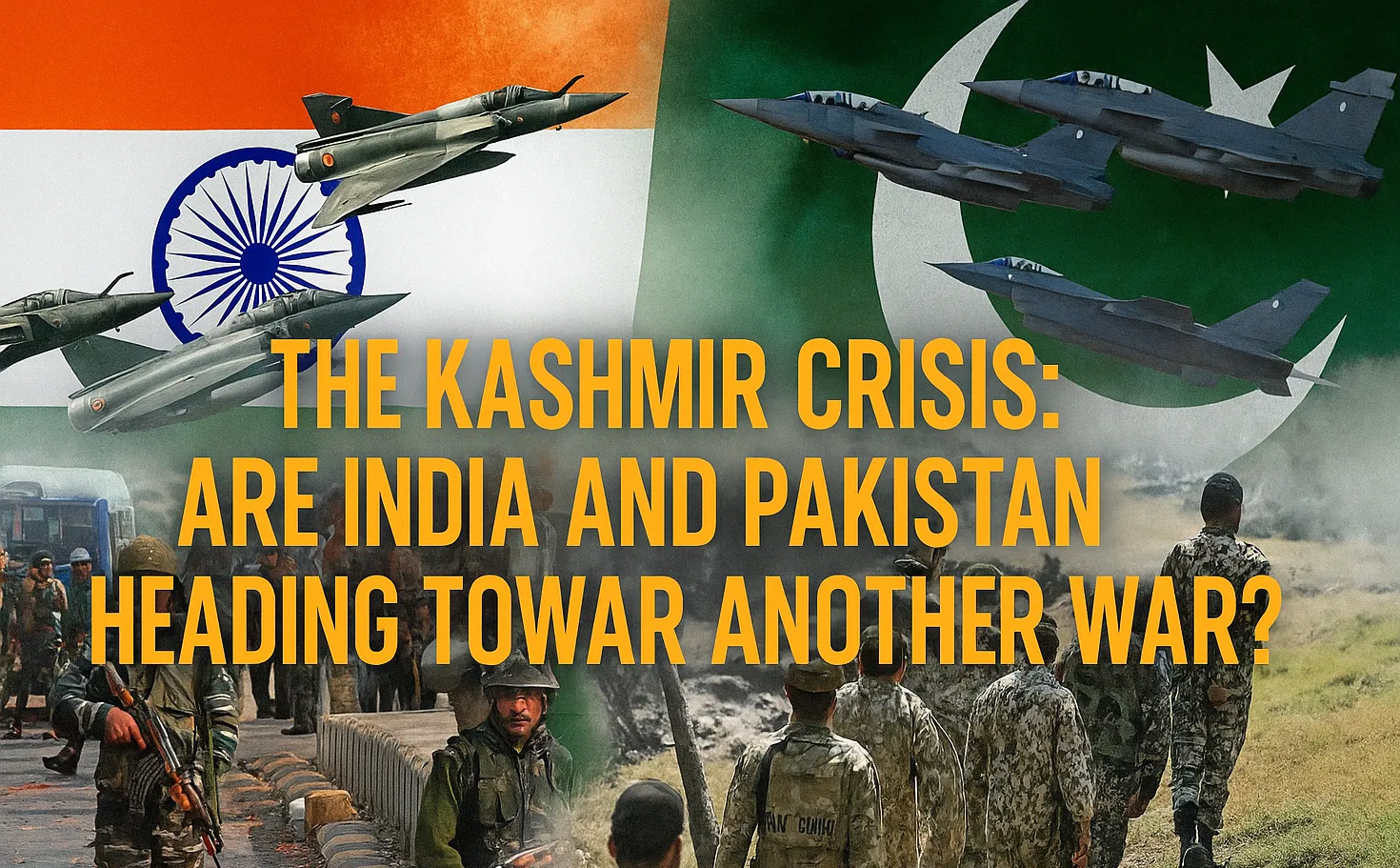
    The bloodshed returned suddenly. On April 22, 2025, the lush meadows of Baisaran Valley near Pahalgam, in Indian-administered Kashmir, were soaked with the blood of innocent tourists. Armed militants opened fire on an unarmed tourist group, killing 26 civilians and injuring at least 17 others. It was one of the deadliest attacks on Indian civilians in decades, surpassing in its brutality even the memory of the 2008 Mumbai siege.

    The militant attack has reopened deep wounds in Kashmir, and between India and Pakistan. It comes at a time when the world’s attention is elsewhere. India and Pakistan, both armed with nuclear weapons, are once again moving rapidly toward a dangerous confrontation. Few outside powers are stepping in to stop them.

    A familiar pattern, but greater danger

    The Indian government swiftly accused Pakistan of complicity. Officials privately briefed diplomats that the attackers were linked to Lashkar-e-Taiba (LeT), a militant group based in Pakistan that has been blamed for previous atrocities, including the 2008 Mumbai attacks. A little-known outfit calling itself The Resistance Front (TRF) initially claimed responsibility on social media before later retracting, saying its account had been hacked. Indian intelligence asserts that TRF is a proxy of Lashkar-e-Taiba, created to give attacks an indigenous Kashmiri face while retaining links to Pakistan’s intelligence services.

    The Pakistani government has categorically denied any involvement. Islamabad, facing its own internal political instability and a fragile economic recovery, reacted angrily to Indian accusations. Pakistan cancelled most Indian citizens’ visas and warned that any military strike across the Line of Control (LoC) would provoke a “full-spectrum” response; a phrase widely understood to include the possible use of tactical nuclear weapons if its sovereignty is threatened.

    Meanwhile, India ordered almost all Pakistani citizens to leave its territory, and in an unprecedented move, threatened to disrupt the flow of the Indus River system; a step viewed by Pakistan as tantamount to a declaration of war. The Indus Waters Treaty, brokered by the World Bank in 1960, had until now survived wars, border skirmishes, and political upheavals. If India uses water as a tool of pressure, cutting off a resource that is vital to Pakistan’s farming economy, the consequences will go far beyond military conflict and trigger a serious humanitarian crisis.

    Modi’s Response: Talking Tough, Acting Carefully

    Prime Minister Narendra Modi vowed in a fiery speech to raze terrorist safe havens, though he stopped short of naming Pakistan directly. His government faces mounting public anger and an election campaign looming in several key states. The Bharatiya Janata Party (BJP) has tied its political image closely to nationalism and strong military messaging. However, launching a full-scale war would be risky. India’s armed forces are still in the middle of major modernization efforts. Their ability to fight a long conflict on two fronts; especially if China takes advantage of the situation, remains uncertain. Thus, analysts in Delhi and beyond expect a limited and carefully measured response. Limited airstrikes, precision special forces operations near the border, or cyberattacks on Pakistani infrastructure are all being considered, according to senior Indian officials speaking anonymously to Reuters and The Hindu. Such options would allow Modi to satisfy domestic demands for retribution while avoiding a catastrophic spiral into uncontrollable escalation.

    In 2019, following the Pulwama suicide bombing that killed 40 Indian soldiers, India launched an airstrike inside Pakistan’s Balakot region. Pakistan retaliated with air raids of its own. A repeat scenario: with both militaries now on hair-trigger alert, could easily slip into a broader war.

    Kashmir: A Conflict Rooted in Partition

    At the heart of the latest tensions lies Kashmir itself; a legacy of the 1947 partition that neither India nor Pakistan has ever been willing to compromise on.

    When Britain divided its Indian empire, Kashmir’s fate was left ambiguous. Its Hindu ruler eventually acceded to India under pressure, sparking Pakistan’s first military intervention. Since then, Kashmir has remained a bitterly disputed territory: about two-thirds administered by India, the rest by Pakistan. China also holds a small part of the wider Kashmir region, adding another layer to the dispute.

    Decades of conflict have hardened positions. India regards Kashmir as an integral part of its secular identity. Pakistan, meanwhile, views the region’s Muslim majority as evidence that Kashmir should be part of its national territory. Since 1989, a violent insurgency, driven by separatist sentiment and supported by Pakistan, has devastated Kashmir. India has long accused Pakistan of using militant groups to weaken it through repeated low-intensity attacks. Pakistan counters that it merely supports the Kashmiris’ right to self-determination, citing decades-old United Nations resolutions that India considers outdated.

    The Indian government’s 2019 decision to revoke Article 370, which removed Kashmir’s constitutional autonomy, marked a turning point. Prime Minister Modi’s administration presented the move as essential for development and national integration. Critics, however, viewed it as an attempt to change the region’s demographic balance, marginalize its Muslim majority, and silence dissent. In the aftermath, Kashmir was placed under a sweeping lockdown: political leaders were detained, internet access was cut, and civil liberties were sharply restricted. Although Delhi has since reinstated local elections and launched infrastructure projects, the heavy security presence remains. The recent massacre has now shattered any lingering belief that normalcy had returned.

    An international vacuum

    Calls for de-escalation from the United Nations, European Union, Iran, and Saudi Arabia have so far fallen on deaf ears. Major global powers, mainly the United States, China, and Russia, are too preoccupied elsewhere. Washington’s strategic attention is consumed by conflicts in Ukraine and the Indo-Pacific; Beijing is focused on its economic slowdown and tensions in Taiwan; Moscow remains entangled in Ukraine.

    This strategic distraction emboldens India. Once pressured by Western capitals to show restraint after past incidents, India today feels diplomatically secure. Western countries need India, as a market, as a counterweight to China, and as a climate partner. As a result, New Delhi may perceive a broader margin of action. Yet risks remain profound. A limited Indian strike that accidentally kills Pakistani soldiers could provoke a much stronger reaction. The biggest danger is not a planned war, but a miscalculation. Even a small clash could quickly grow into a major conflict involving air strikes and ground troops, and because both countries have nuclear weapons, even a small mistake could lead to a catastrophic war.

    Moreover, the internal situation in Kashmir could worsen. The sweeping crackdowns currently underway; mass arrests, home demolitions of alleged militants, and intensified surveillance, could fuel further radicalization, breeding new generations of militants disillusioned by political exclusion and economic stagnation.

    What lies ahead?

    India is expected to respond with force, but in a limited way to avoid starting a full-scale war. Targeted airstrikes, drone attacks, or cyber operations are the most likely options. But even a small mistake could trigger a dangerous escalation that neither side can fully control.

    Over the long term, Kashmir remains a flashpoint that neither military means nor diplomatic neglect can neutralize. Without meaningful dialogue, including with the people of Kashmir themselves, the region will remain a tinderbox, waiting for the next spark.

    The question is no longer whether South Asia can survive this crisis. The real question is: how many more times can it come close to war before it finally crosses the line?

    Support Our Work

    If you find our content valuable, please consider supporting our mission through a donation. Your contribution helps us continue providing high-quality analysis and insights.

    Donation Options:

    If you enjoy my work and would like to support it while helping me stay energized, I’d be deeply grateful for a coffee.

    https://buymeacoffee.com/falahmousa

    Thank you sincerely for your kindness and consideration.

    PayPal: falahmousa@gmail.com

    Scan PayPal Payment:

    PayPal payment QR code
  • Hunger is Not a Tech Problem: The Real Crisis is Inequality and Market Manipulation

    Hunger is Not a Tech Problem: The Real Crisis is Inequality and Market Manipulation

    Falah Mousa

    **unger is Not a Tech Problem: The Real Crisis is Inequality and Market Manipulation**

    In a recent open letter (worldfoodprize.org, 14 Jan. 2025) over 150 Nobel laureates and World Food Prize recipients have sounded the alarm on an impending global hunger crisis, urging a significant boost in food production through technological advancements. While their concerns are valid, the proposed reliance on technological solutions may overlook the complex socio-economic factors driving global hunger.

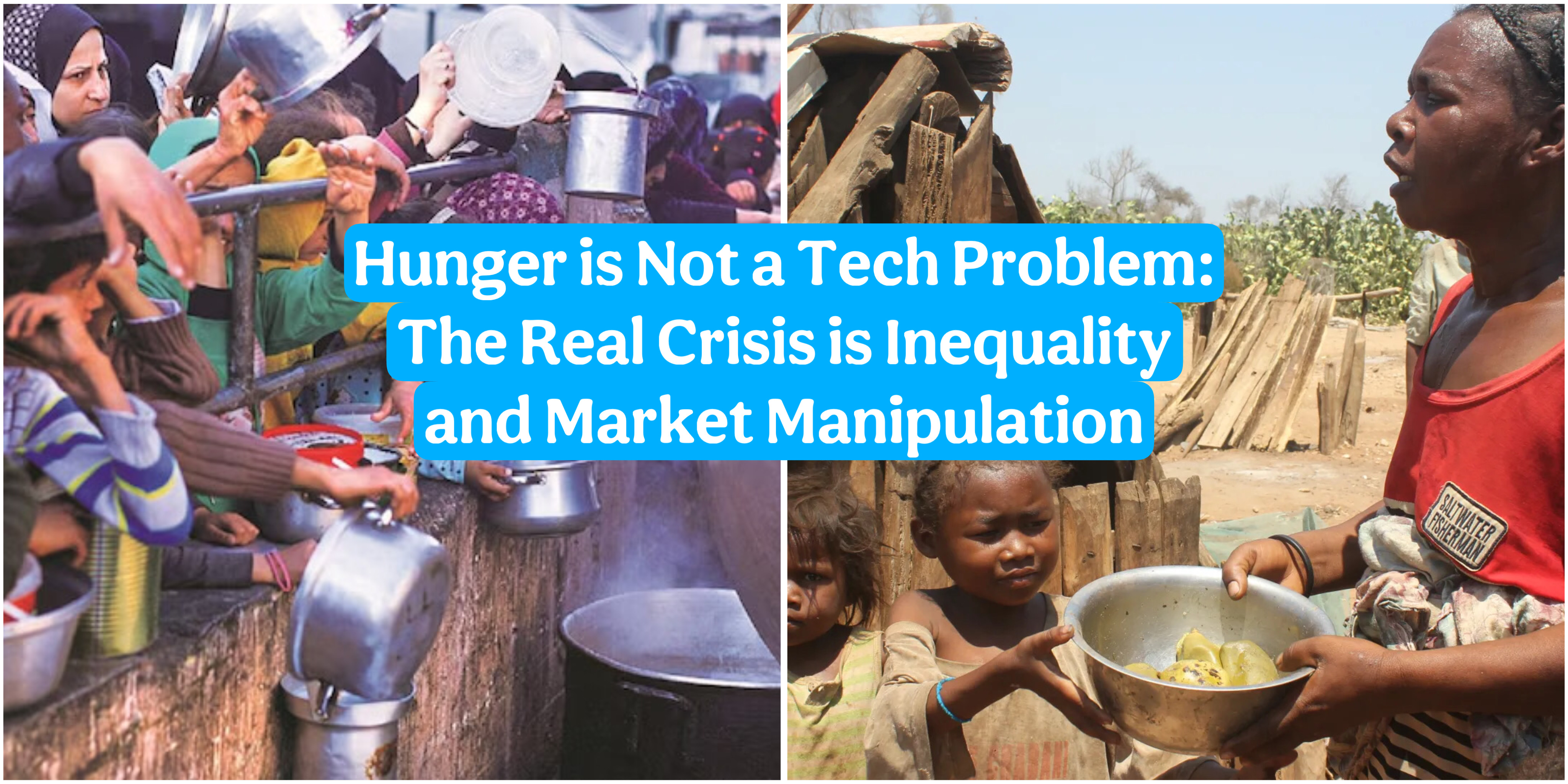
    The letter highlights alarming statistics: 700 million people currently face food insecurity, and 60 million children under five suffer from stunted growth due to inadequate nutrition. To combat this, the signatories advocate for enhancing agricultural productivity using tools like artificial intelligence, computational biology, and genomic techniques.

    However, the World Food Programme (WFP) has consistently emphasized that global hunger is not solely a consequence of insufficient food production. The world produces ample food to nourish every individual, yet nearly one-fifth of it is lost post-harvest or wasted (food.ec.europa.eu and wfp.org). The crux of the issue lies in accessibility; many remain hungry because they cannot afford available food. The open letter, however, appears to underemphasize these critical aspects.

    Hunger as a Social Problem

    Hunger is not simply a matter of food scarcity; it is deeply rooted in economic inequality, political instability, and systemic injustices. Across the world, individuals in poverty struggle to afford nutritious food even when it is available in abundance. In many cases, those most affected by hunger are not those in areas with the least agricultural production, but rather those living under restrictive economic systems that limit food availability due to low wages, poor social policies, and inefficient food distribution networks.

    In many urban centers, particularly in developed nations such as the United States and the United Kingdom, low-income communities often struggle to find fresh and affordable food due to economic disparities, inadequate transportation, and the dominance of highly processed, unhealthy options. According to the Food and Agriculture Organization (FAO), these systemic failures contribute significantly to urban food insecurity, emphasizing that access to nutritious food is more about economic policy than agricultural output. Meanwhile, in sub-Saharan Africa and parts of South Asia, food insecurity is exacerbated by political corruption, armed conflicts, and climate-related disasters that displace communities and disrupt local agricultural markets. In Yemen and South Sudan, hunger is wielded as a weapon of war, where blockades and deliberate food shortages deepen crises that technological advances alone cannot solve.

    Moreover, industrialized food systems prioritize profits over people. Global agribusiness conglomerates monopolize food supply chains, leading to inflated prices and market dependencies that make staple foods unaffordable for low-income populations. Additionally, land grabs by multinational corporations often displace smallholder farmers, stripping them of the ability to produce their own food and making them reliant on costly imports.

    Proponents of genetically modified organisms (GMOs) often argue that such technologies offer environmentally friendly solutions by reducing pesticide usage. Nonetheless, empirical evidence suggests otherwise. For instance, Bt cotton, engineered to resist pests, has led to increased farmer indebtedness due to its high costs, contributing to a tragic rise in farmer suicides in countries like India.

    Current intensive farming practices, including monocropping and increased industrialized livestock production, have exacerbated methane emissions, led to freshwater contamination, degraded soil quality, and accelerated deforestation. Relying solely on advanced technological innovations, which often require substantial capital investments, may not sustainably address hunger.

    The 'Green Revolution' of the 1960s, which promoted technological innovations such as mechanized farming, fertilizers, and pesticides, did boost crop yields. However, it also precipitated environmental and ecological challenges. While the current appeal acknowledges the importance of researching indigenous crops resilient to extreme weather and reducing food waste, the emphasis remains on technological solutions.

    A more sustainable approach would involve promoting ecologically friendly crops cultivated by small-scale farmers rather than large agribusinesses. Additionally, improving global food distribution networks to ensure that surplus food reaches those in need rather than being wasted is crucial. Focusing predominantly on technological fixes may inadvertently perpetuate the underlying socio-economic issues that contribute to global hunger.

    In conclusion, while technological advancements have a role to play, addressing global hunger requires a holistic approach that considers socio-economic disparities, environmental sustainability, and equitable access to resources. Until the structural inequalities that limit access to food are dismantled, no amount of innovation will eliminate hunger. Hunger is not merely a problem of production but a reflection of failed policies, inequitable economic systems, and a global food industry designed to prioritize profits over people.

    Support Our Work

    If you find our content valuable, please consider supporting our mission through a donation. Your contribution helps us continue providing high-quality analysis and insights.

    Donation Options:

    PayPal: falahmousa@gmail.com

    Scan PayPal Payment:

    PayPal payment QR code

    Bank Transfer:

    IBAN: BE33967579583046

    SWIFT/BIC: TRWIBEB1XXX

    Bank Name and Address: Wise, Rue du Trône 100, 3rd floor, Brussels, 1050, Belgium

  • Harassment Exposed: Why This Global Crisis Won’t Go Away

    Harassment Exposed: Why This Global Crisis Won’t Go Away

    Falah Mousa

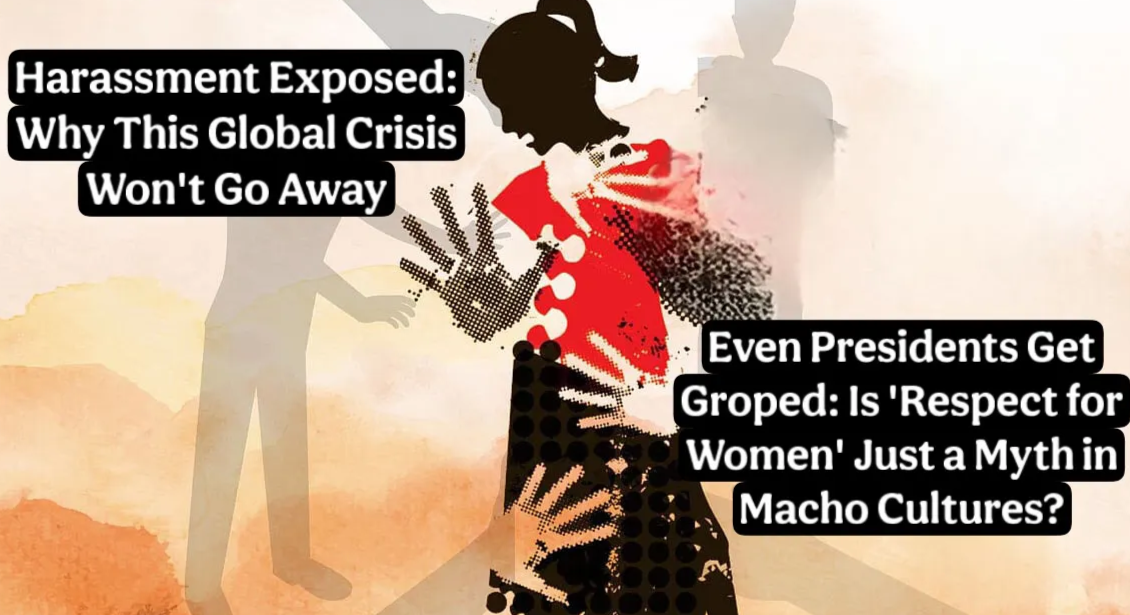
    Image accompanying Harassment Exposed: Why This Global Crisis Won't Go Away

    Even Presidents Get Groped: Is 'Respect for Women' Just a Myth in Macho Cultures?

    On November 4, 2025, during a routine public walkabout in Mexico City's historic center, a visibly intoxicated man approached President Claudia Sheinbaum, the country's first female leader, and groped her breast while attempting to forcibly kiss her, as captured in viral video footage. Security quickly intervened, and the assailant, identified as a 45-year-old local resident with no prior criminal record, was taken into police custody. Sheinbaum, undeterred, promptly filed charges for sexual harassment and assault, emphasizing that no one is above the law and vowing to use the incident to push for stronger protections against gender-based violence.

    This brazen act has reignited a fierce national debate in Mexico, where over 10 women are murdered daily in femicide cases, and street harassment remains rampant despite ongoing feminist movements like “Ni Una Menos” (Not one [woman] less).

    Worldwide, this incident underscores harassment as a pervasive, insidious plague that transcends borders, cultures, and status; dismissing it as isolated ignores the systemic rot. According to UN Women, nearly 1 in 3 women worldwide have experienced physical or sexual violence, with public figures like Sheinbaum joining a grim list that includes U.S. politicians, European leaders, and activists in India and the Middle East who face similar violations.

    Critics argue that lax enforcement, victim-blaming, and patriarchal norms perpetuate this cycle: Why do we normalize "drunken mistakes" when they strip women of dignity? In countries like Mexico, where machismo culture often excuses male aggression, such events highlight how harassment isn't just personal; it's a tool of oppression that silences women in power and deters others from leadership. Yet, progress is uneven; while Mexico's government has introduced apps and safe zones for reporting, global efforts like the #MeToo movement have waned, leaving billions vulnerable. It's time to call out the hypocrisy: If even a president isn't safe on her own streets, what hope for everyday women? This isn't just Mexico's problem; it's a worldwide failure demanding zero-tolerance policies, education reform, and accountability for perpetrators everywhere.

    Beyond public spaces, harassment infiltrates professional environments, turning workplaces into arenas of fear and inequality that undermine productivity and human dignity. Recent global surveys reveal that approximately 23% of workers worldwide have experienced some form of violence or harassment during their careers, with sexual harassment disproportionately affecting women. (https://open.unaids.org/sites/default/files/2024/ILO-2022-2023.pdf)

    According to data from various studies, 38% of women and 14% of men report encountering sexual harassment at work, often manifesting as unwanted advances, inappropriate comments, or quid pro quo demands that exploit power dynamics. (https://www.nsvrc.org/ending-sexual-assault-and-harassment-workplace/).

    This isn't merely anecdotal; it's a systemic issue fueled by inadequate policies and cultures that prioritize hierarchy over safety. In the United States, for instance, 78% of sexual harassment claims are filed by women, and broader discrimination affects 91% of the workforce, including bullying that impacts 30% of employees. (https://www.eeoc.gov/data/sexual-harassment-our-nations-workplaces).

    Globally, the International Labour Organization (ILO) highlights that psychological violence is the most prevalent form, but women face heightened risks of sexual harassment, with over 75% of workers in some regions reporting at least one incident of workplace violence in their lifetimes. (https://unstats.un.org/unsd/demographic-social/meetings/2024/iaeggs-20241203/3.A3_ILO.pdf).

    Younger generations, like Gen Z, are witnessing this crisis firsthand—52% have seen harassment occur to colleagues in the past five years, compared to lower rates among older workers, signalling that the problem persists despite awareness campaigns. (https://www.traliant.com/resources/state-of-workplace-harassment-report/).

    The economic toll is staggering: Harassment leads to higher absenteeism, reduced job satisfaction, and turnover costs that burden companies and economies alike.

    In Europe, 31% of working women have faced sexual harassment, escalating to 42% for those aged 18-29, often in male-dominated industries where victim-blaming silences reports and protects perpetrators. (https://eige.europa.eu/newsroom/news/sexual-harassment-work-more-common-we-think?language_content_entity=en).

    Critics decry how corporate inaction, such as weak investigations or retaliatory measures against whistleblowers, perpetuates this cycle, turning offices into toxic environments that disproportionately hinder women's career advancement and contribute to the gender pay gap.

    Even in sectors like healthcare, where trust is paramount, up to 62% of workers experience workplace violence, including harassment, underscoring that no industry is immune. https://www.who.int/tools/occupational-hazards-in-health-sector/violence-harassment

    As we move further into 2025, with statistics showing rising risks, organizations must prioritize comprehensive training, anonymous reporting mechanisms, and cultural shifts to dismantle these barriers. https://3plusinternational.com/tackle-the-risk-of-workplace-sexual-harassment/

    Failing to address workplace harassment isn't just a moral lapse; it's a professional and economic sabotage that demands urgent, global accountability to foster truly inclusive environments.

    Support Our Work

    If you find our content valuable, please consider supporting our mission through a donation. Your contribution helps us continue providing high-quality analysis and insights.

    Donation Options:

    If you enjoy my work and would like to support it while helping me stay energized, I’d be deeply grateful for a coffee.

    https://buymeacoffee.com/falahmousa

    Thank you sincerely for your kindness and consideration.

    PayPal: falahmousa@gmail.com

    Scan PayPal Payment:

    PayPal payment QR code
  • Will the Balkans Be Able to Accept the Migrants That Europe Wants to Send Back?

    Will the Balkans Be Able to Accept the Migrants That Europe Wants to Send Back?

    9 September 2026 · Falah Mousa

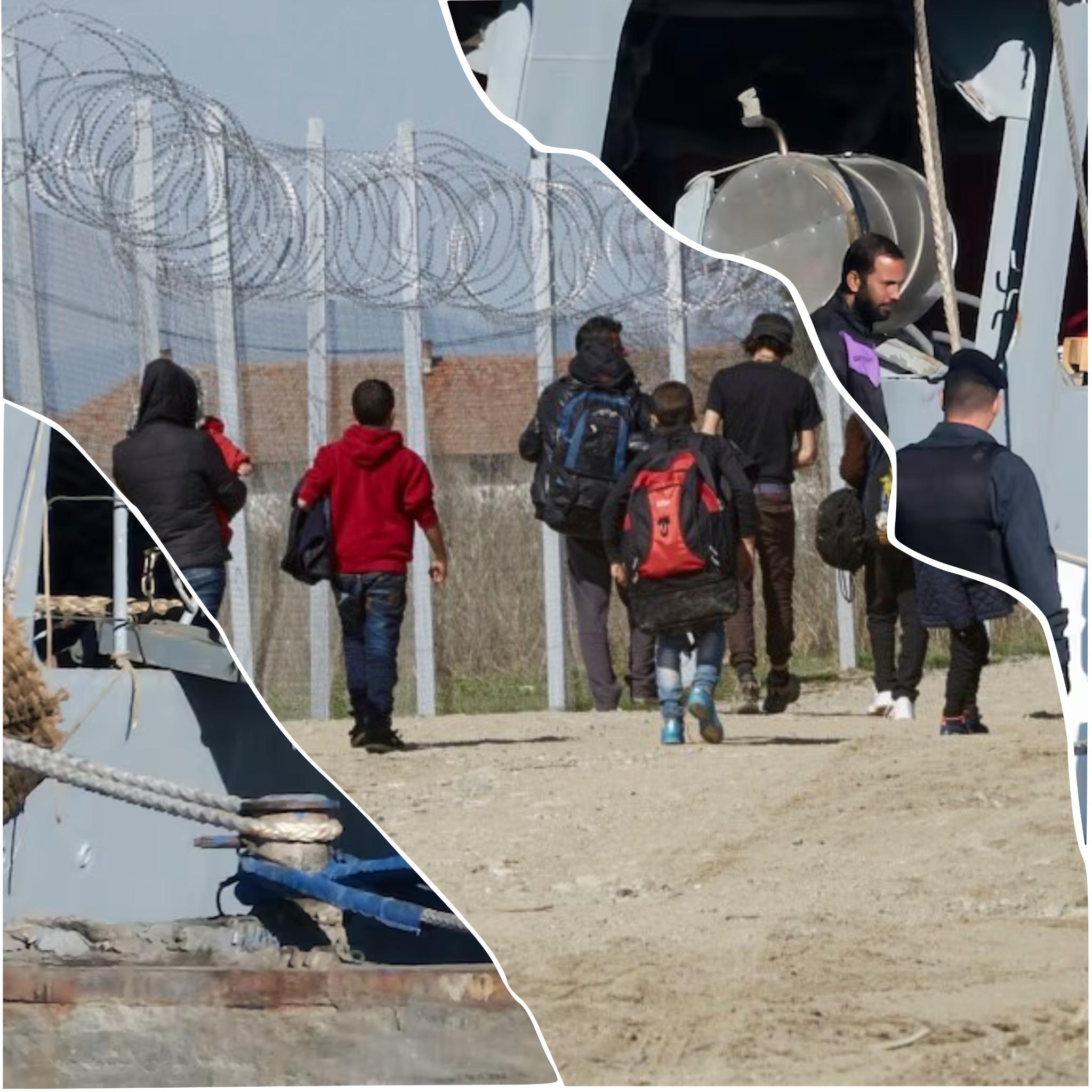
    Photographic collage of migrants, a border fence and people at sea.

    Western European governments want to create “Return Hubs” outside of EU. The Western Balkans has been considered; however, talks have not resulted in any identified host countries so far.

    In Copenhagen last week, (September 4) representatives from Germany, Austria, Denmark, Greece and the Netherlands met to discuss establishing centers for processing migrants. The goal is to agree to establish these centers in third countries in 2026. Denmark expects to begin sending migrants back to other countries by late 2027. “We expect to reach an agreement with third countries during 2026,” said German Interior Minister Alexander Dobrindt. The next meeting is scheduled to take place in Munich in September (internazionale.it, Five European nations seek deals to send migrants out of the EU. 4 Sep. 2026).

    If established, the “Return Hubs” will serve as a center where individuals can be detained until such time as they may be deported. Detention could occur if someone’s asylum claim was denied. According to the provisional deal between the Council and the European Parliament on an EU law regarding the processing of migrants within an EU member state, a migrant could be held in a detention facility prior to being deported to another country, or the migrant could be sent directly to the designated country. Therefore, deportation could result in relocation to a country which is not that individual’s native land.

    The EU legislation is still under consideration and requires final approval. On June 1, negotiators concluded an agreement. Members of Parliament voted on the position of the Parliament on June 17. At present, the official tracking page of the European Parliament indicates that the regulation is pending the position of the Council. Therefore, the regulations have not entered into effect. European Parliament

    Supporters of the initiative believe that once deportation orders have been issued, those subject to the order should actually leave. A recent report from Eurostat indicated that approximately 108,475 non-EU nationals received a deportation order from an EU country in the first quarter of 2026. Approximately 34,550 non-EU nationals were removed from the EU and sent back to third countries. This number represents an increase of 8.1 percent over the same period last year. (Eurostat, Returns to third countries up by 8% in Q1 2026. 30 June 2026).

    The Balkans have gained prominence due to existing infrastructure. An investigation published by Prishtina Insight in August identified approximately forty migration centers located throughout the Western Balkans. Fifteen were either constructed or renovated using EU funds after 2015. Space for approximately six thousand people existed in Serbia, while space for roughly two thousand six hundred people existed in Bosnia and Herzegovina. The numbers refer to reception centers, asylum centers and detention centers; each type has a separate function. (prishtinainsight.com, “Return Hubs” for Migrants Anticipated in Balkans for “Era of Deportations”. 26 August 2026).

    Albania currently houses what is believed to be one of the most well-known examples of an EU member state transferring aspects of its migration activities to a third country. The agreement between Italy and Albania was signed on 6 November 2023. Italy originally intended to process certain asylum applications at centers established on Albanian territory. Although several court rulings prohibited early transfers from Italy to Albania, in March 2025 Rome amended the regulations governing the use of centers on Albanian territory; centers could now detain people who were transferred from Italy while awaiting deportation. (Associated Press, Italy approves new decree to use Albanian migration centers as repatriation hubs).

    Cost is an additional consideration. By 3 August, according to El Pais over 600 migrants had already left Italian detention centers to go to Gjadër as part of the new function of the center. Only less than 100 of these migrants had been repatriated to their respective countries; all other migrants had gone back to Italy. The El Pais report cites official estimates by the Italian government at an estimated cost of €138 million per year. Balkan governments interested in similar deals are justified in asking what value they will obtain in exchange for the expenditure of such funds. (El País, El centro de deportación de migrantes de Italia en Albania sigue casi vacío por segundo año consecutive. 03 Aug. 2026).

    Additionally, Albania has demonstrated that acceptance of one type of program does not imply automatic acceptance of any subsequent programs. On 15 May 2025, during a visit by UK Prime Minister Keir Starmer, Albanian Prime Minister Edi Rama declined a role in Britain’s planned return hubs. Likewise, on 27 October 2025, the office of Montenegrin Prime Minister Milojko Spajić stated that Montenegro would not accept migrants from Great Britain. This decision related solely to Britain’s proposals. (mina.news, PM’s Office: Montenegro will not accept migrants from Great Britain).

    On the other hand, Serbia has agreed to collaborate with Austria and Hungary concerning deportations. On 16 November 2022, the three countries signed a Memorandum on Migration. Officially, this included cooperation to strengthen policing of borders and create a joint project for the forced removal of persons residing illegally in Serbia. (srbija.gov.rs, Memorandum on cooperation of Serbia, Hungary and Austria in fight against illegal migration).

    In addition to collaboration with Austria and Hungary, Kosovo has established a separate agreement with the U.S. As reported by the AP, in June 2025 Kosovo agreed to temporarily take in up to 50 individuals from the U.S. who were subject to deportation but were not citizens of Kosovo. The AP reported in December 2025 that one individual had arrived under this agreement. (Associated Press, Kosovo receives first deported migrant from US under agreement with Trump administration).

    Concerns exist among aid organizations operating in both Bosnia and Serbia pertaining to treatment of migrants, if greater numbers were to be deported to these two countries. On 27 February 2026, Collective Aid reported that migrants were experiencing extended stays in detention facilities in both countries while enduring harsh conditions. Access to legal counsel and medical assistance were poor. Collective Aid cautioned that return hubs could result in larger scale implementation of these difficulties. (collectiveaidngo.org, Webinar on EU Return Regulation, Return Hubs and the Balkans: Detention and Deportation in Practice. 27 Feb. 2026).

    Rules intended to protect migrants sent to a hub are outlined within an agreed upon EU document. Host countries are obligated to uphold basic human rights standards as defined by law including prohibition against returning an individual to a location where he/she/they would experience severe danger. Children without parents/guardians are excluded from hub agreements involving returns. When involved in return agreements beyond hubs, countries must outline alternative options available when returning is not feasible. Countries must also establish mechanisms for independent monitoring of compliance. Agreed legislative text, Article 17

    It remains unclear how these rules will be implemented. On July 16, Council of Europe Human Rights Commissioner Michael O’Flaherty requested that the five governments review the potential risks associated with implementing a hub prior to proceeding. He suggested that an independent assessment process occur regularly along with the establishment of binding agreements enabling migrants to seek enforcement of their rights. O’Flaherty also advocated for transparency through publication of agreements and assessments so that national courts and legislatures may review and evaluate them. (Commissioner for Human Rights, Austria, Denmark, Germany, Greece and the Netherlands should put in place strict human rights guardrails in their plans for ‘return hubs’. Strasbourg 16 July 2026).

    At present, the UN Refugee Agency has yet to review the specifics of the plan. In September, representatives indicated they would communicate with UNHCR and the International Organization for Migration. UNHCR reported that it had not received sufficient information regarding a proposal and therefore was unable to comment on aspects of the arrangements. (internazionale.it. see above).

    Balkan governments should be cautious when considering the establishment of centres for people sent from other countries. Although hosting a small number of people is likely to provide some advantages should additional European funding improve local services, provide proper care and legal assistance, these benefits are subject to the terms of any agreement. The country that sends people away will see an immediate reduction in the number of people waiting to be removed, while the host country may face years of responsibility if removal proves impossible. The proposed rules allow the host country to become a person’s final destination; therefore, governments must assess the cost of people remaining as carefully as they assess the costs of operating a centre. Council of the EU⁠ using existing camps could make it easier for governments to establish agreements, however, shortages in legal assistance and asylum services raise doubts about whether some countries can manage this type of arrangement. Birn⁠ a limited agreement may be worth considering if funding covers all responsibilities and rights of people received can be enforced. Otherwise, there are uncertainties regarding the benefits to the host country and its duties towards the people it receives will be real and long lasting.

    Prior to entering into a contract, Balkan Governments must determine what occurs when someone cannot be deported. Does the EU country that initiated the deportation assume responsibility for transporting the migrant back to their country or does the host country allow them to reside in their country? Which entity assumes financial liability if the funding ceases? What governmental body is liable if a migrant is subjected to unlawful detention? Which court can issue an order directing the release of a migrant? Will the host country have authority to deny future admissions when it is no longer capable of providing necessary services? And finally, what happens to the agreement if the host country becomes an EU member? These issues should be publicly disclosed prior to signing any agreements. A government accepting monies for establishing a temporary facility may find itself caring for individuals for years and taxpayers are entitled to know what this entails financially and what obligations will remain with whom.

  • Albania: Why Build Resorts on Protected Land? And Who Decides What Happens to Albania’s Coast: Residents or Investors?

    Albania: Why Build Resorts on Protected Land? And Who Decides What Happens to Albania’s Coast: Residents or Investors?

    8 September 2026 · Falah Mousa

    Image accompanying “Albania: Why Build Resorts on Protected Land? And Who Decides What Happens to Albania’s Coast: Residents or Investors?”

    It’s been 100 days of the “Flamingo Protests” testing whether Albania’s European future will protect the environment.

    Protestors say what started out as a local protest against an area being developed to create a tourist destination has now evolved into a national issue testing if environmental protection, public involvement and rule of law can stand up to luxury tourism and large scale development?

    Where did it begin?

    Early this year, in May, equipment rolled onto the Pishë Poro-Nartë protected area, located within the greater Vjosa delta. This strip of coastline is home to over 200 bird species and more than 70 are endangered. Birds migrate through this section of coastline to travel between Africa and Europe. There is very little wild coastline remaining in the Mediterranean.

    Government officials referred to it as "a technical study" prior to an environmental assessment. However, the evidence presented a much different picture.

    Heavy machinery worked inside the protected area for several days, blocking the entire connection between the Narta Lagoon and the ocean. In doing so, bulldozers damaged the flow that maintains balance in the salt levels in the lagoon, provides oxygen for fish, etc. Flamingos, Dalmatian Pelicans and nesting Turtles depend on the food chain maintained by this flow. Scientists would eventually warn that additional damage could cause ecological collapse. Much of what was destroyed; wetland, dune, forest, three EU priority habitats, may take years to restore.

    It does not appear that the actions taken by the government constituted a genuine environmental assessment. Government claims vs. reality created distrust in those responsible for protecting Albania’s nature. Additionally, it exposed a bigger question: Who decides Albania’s development?

    Local residents attempted to stop the destruction when they realized what was occurring. Private Security and barbed wire prevented them from stopping it and their attempts were caught on camera. International attention was given to these images by the end of May. Nightly protests in Tirana followed. They continue to this day.

    Resorts versus Joining the EU:

    The heart of this debate revolves around a 2024 law that allows previously protected areas to be open to luxury tourism and/or infrastructure projects; which directly conflicts with EU environmental laws. From the beginning, the EU opposed this law and repeal of this law has since become one of the requirements Albania must meet before membership is granted.

    On June 17th, the European Parliament supported the protestors in saying that there needs to be an immediate moratorium on issuing any new permits and construction within protected areas until this law is repealed. Vjosa-Narta is currently the most direct example of how an applicant country for membership will treat EU laws when there is significant investment at stake.

    What Albania Stands To Lose Or Prove:

    After 100 days, the government has done nothing to repeal this law nor abandon this project. Protestors have successfully transformed a local environmental issue into a national issue about what type of country Albania wishes to be.

    There are two options for Albania. Either maintain a form of governance where environmental law and public participation play second fiddle to investments or demonstrate that environmental protection, meaningful public participation and economic growth do not conflict; as they should in a modern democracy.

    Albania does not need to repeat many mistakes other Mediterranean coastal regions have already experienced. For a country developing an economy based upon tourism, a wild lagoon represents one of the few resources that cannot be restored once it is lost.

    The lagoon inlet was temporarily reopened. The flamingos remain for now. How long they will remain after day 200 will rest on a decision yet to be made by the government.

    Image: Flamingos at Narta Lagoon, Albania. Arbenllapashtica / Wikimedia Commons, CC BY 4.0.