What the Global Fight Over Greenland Leaves Out: Greenland Is a Society, Not Just Strategic Territory
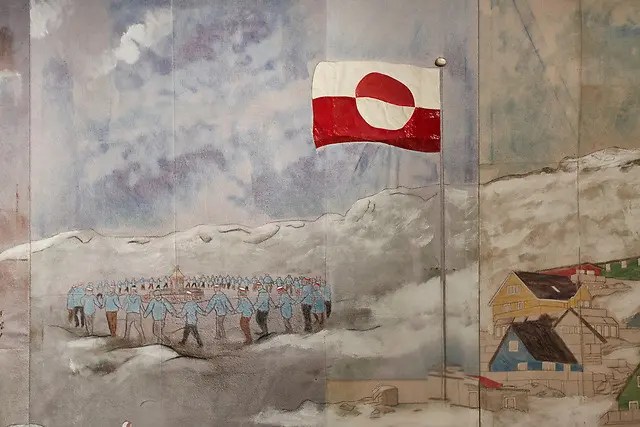
Most news about Greenland focuses on President Trump, military strategy and mineral wealth. Qaqortoq shows what those stories leave out. In this southern town, the government-owned Great Greenland company runs the country’s only tannery; a factory that preserves and prepares animal skins. Sealskins caught by Inuit hunters are collected through trading stations along the coast, shipped to Qaqortoq, then tanned and coloured. Many steps are automated, but manual handling is still required.
Some skins are sewn locally into jackets, mittens, boots and bags; seal bones are also used for jewellery. Seal meat feeds families and sled dogs, while the skin trade supports thousands of Inuit hunters.
The industry is controversial abroad. In Greenland, it is also food, income and culture. Any debate about the island that ignores the people who depend on this economy is one-sided and fails to tell the full story of Greenland.
A FLAMINGO BECAME ALBANIA’S MOST POWERFUL POLITICAL SYMBOL
Protests that began against a Kushner-linked luxury development near protected coastal wetlands have grown into what BIRN calls Albania’s largest civil mobilisation since the fall of communism.
The flamingo represents the habitat threatened by the project, but the movement now addresses corruption, opaque development, weak public services and a political economy that encourages young Albanians to leave while valuable coastline is offered to wealthy investors.
Prime Minister Edi Rama dismisses the protests as politically motivated. The European Commission has warned that Albania must respect EU environmental requirements as an accession candidate.
“Albania is not for sale” is therefore about much more than birds. It asks who owns the country’s future.
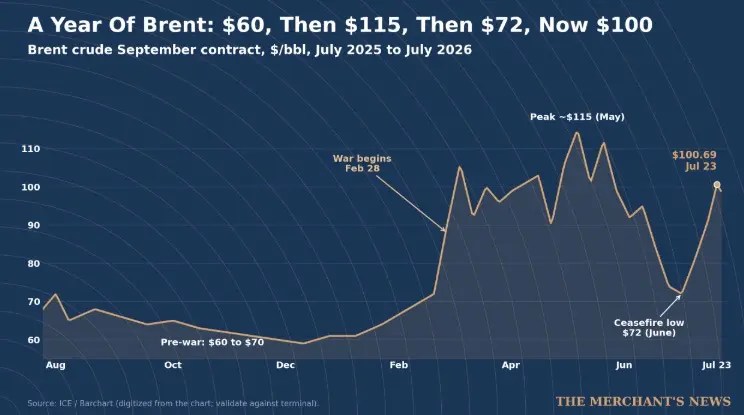
Oil reached $100 a barrel on Thursday, the Magnificent 7 lost nearly $800 billion in market value, and Wall Street’s fear index reached its highest level in a month.
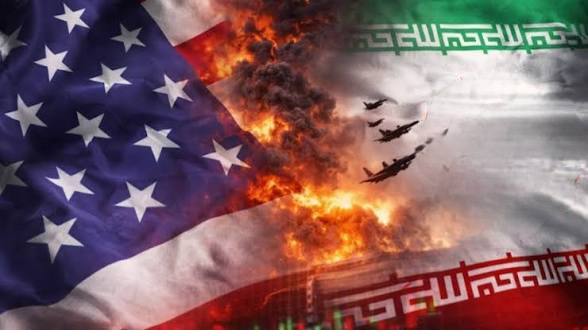
The Iran war is raising oil prices and increasing inflation fears. At the same time, investors are questioning whether the huge amounts spent on AI will ever produce enough profit. Even strong technology earnings are no longer enough. Investors are selling as soon as they see any weakness.
Many now expect oil prices to fall because they believe Washington will eventually face enough pressure to reduce tensions with Tehran. Markets are expecting economic damage to achieve what diplomacy and international institutions have failed to achieve.
Strangely, the whole world watches this chaos, complains about it, and does nothing to stop the bullying and arrogance of power that have weakened international law and its institutions.
(Short Version) Oil hit $100 and the Magnificent 7 lost nearly $800bn as the Iran war and huge AI spending shook markets. Strangely, the whole world watches this chaos, complains about it, and does nothing to stop the bullying and arrogance of power that have weakened international law and its institutions.
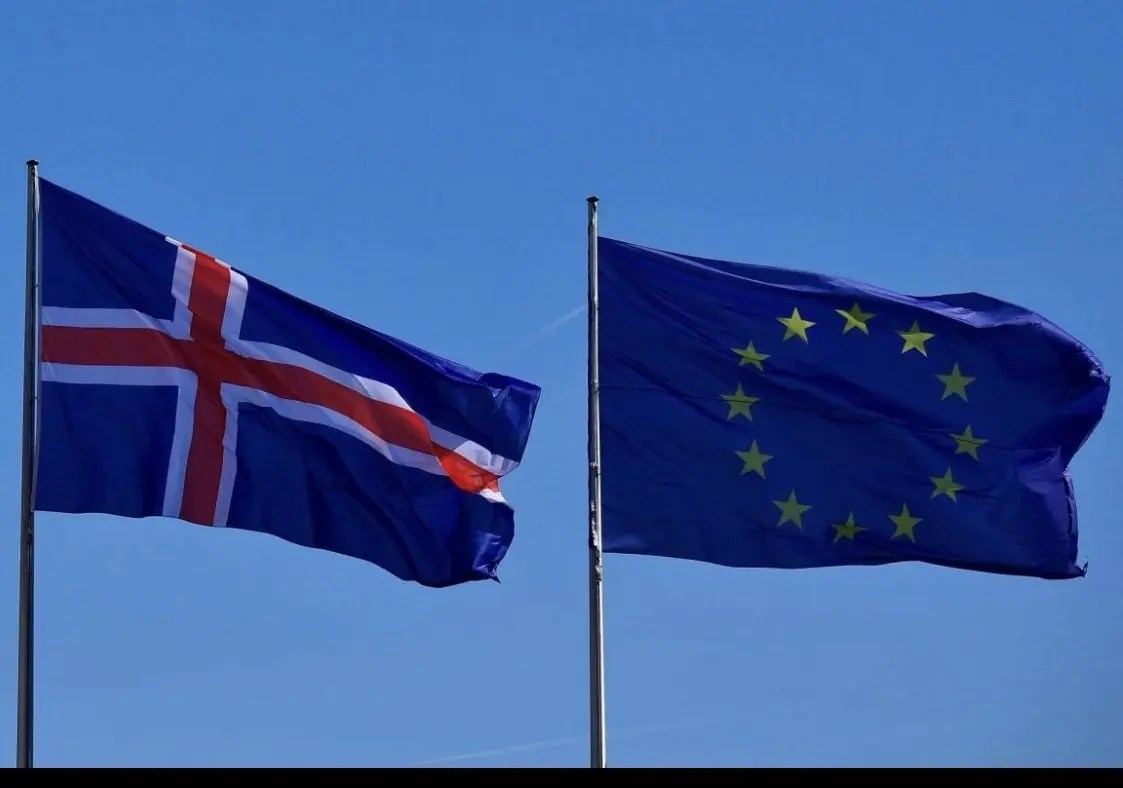
President Trump may be doing what Brussels could not: making Iceland reconsider the EU.
On August 29, Icelanders will vote on whether to restart EU membership talks. This is not a vote to join. Any final membership agreement would require another referendum. The latest official poll is close: 42% support reopening talks, 39% oppose it and 19% remain undecided.
The old debate focused mainly on fishing rights, national control and the economy. Talks were frozen in 2013 after a dispute with Brussels over fishing. Now Trump’s threats to annex Greenland have forced Icelanders to question whether they can continue relying on Washington.
Both sides should be honest. The EU cannot solve every security concern, but pretending that threats against a nearby Arctic territory have nothing to do with Iceland is irresponsible.
Iceland has every right to remain outside the EU. But assuming Trump will eventually forget about the region is not a serious national strategy.
Iceland votes August 29 on reopening EU talks. Poll: 42% yes, 39% no, 19% undecided. Trump’s threats to annex Greenland have changed a debate once focused on fishing and economics. The irony: Trump may be doing more to push Iceland toward the EU than Brussels ever did.
Press Freedom in 2026: A Dinner That Raised More Questions Than It Answered
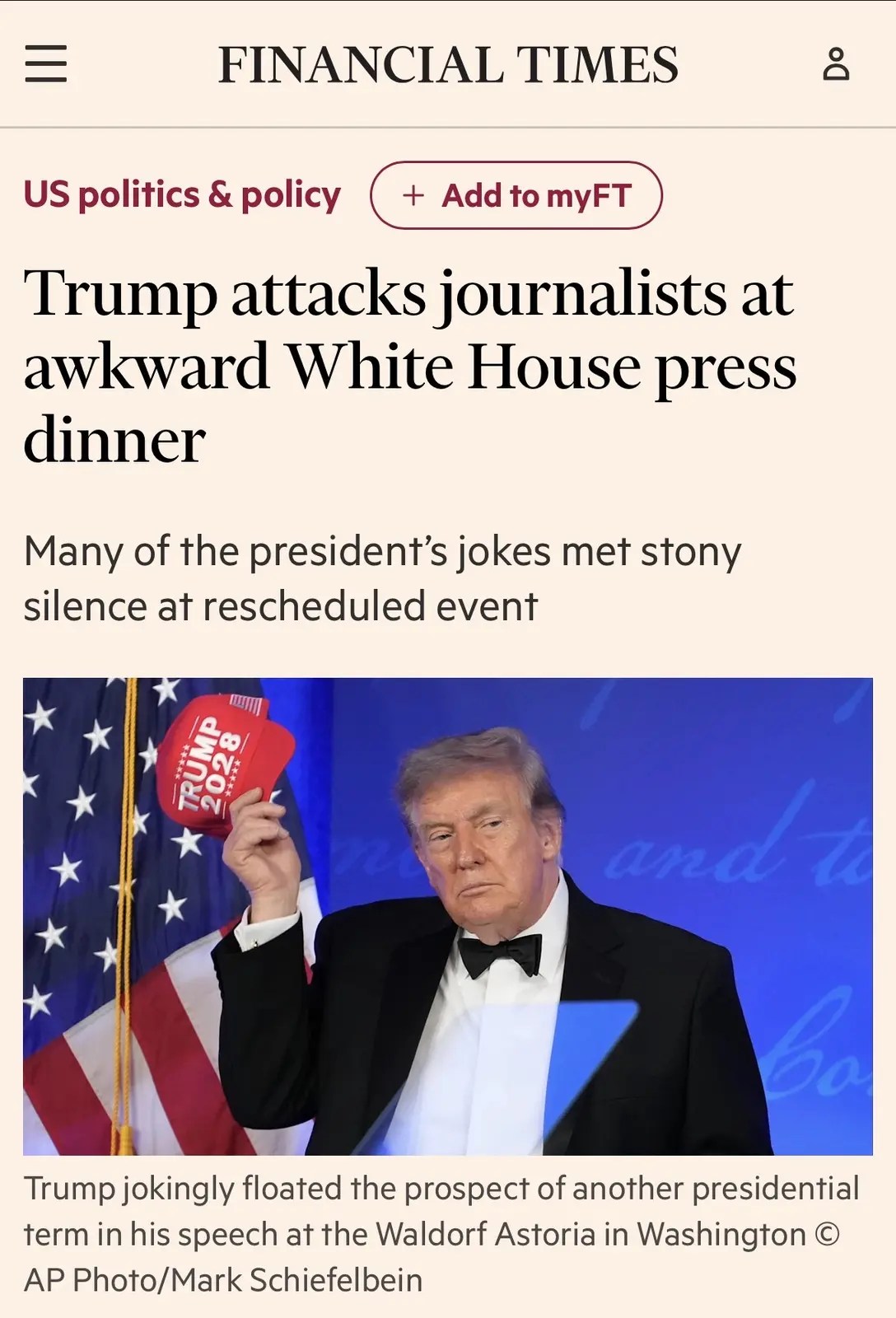
American press freedom in 2026 apparently means many journalists sit quietly while the president tells them, at their own dinner, that they have treated him unfairly.
Trump said reporters would be “broke” without him, criticized journalists by name, commented on Kaitlan Collins’s appearance and asked her to smile. He also criticized political opponents and joked about running for a third term.
His relationship with the press has long been tense. He has called major outlets “fake news,” filed lawsuits against media companies and accused journalists of unfair coverage. Critics have also questioned whether government actions toward media outlets could put pressure on independent reporting.
One day before the dinner, the Justice Department withdrew subpoenas seeking testimony and phone records from New York Times journalists after a federal judge raised serious First Amendment concerns.
Some people in the room gave a muted response. However, the White House Correspondents’ Association president and CNN later defended Collins and the right of journalists to report without government interference.
So, what does freedom of speech mean in the United States today? How free is the press when critical reporting can bring lawsuits, subpoenas and government pressure? And how independent is the media if journalists will not challenge the president when he attacks them in person?
(Short version) American press freedom, 2026: journalists are free to sit quietly while Trump insults them, sues media companies and threatens broadcasters. Is this freedom of speech? How independent is the press when the president can punish critical reporting and leading journalists barely respond?
Britain has lost its advantage over the EU when it comes to trade, the head of the British Chambers of Commerce (BCC) has said after it emerged the UK will pay higher tariffs than the bloc following President Trump’s new wave of tariffs. So much for the promise of “Global Britain” Higher tariffs than the EU — how is this the independent trade advantage we were sold? Where is the government’s concrete plan to reverse this damage? And how long will British businesses keep paying the price for a strategy that looks increasingly hollow? #Brexit #UKTrade #TrumpTariffs #GlobalBritain #BritishChambers
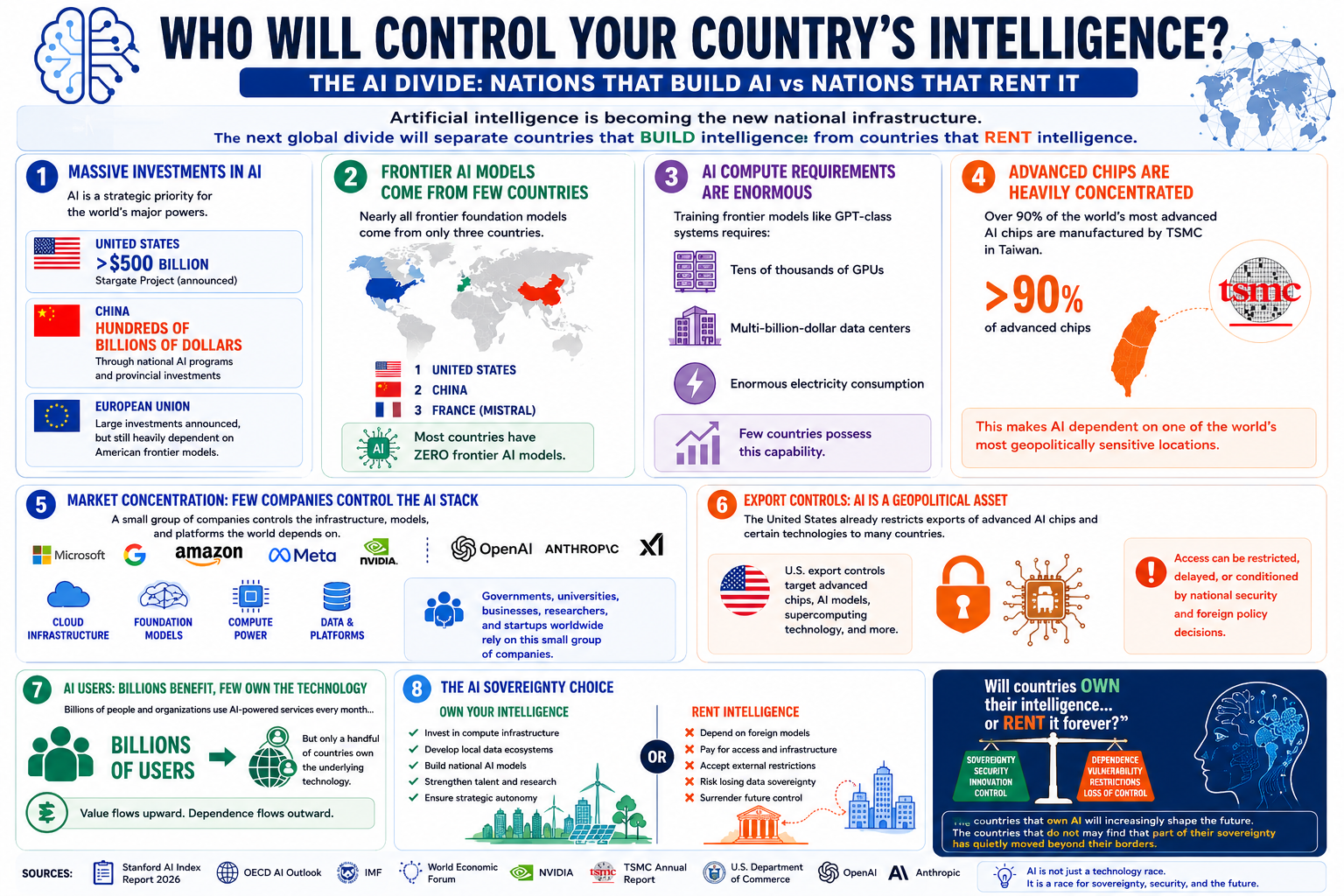
Artificial intelligence is no longer simply a technology story; it is becoming a sovereignty issue. Governments have discussed artificial intelligence for years in terms of its potential role within the digital economy. As such, it has been viewed as one of the many technologies which can enhance productivity, enable automation of cognitive functions, stimulate research and development, assist in improving decision making processes and create economic growth opportunities across all sectors.
However, this way of thinking about AI is rapidly being replaced by a growing recognition of its increasing status as a strategic resource. Like electricity, oil, satellite communications, ports, logistics for military supplies, cloud computing services and high-performance semiconductor devices, AI is becoming a key component of a nation's critical infrastructure. It is no longer just a tool which nations utilize. Instead, AI will increasingly influence how nations govern themselves. This is why recent American moves around access to advanced AI models should not be read only as a dispute between Washington and technology companies. They should be read as a signal from the future.
The US Government is starting to view the most cutting-edge forms of AI as national-security assets. Therefore, access to these types of AI models can be denied. In some cases, rollout of advanced AI model applications can be delayed. US Government can even establish formal vetting requirements for entities wishing to utilize advanced AI model capabilities. Additionally, access to certain advanced AI models can be limited for non-domestic users. Finally, in order to encourage cooperation between companies and the government, private companies utilizing advanced AI model capabilities may be required to work closely with the government. While the technical aspects of these actions may be described in terms of "safety", "cybersecurity", "export controls" or "responsible deployment", there is clearly a common thread running throughout them. The most capable AI systems will not continue to be regarded as neutral global public goods. Instead, they will be considered tools used to exert power.
Europe has heeded the warning. The debate today in Brussels, Paris, Berlin, and in all the major cities of Europe, is how to achieve technological sovereignty. European leaders are debating whether they should continue to build their economies; public administrations; research programs; security policies; and industrial development using foreign artificial intelligence (AI) systems which may become subject to restrictions by a foreign government. But it is not only about Europe; the challenge facing the Global South is much greater. Europe possesses money; universities; industry; customers for cloud computing; well-established institutions; and at least several AI companies with international ambitions. For many developing countries there is very little room to maneuver. Most developing countries rely heavily on foreign platforms for cloud services; operating systems; search engines; social media platforms; cybersecurity measures; e-commerce; and often even the national digital identities. These types of dependence will not diminish with the introduction of AI. Instead, they will be reinforced and deepened.
This represents a new type of dependency: dependency on foreign intelligence. This means not only dependency on foreign intelligence gathering agencies through traditional forms of espionage. However, it also includes dependency on foreign intelligence as applied to reasoning or thinking processes. The ability to read data; create algorithms; design policy; assess risk; coordinate logistics; support research; and make automated decisions are all examples of foreign intelligence. If a country depends solely on foreign suppliers for these capabilities, then it is not merely purchasing a service. In fact, it is effectively renting out a portion of its national consciousness to a foreign supplier. While this sounds extreme, it is an accurate way to describe what lies ahead.
A Ministry using foreign AI to create legislation is more than just adopting an entirely new digital tool. As much as it represents the adoption of a new digital tool, it also represents the beginning of dependency on the external infrastructure used to create public policy. That is true for other uses of foreign AI. Courts may use foreign AI to better organize their knowledge base; universities may use foreign AI to teach students; hospitals are increasingly turning to foreign AI for clinical support; and news organizations will likely become increasingly reliant upon foreign AI to develop and distribute content. Each example illustrates how part of a nation's capacity to think, organize information, and make decisions will eventually be transferred outside of its institutions.
Initially, there will obviously be advantages to utilizing foreign AI. Nations will be able to supplement their lack of trained personnel by hiring companies that utilize foreign AI systems; companies will have access to expertise they could never afford to hire; schools and hospitals will be able to accomplish more with fewer resources. Foreign AI will provide capabilities to most developing nations which would be unattainable without these tools. Again, this is not necessarily anything wrong with this. The issue occurs when reliance on foreign AI transitions from being convenient to being dependent. Efficiency does not equal sovereignty.
International AI technology will definitely bring advantages. Countries short of training for workers can buy foreign technology to supplement that shortage; Companies will be able to tap into expertise that would otherwise be out of reach; Schools and hospitals will be able to accomplish more with fewer resources. Countries that lack means to acquire certain capabilities otherwise will get access to capabilities through international AI technology. This is not inherently wrong. Problems arise though when a country becomes overly dependent on that international AI. Therefore, the real question is not whether countries should use foreign AI. They almost certainly will and in many cases should use it. What is much more important is whether they will have meaningful alternatives if access is restricted, prices go up, regulations change or political decisions determine who can use that technology. If they don't have alternatives, they could lose access to AI, cloud services and digital infrastructure on which much government, economy, businesses, universities and public services rely.
This is one of the reasons for AI "kill switches" to exist. It doesn't have to be sensational. It could occur in many forms; a new license agreement, a higher price tag, an additional regulatory requirement, a new sanctions designation, a new export control rule, a cloud services review, downgrading models for certain use cases, refusing service to specific customers, or simply deciding certain markets are now too high-risk. On any given day a nations’, universities’, companies', journalists', ministries', and banks' reliance upon AI tools can suddenly stop working due to changes in how those tools will be made available. That is not a minor technical issue. It is a major strategic vulnerability.
Major world powers have already chosen a path for themselves. The U.S. has decided to be the world's leading country in developing Artificial Intelligence. China has begun to invest a great deal of money into developing new technologies so it can become less dependent on U.S. based technology. Europe is working hard at creating technological independence. Many other nations such as India and those of the Gulf region are developing AI capabilities that help them achieve their own economic development and strategic goals. The AI race is already underway. For the Global South, the challenge is not to compete with the United States or China, but to avoid being left with no meaningful technological capacity of its own.
The majority of developing countries today are also viewing AI as merely just one additional tool which they can purchase from overseas. While purchasing AI from other nations could quickly give them access to many potentially valuable tools, it would not build their ability to utilize these tools without external support. The higher the dependence of such organizations (i.e., government, business, university, hospital, banking system, etc.) on AI based tools there will be an increasing amount of costs associated with them not having the capability to develop this technology internally. Developing some level of control over how they use AI has become a fundamental need for the Global South in order to promote economic growth, enhance public administration, improve national security, and encourage technological self-reliance.
One of the major obstacles for many countries is the creation of a solid foundation (infrastructure) to support advanced artificial intelligence. For advanced artificial intelligence to operate at its full potential, it requires both dependable power (electricity), cutting-edge data canters, high performance computers, fast connectivity via internet (broadband networks), and well-trained/educated professionals with technical skills. At this time, most developing countries do not have sufficient reliable power, cost-effective internet service availability and/or the necessary modern digital infrastructure to create frontier class artificial intelligence. Developing countries may wish to consider focusing on creating their own areas of expertise in their respective countries as opposed to building large-scale frontier artificial intelligence; developing specialized models to meet specific needs in their country; increasing investment into digital infrastructure such as data storage facilities, telecommunications and computer networking; and fostering collaboration with neighbouring countries in order to share computing resources, research capacity and technical knowledge.
Regional collaboration could well be one of the biggest opportunities for Global South nations. Developing countries individually have limited capabilities to create global-level AI ecosystems, however as a group they present huge market potential, rich diversity in data sets, rapidly expanding digital economies, and substantial human resources. They can share research canters, regional computing platforms, make common investments in digital infrastructure, and collaborate in developing language-based models. This will provide them with reduced cost levels while achieving greater technological autonomy. Additionally, by working together they will be able to enhance their bargaining power in negotiations with the major technology firms of the world. At the same time, countries should avoid becoming dependent on any single technology provider. An effective AI strategy should remain flexible. Governments should use the best available technologies while continuing to invest in domestic skills, universities, research institutions, and local technology companies. Protecting strategic data, encouraging open standards, and developing local expertise are likely to prove more valuable over the long term than relying entirely on imported systems, regardless of where they originate.
AI has become a component of global critical infrastructure and nearly all countries will apply it in some way. The real division won't exist between countries adopting AI and countries which don’t; however, the division will occur between the countries building the institutional base (knowledge, skills) required for creating an environment where AI is created and applied to support their local society needs, as opposed to those that are dependent upon other countries developing the systems used to create AI.
For the Global South, the issue isn't competing with the world's top AI powers by replicating Silicon Valley, it's building enough capability so that AI supports its own languages, economy, institutions and developmental priorities instead of being a long-term dependency.
Support Our Work
If you find our content valuable, please consider supporting our mission through a donation. Your contribution helps us continue providing high-quality analysis and insights.
Donation Options:
If you enjoy my work and would like to support it while helping me stay energized, I’d be deeply grateful for a coffee.
The 2026 Iran war was a conflict centred on Iran, launched by the United States and Israel on February 28, 2026, and has reshaped the political and security order of the Middle East.
Its consequences cannot be understood only through the immediate military events. The war also raises a set of wider questions about state collapse, regional instability, economic disruption, humanitarian suffering and the moral limits of power.
Taken collectively, they identify how this conflict may reveal deeper structural weaknesses within the global order. The conflict has elements of both a military and a political-economic-humanitarian-moral nature.
The Post-Invasion Vacuum: The first question concerns collapse of a State. History indicates that it is considerably easier to destroy/undermine a State’s authority structure than to establish a viable alternative. The case of Iraq provides a most graphic illustration. Military removal of a regime without establishment of a viable political successor creates a void into which fill with: militias; vengeance; corruption; external intervention; and long-term instability. Each of these dangers faces potential exposure today concerning Iran and other areas of the region.
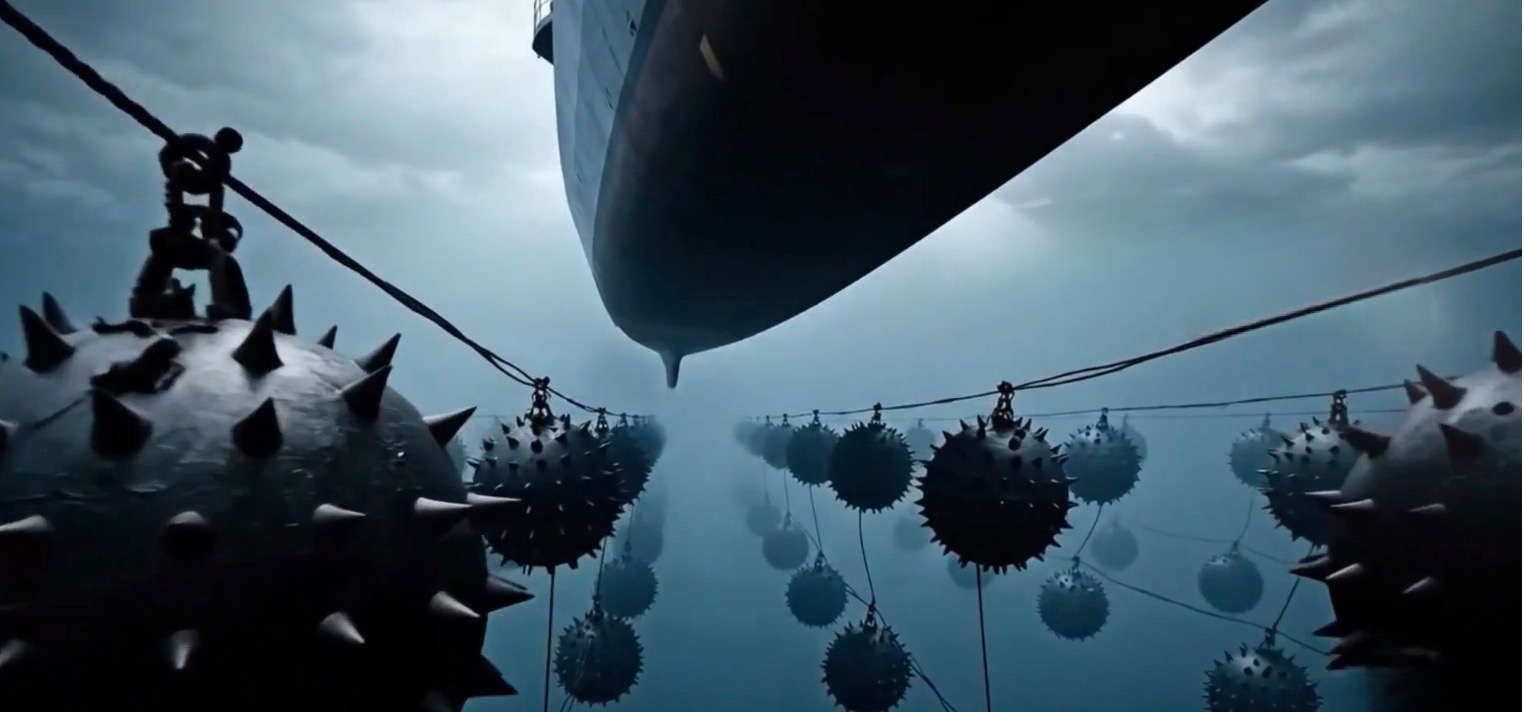
The Rebuilding Trap: The second question pertains to energy and infrastructure. Wars in the Gulf are always regional conflicts but they touch upon oil/gas; shipping lanes; insurance markets; refineries; ports; and global supply lines. Damage to energy-related infrastructure may have the appearance of being repairable on paper, however, restoration of investor confidence; worker confidence; shipper confidence; government confidence; and therefore, restoration of "business-as-usual" will not occur merely because the shooting stops.
Global Development Risks: The third question concerns poverty. While those directly exposed to missiles during wartime obviously suffer as well, poorer nations around the globe experience increased costs associated with: higher-priced energy; food inflation; currency devaluation; and increasing national debt. Therefore, a war in the Gulf can rapidly convert into a poverty-based crisis in many areas of Africa, Asia, and Europe. For this reason, the conflict should be perceived as an international economic shock rather than solely as a localized military confrontation.
The Ethics of Power: The fourth question concerns power and legitimacy. The conflict serves to illustrate how international politics continues to treat some lives as vital while treating others as expendable. Powerful states proclaim their support for security, law, and stability but often exercise them selectively. Selective application of such principles undermines the moral credibility of the current international order. An international order that defends power at the expense of protecting individuals cannot endure for very long.
In summary, this series of articlesargues that the Gulf War is not an isolated occurrence. Instead, it reflects our time: a world characterized by rapid movement of military action vs. slow diplomatic processes; a world wherein energy markets play a significant role in sustaining individual life; a world wherein poor societies bear the cost of decisions made by powerful elites; and finally, a world whose legitimacy is eroding due to widespread hypocrisy.
Support Our Work
If you find our content valuable, please consider supporting our mission through a donation. Your contribution helps us continue providing high-quality analysis and insights.
Donation Options:
If you enjoy my work and would like to support it while helping me stay energized, I’d be deeply grateful for a coffee.
The balance of political and executive power inside Iran changed sharply after February 28th, 2026. As a consequence of this shift Iran is now rapidly moving towards a new type of military/centralized political structure. This new centralized system will be largely dependent upon the Islamic Revolutionary Guards.
Although formal structures continue to exist within the Iranian Government such as the Presidency, Foreign Ministry and other governmental agencies, they all have significantly less authority and independence than previously. Also, the new Supreme Leader Mojtaba Khamenei, although providing legitimacy for the current regime has provided very little day-to-day guidance. In addition, he has been absent from publicly visible life.
This shift has had a clear effect on negotiations with the American administration. Washington has sensed that there is no single Iranian position. The tone, aims, and participants in the talks have changed repeatedly.
Iran’s current political and executive scene can be divided into three main blocs with direct relevance to the negotiations with the United States:
The first bloc includes President Masoud Pezeshkian, Foreign Minister Abbas Araghchi, parts of the technocratic class, most civilian members of parliament and a broad section of the business community. These are the actors most open to negotiation.
The second bloc consists of those willing to negotiate, but only under conditions free of American threats. This group includes Mohammad Bagher Qalibaf, the speaker of parliament; acting defence minister Major General Majid Ibn al-Reza; and parts of the intelligence services and the regular army, known in Persian as the “Artesh”.
The third bloc is the most hardline. It includes those opposed to any real agreement that would end the wider crisis in the Middle East. This bloc is led by Ahmad Vahidi, commander of the Revolutionary Guard. It also includes Mohammad Bagher Zolqadr, secretary of Iran’s Supreme National Security Council; Gholam-Hossein Mohseni-Ejei, head of the judiciary; Ahmad-Reza Radan, commander of Iran’s police and security forces; and a large section of the clerical establishment. It is also supported by the Paydari Front, or Front of Islamic Revolution Stability, one of the most influential hardline movements inside Iran’s conservative camp. Founded in 2011 as an electoral list for the 2012 parliamentary elections, it later developed into an organised political force with broad influence inside Iran.
Above all these blocs stands Mojtaba Khamenei, Iran’s absent supreme leader. He remains the final authority on all matters concerning the Iranian state. Despite the numerous differences among these political blocs there is at least some level of understanding on how to prevent an open conflict between the blocs. As such, a 'mutually vetted' form of dispute resolution exists internally to the Iran political structure in order to limit the escalation of any disputes. These same three blocs also recognize that any splits during this time of war and economic turmoil would be detrimental to the survival of the Islamic governing body in Tehran. However, while the above-mentioned risks exist they currently are being kept under wraps. It is likely that these risks will grow larger with respect to their likelihood of occurring as well as their potential severity should negotiations fail and the full-scale military operations resumed.
The secularist, nationalists and armed opposition forces against the government of Iran are very diverse; however, they are also very fragmented and fractured. Much of the secularist opposition's organizational and political capabilities were severely damaged due to the repression of protests by the authorities in Iran in both 2025 and 2026. The largest opposition organizations include:
Reza Pahlavi, son of the Shah of Iran who resides in the U.S., is considered the most recognizable opposition leader to the regime. He created the Phoenix Project (a research organization) in 2019, which is a network of Iranian experts, scientists and professionals residing outside of Iran. The stated goal of the Phoenix Project is to assist in "restoring Iran" after years of what it claims to be destructive acts by the current Islamic Republic. The Phoenix Project is presented as a technical/academic center and not as a political party. In addition, in 2025 Reza Pahlavi created Prosper Iran (an initial 180-day plan) outlining a series of steps that would occur immediately after the collapse of the current Islamic Republic.
Mr. Pahlavi has been actively engaged in diplomatic efforts. In addition to meeting with members of the European Parliament he spoke to a large number of people (estimated by German authorities at approximately 250,000) at the side lines of the Munich Security Conference in February 2026. He views any negotiation between the U.S. government and the present ruling powers in Iran as supporting the Iranian regime. He has called upon the U.S. Government to assist in toppling this regime. Mr. Pahlavi has referred to military action taken by the U.S., or Israel against the Iranian regime as "humanitarian intervention" and stated that civilians should be protected from injury.
Maryam Rajavi leads the National Council of Resistance of Iran (NCRI), which is the political arm of the Mujahedin-e-Khalq (MEK). NCRI is headquartered in France and Albania. The organization proposes a transition period of six months after the fall of the Islamic Regime in Tehran, during which time there would be free elections in Iran. NCRI does not want either the existing system of governance in Iran or a monarchical system of governance. NCRI opposes any agreement between the U.S. Administration and Iran's current government; they argue that such an agreement lends legitimacy to Iran's current government.
MEK has established throughout Iran units of resistance and MEK was able to operate with successful media and propaganda efforts. However, MEK remains without wide-spread public support primarily based on their past cooperation with Former Dictator of Iraq, Saddam Hussein. Additionally, MEK operates under a very secretive organizational structure.
The "Solidarity for a Secular Democratic Republic in Iran" Coalition was established in 2023. The coalition represents a number of political parties and organizations including; the Republican Union, the European National Front, the Left Party, and the Union of Secular Republicans and Human Rights. This coalition does not support either Religious Rule or Monarchy. Instead, it supports a secular democratic republic, protection of minority/ethnic rights, and federal reform. However, the coalition's visibility and activity never was notable. Today, it appears to be less active and less visible than the Mujahedin-e Khalq Organization or other initiatives promoted by Reza Pahlavi, although both of them are criticized by the coalition. Additionally, the coalition's stance on an agreement with the U.S. is cautious and somewhat critical. This caution stems largely from concern that any agreement will enable the current regime to rebuild itself.
Kurdish parties operating in Western Iran include Komala, the Democratic Party of Iranian Kurdistan and several others. These Kurdish parties have no opposition to engagement with the U.S. However, they strongly advocate for minority rights and federal reform in any political resolution that may emerge from negotiations with the U.S. This advocacy places them diametrically opposed to the Iranian government's view of the State. On January 11th, 2026, these Kurdish parties issued a call for a national strike throughout Iran; however, this effort received little if any public support.
The ability of all Iranian opposition groups to directly impact politics inside Tehran is clearly very limited. Most of these groups have bases outside of Iran; therefore, the majority of their activities take place outside of Iran and away from the eyes of the people in Iran. There is little common ground among the groups as well. Their differing views of what Iran should be like in the future create great divisions.
The group hoping to lead the opposition movement in Iran, is the monarchical faction, but this too is divided. The older members of exile are nostalgic for the good old days while younger activist see a monarch as a quaint relic of history that has that hardly fits the modern world.
Iran's ruling class is terrified of another Syria or Libya. This fear prevents both the radical factions within the government from taking actions that may disrupt the existing social structure and prevent reformers from making demands for large scale concessions or sweeping changes, since they fear that the existing social structure may become unstable. On the other hand, Iran's secular opposition, as it now exists, cannot overthrow the government without either foreign military involvement (as was seen in Iraq, Afghanistan, Libya…etc) or a break down in loyalty among Iran's security forces who continue to exercise total control domestically. Either of these two possibilities seem unlikely to occur. Therefore, predicting Iran's future is uncertain and difficult, particularly since there appears to be no leadership or guidance regarding how to wage the U.S. war against Iran. However, few would argue that Iran stands at a cross-roads in time. Change has taken place and will continue to take place.
The Islamic Republic of Iran has survived many predictions of its early collapse. It has outlasted the loss of key figures in both the military, political and religious spheres. Therefore, it is too premature to consider a drastic alteration.
Democratic activists, trade unionists, and others who represent Iranian civil society are already in the prisons. And there is not any organized alternative that could overthrow the current government. Moreover, long years of state repression had effectively suppressed the revolutionary spirit calling for change among ordinary people, who were afraid even to show solidarity with the opposition groups that sought to bring down the existing regime.
One fact is hard to ignore: no single actor inside Iran controls the keys to an agreement or a "deal" with the USA. The hardline bloc led by Mr Vahidi cannot reject a deal forever if the Revolutionary Guard concludes that continued confrontation threatens its survival, not just its interests. At the same time, Mr Qalibaf and those around him cannot sign anything without cover from the new supreme leader, Mojtaba Khamenei, who so far appears, for different reasons, absent from the scene.
Therefore, a realistic agreement is unlikely to develop via conventional diplomatic channels. Instead, it will likely arise from a very limited "back-channel" communication process between the Revolutionary Guard and the United States, while excluding the Foreign Ministry and President Pezeshkian. Iran's historical record supports this assessment. The 1981 Hostage Agreement did not occur via a public, formalized channel. The 2013 secret Omani Talks, which provided a pathway toward the 2015 Nuclear Agreement were conducted along a similar model.
It's unlikely that any agreement/ deal will be fully comprehensive. Washington doesn't want a comprehensive “deal”; it wants nuclear guarantees and a halt to Iranian expansionism. Tehran isn't looking for anything more than survival, and some relief from the economic pressures which are crippling the country. There may be some common ground here between Washington and Tehran, but if there is, it is a fragile space.
Following any “deal” and the lifting of sanctions, Iran is likely to go into a period similar to that experienced in post-Soviet Russia: rapid economic development; chaotic distribution of wealth and the emergence of individuals from within the security services as leaders of "reform". The key difference now is that Iran's revolutionary guard holds both the guns and the controls. Whatever comes out of any agreement, it is evident that most of the funds which come out of sanctions relief will flow through Iranian companies and institutions owned by the revolutionary guard. That is what happened in 2015; ordinary Iranians saw few real gains. Therefore, if they finally conduct a "deal", then the life of the regime well be extended as opposed to providing a means to get towards serious change. The popular pressure was insufficient to topple the system when it was in its weakest state (as with the protests of 2022), so, what makes us think that will be possible, when the regime has some breathing space economically?
Ultimately, Iran does not face the alternative between the present regime and democracy. Rather, it faces an alternative between different types of authoritarianism. The real issue is not how much the system changes. It is who manages Iran post this era and to whose advantage. The realistic answer points to those who already hold the real cards: money, weapons and networks of influence (The Islamic Revolutionary Guard Corps "IRGC"). The opposition abroad has the language of change, but not the ground beneath it. The people inside Iran have the will, but not the organisation. The regime has power, but not a future.
This difficult equation will shape Iran in the coming years more than any talks in Muscat, Islamabad, Geneva or elsewhere. Perhaps the most honest conclusion is this: Iran deserves a better future than the one offered by its current Islamic theocratic elite, whether by those who rule it today or by those who claim they will rule it tomorrow.
Support Our Work
If you find our content valuable, please consider supporting our mission through a donation. Your contribution helps us continue providing high-quality analysis and insights.
Donation Options:
If you enjoy my work and would like to support it while helping me stay energized, I’d be deeply grateful for a coffee.
Much of what the public is currently hearing about the ongoing conflict in the Middle East revolves around oil price increases, disrupted shipping routes, military risks, and strategies for each country's involvement in the region. These are all important topics; however, they do not represent an entire picture. This situation represents a global crisis; a combination of both a security crisis and a development crisis. A major aspect of this crisis is that wars taking place in strategically located regions, such as the Middle East, do not remain isolated to combat zones. It moves through energy systems, which translates into higher transportation costs, which leads to increased costs of goods within supply chains, which leads to increased prices in food markets, which directly affect consumer spending habits and household budgets. Finally, once household budgets are affected by price inflation, these changes can be reflected in the official poverty rates.
According to the UNDP policy brief Military Escalation in the Middle East: Reversals in Global Development, Policy Response Options, as many as “32.5 million people” could fall into poverty globally because of a “triple shock of energy affordability and availability, food price increases, and GDP downturns.” This is the key point. The issue is not just lower rates of economic growth but lower rates of economic growth with added inflationary pressure on the goods that are most important to poor families.
That is why this period is so serious. Households will find a moderate slowdown in growth much easier to endure than they would an increase in the cost of electricity, gasoline, bread, transportation, and propane or other fuels simultaneously. The poorest individuals will feel the greatest impact from this because they have the largest percentage of their income spent on meeting their basic needs. Inflation is not a theoretical macro-economic measure for these individuals. It is an immediate reduction in how well they are able to survive each day. That is why one of the most important findings in the same UNDP policy brief is that “price pressures rather than output losses alone drive much of the additional poverty increase.” In other words, the real danger does not come only from weaker GDP. It comes from the price shock transmitted into everyday life.
The impact is particularly severe for energy-dependent developing countries and emerging markets. A number of these are exposed on all sides simultaneously. Emerging markets and developing countries experience a rise in their costs of importing goods and services due to rising commodity prices, a weakening currency (which makes imports more expensive), reduced fiscal space to implement economic policies (due to the need to spend increasing amounts on servicing their debt) and also less ability to offer protection to households. Advanced economies can provide some level of shock absorption through borrowing, reserves, and other forms of targeted support. Most poorer economies lack this ability. As stated in an October 2008 UNDP policy brief "advanced economies have the fiscal and monetary means to absorb shocks; low income and most middle-income countries do not."
This difference in exposure to potential crisis should therefore be central to any meaningful consideration of policy options.
According to the same UNDP policy brief, “Timely, targeted, and coordinated policy responses will be essential to prevent temporary shocks from becoming lasting development setbacks.” That is exactly the issue. Temporary shocks have a habit of becoming long-term reversals when governments respond too slowly, too broadly, or with the wrong tools.
Another clear policy recommendation is simply the most reasonable recommendation. As stated in the UNDP policy brief, "Targeted and Temporary Cash Transfers" are "the best alternative policy response for fiscally-constrained countries." The reason this recommendation is deserving of consideration is that it reflects a simple reality many governments continue to dispute. The way to effectively protect poor household(s) is generally to provide direct financial assistance to those households.
While “Blanket Subsidies” may appear to be a political winner in the short-run, they can be an extremely blunt instrument. Blanket Subsidies (also known as universal or untargeted subsidies) tend to be very costly, regressive and difficult to reverse after they are implemented. The UNDP policy brief's warning about blanket energy subsidies being "regressive" and "un-sustainable on a fiscal basis over time", has merit. In practical terms this means that governments should quit pretending providing blanket subsidy to all citizens is the same as providing protection to the vulnerable. It is not.
The better route is providing narrow and specific assistance. wherever states have the ability to administer, direct monetary support is the most effective route. wherever states don't have the administration capability, temporary vouchers or minimum consumption support for the purchase of electricity or cooking gas would be a viable alternative. There should remain one underlying premise: safeguarding necessary household consumption while keeping the state from being locked into wasteful and widespread subsidies.
there exists another issue that merits greater discussion. Some countries won't be able to handle this by themselves regardless of how well domestic policies are designed. If a country carries high levels of debt, low reserves and limited market access then a large external energy shock can rapidly develop into a balance-of-payments problem which can rapidly evolve into a fiscal problem and finally into a social problem. In such instances, multilateral financial support is not charity, it is crisis management.
My interpretation is very simple. Today the world continues to view war, inflation, debt stress and poverty as distinct issues. They are not distinct; they are all connected. A military escalation in the middle east can lead to food insecurity shocks in Africa, create a fiscal crisis in economies dependent upon imports in Asia, and represent a hindrance to human development in areas distant from the initial area of conflict.
that's why this time period should be viewed not just through foreign policy but also through development policy.
The question is no longer whether the war has economic impacts (it clearly does). the question now is whether national governments and international institutions are willing and prepared to act prior to these economic impacts becoming permanent in terms of poverty.
Once millions of households lose purchasing power, fall into a vulnerable position, begin to cope through debt, reduce food purchases, lose schooling opportunities, or cut back on healthcare spending; the impact of the shock is no longer temporary, it becomes structural, and that's exactly when wars begin shaping development beyond where bombs are dropping.
What remains unclear is how seriously the governments behind this confrontation take the tens of millions of people whose quality of life will be impacted negatively due to hunger, insecurity, and an even slower decline into poverty. Is there evidence to suggest that Washington, Tel Aviv, and Tehran consider the potential human cost of their actions; or has their pursuit of power, Arrogance, superiority complex, and disregard for international law, political narcissism, and political grandstanding led them to disregard the value of individuals' everyday lives? Leaders of these Governments continually talk about security, sovereignty, deterrence, rights, and civilization, yet the widespread destruction of the social structures in lower-income communities indicates an astonishing failure to consider the real-world implications of their actions. Too often human rights are used as a banner or slogan to justify war and/or other action against others, while the human being (poorer, hungry, displaced, losing his/her dignity), is completely ignored.
If you find our content valuable, please consider supporting our mission through a donation. Your contribution helps us continue providing high-quality analysis and insights.
Donation Options:
If you enjoy my work and would like to support it while helping me stay energized, I’d be deeply grateful for a coffee.